In recent months, several directors of cancer centers, appearing on The Directors, a segment of The Cancer Letter Podcast, mentioned that their institutions are increasingly providing small grants—typically in the range of $50,000—to scientists to enable them to keep their labs open.
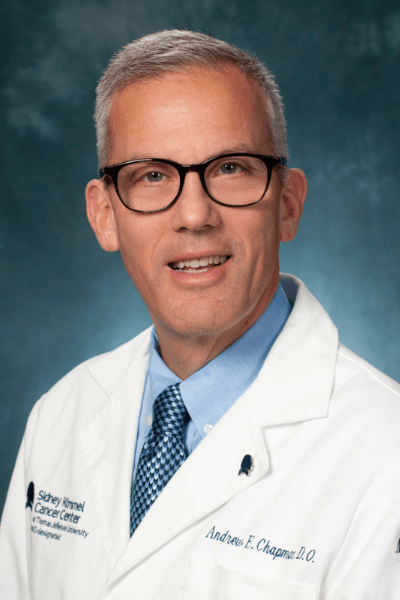
“At least during my tenure, we didn’t have to do it before,” Andrew Chapman, director of the Sidney Kimmel Cancer Center at Jefferson, said on the April episode of The Directors podcast. “I don’t think we were doing it very much at all. And we’ve been fortunate in the cancer center that it was really quite limited to date in terms of the amount of support that was required…
“You’d hate to see a highly productive scientist have their lab closed based on a timing issue.”
Chapman said he and other officials at Jefferson designed a bridge funding mechanism that applies to oncology as well as to other therapeutic areas.
“There were non-cancer scientists as well as cancer-focused scientists in whom we addressed [the program],” Chapman said. “And so, the support for research and resources has remained very much intact; president of university, and dean, in lockstep in terms of movement of the cancer center forward. And this was one of the examples. We came together to think about, ‘How can we best ensure that both the cancer-focused and non-cancer-focused scientists would be viable?’”
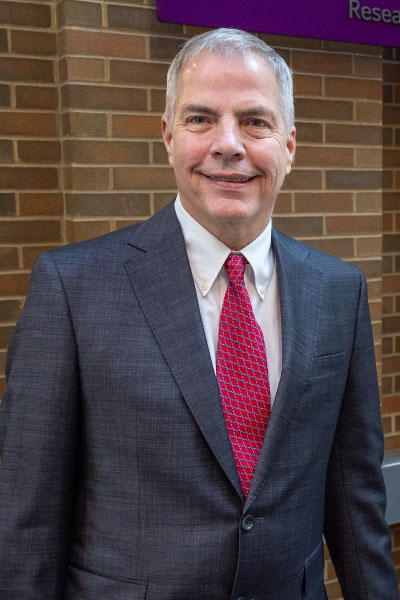
John Byrd, director of UPMC Hillman Cancer Center, said bridge funding at his institution was started by Kathryn Schmitz, who served as the interim director before he started his job last November.
“We’ve had to do this, to some extent, on a one-on-one,” Byrd said.
The problem isn’t limited to scientists who haven’t been able to get a grant for two or three years or had been “floating on one grant.” Now, “it’s been people that often have been really well-funded, and they either were one of the unfortunate individuals that had several grants cut by the guillotine initially, or they sort of got caught in this, ‘Is it going to be funded? Is it not going to be funded?’ with an eight and nine percentile,” Byrd said.
“And we’ve also used this time to talk with people and give them the opportunity to redirect what they’re doing to a path where they’re going to potentially be more successful if they have not had funding for several years.”
Chapman and Byrd appeared together on The Directors, a monthly podcast series that focuses on the problems that keep directors of cancer centers up at night.
This episode is available exclusively on The Cancer Letter Podcast—on Spotify, Apple Podcasts, and YouTube.
The extent of reliance on bridge funding at NCI grantee institutions hasn’t been studied systematically, but in recent months, it has come up regularly on The Directors podcast. As they strategize amid this time of uncertainty, many cancer centers are tapping into their resources to keep their labs and federally-funded programs going—in essence becoming short-term lenders to the government and placing a bet that the money will soon begin to flow.
This may be a sound strategy if the problem is limited to temporary constriction of federal funds and, assuming that Congress will continue to provide robust funding to NIH and NCI.
System-wide, cancer centers are struggling to retain young scientists amid uncertainty, directors say.
“I think we are talking about morale. We are talking about dollars. We are talking about people being able to be comfortable coming into the field of being a phenomenal cancer researcher, that there’s going to be a viable path for them going down that path, both at the early stage and then also at the late phase,” said Byrd. “What I find myself thinking about is, ‘How can I go about looking at the NIH and funding through the NIH as one of the levers that I’m going to pull to support my researchers while thinking of embodying philanthropy and people that really are invested in this?’
“I’ll add something, that the real successful people are staying funded,” Byrd said. “They’re finding a way to maintain, for the most part, after the first guillotine came down for many sort of arbitrary reasons, but they’re working a lot harder on that. And nobody goes into science or to medicine with the intent that, ‘I want to write grants.’ They go into science, because they want to make an impact.
“And the diversion of people really working hard to write grants is detracting from the impact. Something that I’ve seen, something that I think goes hand-in-hand with cancer research and being a cancer center director, is what’s happening on the clinical side, because the clinical side feeds into research, the research feeds into the clinical side. And we can’t ignore that on the clinical side for reimbursement for changes in programs that are being supported, say, that are very important to our cancer mission.”
Cancer centers are adapting by diversifying funding beyond NIH, and many are trying to shift toward mixed funding models.
“How we can be practical, and say, work with industry to take our findings to commercialization and dissemination, which we should be doing anyways, but not just doing it in a manner where, “Well, it’s great if we do that,” but where we are bringing dollars back in through that process?” Chapman said. ”So, creating alternative revenue pathways is really what we are thinking on the financial side, and while really trying to be cheerleaders with all of our team members.
“We are going to get through this, we are getting through this, we are going to get through this, and there’s tremendous optimism and opportunity that we should have, but it has been difficult.”
Explore previous episodes of The Directors.
Some highlights:
On CCSGs
In 2025, the site visits—one of the mainstays of the NCI Cancer Centers Program—were abolished as review of cancer centers was moved to the NIH Center for Scientific Review.
Though review of cancer centers appears to have gone smoothly last year, many directors argue that site visits have provided the centers the opportunity to solidify internal support at their institutions (The Cancer Letter, Oct. 31, 2025).
In an apparent nod to these requests, the National Cancer Advisory Board established an ad hoc working group that will assess cancer centers as part of the designation process.
The newly-created working group will conduct site visits that will not affect the score that the centers are given in the CSR review, which focuses solely on the scientific merit. This includes review of the Community Outreach and Engagement, and the Cancer Research Training and Education Coordination components of the CCSG applications.
Said Byrd:
Well, I’ll say I’ve got a great external advisory board, and we have a great team that arrived less than about 140 days ago here.
And our grant is due in September, and we are working hard, but it’s a team effort. And say, a lot has changed from times when I was at Ohio State.
The core things are, the grant is important, but it’s what the checking of the boxes of the grant, that you’re really doing things that impact your community, and you’re doing great science and disseminating it, that ultimately it’s telling that story, and that’s what we are trying to do.
So, the rules have changed a little bit. I think probably since there is going to be a very small site visit after the grant is reviewed, and there’s a score assigned where, say, there will be a group that’s checking on things and probably focusing on COE, but it’s not going to be the overextensive site visit where you can respond.
So, it does put a lot more pressure on the writing. And hopefully, knock-on-wood, the reviewers understand that you just can’t clarify everything. And if something is not mentioned, it doesn’t mean it’s not happening, and that they’ll use the website and other things… Or at least give sites the benefit of the doubt based upon success they’ve had in the past, say, for small things that are not important.
Chapman said it’s important that NCI has brought back the site visit.
Said Chapman:
I think it tells me a number of things. The first is that the relationship with the Office of Cancer Centers and with the NCI director is really good. And these people are really listening and thinking about how to improve. I think there’s great value in having directors come in who are living the experience, and come in and who really understand what it means to run a center and be able to sit down.
And if there are any issues from the review, from the [NIH Center for Scientific Review], it gives that director an opportunity to talk through those things. Again, this to me speaks volumes about enhancing the ability for the center to do its work, showing that the institutions are committed, and that the goal here in the re-designation is to really enhance the center’s ability to have impact in the community and whether it’s national, globally, scientifically.
I think that this is a huge win.
And to be quite honest with you, when the email came out about the announcement for reinstating the site visits, I really was thrilled to see this. I think this is going to be really helpful for all of us.
When cancer centers are reviewed, the reviewers usually have a lot of questions at first. Because of that, the initial evaluation score might not be perfect, Chapman said.
But after clarification and discussion, the score often improves and things settle into a better outcome.
“And maybe the pendulum goes a little too far, but people are listening, the NCI is listening and it’s coming back to what might end up being a better process for review, we’ll have to see. I’m certainly hoping that that’s the case,” Chapman said.
“I am very optimistic from what we are seeing and from the communications”
The site visit is a mechanism for the center to do better, Chapman said.
“That’s not specifically around just the score, but it’s an opportunity to really understand from experts where these potential improvements can take place,” Chapman said. “Putting six directors in a room within ADA is going to be really valuable inputs, really valuable inputs. So I actually think it’s brilliant.”
“And I think also the NCI is looking at revising the whole Notice of Funding Opportunity, which underlines evaluation, and that’s going to be coming next year, Byrd said.
I think we’re talking about morale. We’re talking about dollars. We’re talking about people being able to be comfortable coming into the field of being a phenomenal cancer researcher, that there’s going to be a viable path for them going down that path, both at the early stage and then also at the late phase.
John Byrd
“We are functioning under the older one. But just hearing discussions that still are under top secret, a focus that somebody that’s my all time hero, Brian Druker said, who is the cancer center director at Oregon Health Sciences, and I was on his board for a long time, is how for the centers that are doing a great job, can we consolidate the review process to a minimum amount, so we are not disrupting new research moving forward, but at the same time assuring that those groups are meeting the expectation of the taxpayers that are funding the grant is important.
And hopefully, as the new guidelines move forward, we’ll see this happen.”
This is why it’s so essential that the site visit is being reinstated, Chapman said.
“I think that the leadership needs to really understand in a deep way what’s relevant in order to really move the center forward. And I think they hear that and see that from these site visits.”
“So, I would tell you that with the downward pressures that I think we are all feeling with finances, things, again, the belt is a bit tighter,” Chapman said. “So, that goes back to you can’t do quite as much, quite as quickly, but that doesn’t mean you’re standing still.”
“I still feel like we are moving the center forward.”
On Medicaid:
The 2025 “One Big Beautiful Bill Act” (H.R. 1) signed on July 4, introduced significant Medicaid funding cuts, reducing federal spending by approximately $1 trillion over 10 years and projected to cause over 11 million people to lose coverage (The Cancer Letter, July 03, 2025).
These cuts, set to phase in, are prompting states to consider reducing provider reimbursement rates, limiting optional services, and tightening eligibility.
Chapman said that cuts to Medicaid reimbursement “certainly added to the pressure,” especially with the added strain of GLP-1 medications. While some of it has come back, he notes there’s “no question” these challenges weighed heavily on many centers, including his own.
Byrd said that the UPMC network is fortunate to have 80 centers across four states and three countries, with many in rural areas, where Medicare and Medicaid are the primary payers. Because of that, they’ve had to continue working at providing the best cost-effective care.
“I think the fun part, really why this job was so attractive to me, is because patients want to be treated close to home when they can,” Byrd said. “And that’s sort of our UPMC model, the hub-and-spoke to get people as close to home with the same care, because that’s a big aspect of dissatisfaction for patients.
“And say, when you can do that, by virtue, you will lower cost and things assimilate to a common goal.”
On the K awards
Byrd and Chapman said that institutions today are less likely today to take a risk on hiring a young investigator who doesn’t have grants.
Said Byrd:
I think that’s sort of where the bar in a lot of places has gone up, where you might have hired somebody who didn’t have a K award if they were really promising.
[NIH Director] Jay [Bhattacharya] gave just a phenomenal talk at the National Academy of Medicine in the fall, where he talked about instead of having K23s, K08s, funding many more K12s, where cancer institutes have, say, five or six slots, and you move people right from no grant or foundation grant, to this institutional K award, to our funding.
And so, whether it’s a basic scientist, a translational scientist or a clinical scientist, the idea of shortening that time to R01. And again, coming back to this, I’d never heard anybody say this, so this was just a great talk. And when he was here talking about it, I brought it up again, because I think that’s where we really run the risk in this phenomenal time that we are in danger of losing momentum is losing our younger people. That’s where the most creative ideas come from.”
Chapman agreed:
That, I think, is the greatest risk of all, John. I believe that. And I think that it’s good to hear.
I did not hear the lecture at the National Academy, but I think that this is an area that requires a tremendous amount of focus, considering that it was already on our radar screen. Before any changes took place in the past year or year-and-a-half, it was already felt to be a real risk.
And I think that that risk has now been even further escalated.
We will get through this is right, but the piece that I probably worry about the most is that pool, that intellectual pool of youngsters that may never make it into this space because of these various pressures and things that have happened.
And it’s going to take, I think all of us recognize, quite a while to get that back.
Listen to the full episode on Spotify, Apple Podcasts, and YouTube.
A transcript of the podcast is available below:
Paul Goldberg: We have with us Dr. Andrew Chapman, who is the director of the Sidney Kimmel Cancer Center at Jefferson and Dr. John Byrd, who’s the Director of the UPMC Cancer Center in Pittsburgh. So we are two parts of Pennsylvania. We got Pennsylvania covered.
Well, Dr. Chapman and Dr. Byrd, thank you so much for finding the time to appear on The Directors podcast, where the first question is always the same: What’s keeping you up at nights as you run your cancer centers?
John Byrd: I would say we should let Andrew go first. because he has a little bit more experience. I’m just at about 145 days. I’m nervous about everything, including the fire hose that’s continuing to come at me.
Andrew Chapman: Understood. Been there, done that. Yep. Understood completely. All right. I think, Paul, I would start with probably what is fairly obvious to probably all the directors, and that is, with many of the changes that have occurred in the funding climate—the impact that that has on the centers.
And I spend a lot of time thinking about ensuring that the scientists are able to be productive, that we continue to have pipelines for growth and development of the trainees. That, for me, rises to the top in terms of what keeps me up at night.
John Byrd: I would agree with Andrew 100%, but going from that, I think what keeps me up at night is all of the amazing fundamental translational and clinical findings that are coming forth right now, really over the last just several years.
It’s just amplifying, where we are seeing so many new things, whether it’s diagnostics, therapeutics coming forth from fundamental discovery, where we really have an incredible chance of advancing many, many, many types of cancers, and potentially curing many of them, or converting them to diseases where patients can live their life with the cancer, but live a normal life.
And how, in this climate, can we best navigate this and appreciate this opportunity?
Also, how can we, at the same time, plan for survivorship?
Because that’s becoming much more important as we have more cancer patients surviving, and early detection, and incorporating our research into that, to really keep this great momentum going, despite some of the challenges that we have with select types of funding.
Well, Dr. Byrd, John, you weren’t the director of a cancer center, but you were right up there and managing this. And Andy, you also can answer this, but right now, what can’t you do that you could do a year ago, for example? How has your life changed during the Trump administration?
Has there been any type of research that you aren’t doing now? Is there anything that’s disrupted that you can specifically point to? DEI just is a problem, but nothing else, or it is something else?
Andrew Chapman: I would say that I think that there’s just been a slowing. I think that what John was getting at is so much has happened and so much opportunity. And what we are trying to work through is a potential slowing of these breakthroughs and these opportunities.
And so, what I would say is, take, for example, recruiting.
We have not stopped recruiting in terms of scientists, but at the same time, the level of scrutiny in terms of bringing people in and being able to potentially hire, it’s much different, because the stakes are much higher.
What happens now if they are struggling to get funding because of the competitive landscape? It slows things down, Paul, if I can say it. It makes things more difficult, if you will. So, we haven’t stopped recruiting, but it’s more cumbersome.
Because again, if people are unfunded, then that becomes a little bit more difficult, just in that sphere, in recruiting. And I think that it’s even more pressure now on the scientists to be able to get grants.
John Byrd: Yes. To build off what Andrew says in a different way, because I would agree, and I’ll add something, that the real successful people are staying funded.
They’re finding a way to maintain, for the most part, after the first guillotine came down for many sort of arbitrary reasons, but they’re working a lot harder on that.
And nobody goes into science or to medicine with the intent that, “I want to write grants.” They go into science because they want to make an impact.
And the diversion of people working hard to write grants is detracting from the impact.
Something that I’ve seen, something that I think goes hand-in-hand with cancer research and being a cancer center director is what’s happening on the clinical side, because the clinical side feeds into research, the research feeds into the clinical side.
We can’t ignore that on the clinical side for reimbursement for changes in programs that are being supported, that are very important to our cancer mission.
The health systems, for the most part, unless they have a very, very, very deep bankroll, are really struggling right now.
And where I was at before, at UC Health, it was a great endeavor to move cancer to the forefront, and they’re going to do it. You asked for what my experience in the past, but every single turn, there was a struggle with, again, “How can the health system keep up and help invest in research?”
Ultimately, it’s going to impact cancer lives long term, even though the research, the perception that the research costs money, the research really in the end saves everybody money while saving lives.
I guess what I’m not understanding is whether your lives as center directors have changed, because you cannot do certain things, or is it a perception that the chances of getting funded by investigators has changed?
And morale is a very serious and tangible thing.
Are we talking about morale, or are we talking about dollars?
John Byrd: I think we are talking about morale. We are talking about dollars. We are talking about people being able to be comfortable coming into the field of being a phenomenal cancer researcher, that there’s going to be a viable path for them going down that, both at the early stage and then also at the late phase. And for sure, that’s important.
And what I find myself not necessarily staying awake at night thinking about, because usually by the time I go to sleep, there’s not much brain function happening. What I find myself thinking about is, “How can I go about looking at the NIH and funding through the NIH as one of the levers that I’m going to pull to support my researchers while thinking of embodying philanthropy and people that really are invested in this?”
Because one of the things, Paul, about cancer now is if you’re a wealthy person that you have means, you can potentially put dollars toward a project that a loved one will see the benefit from in their lifetime, potentially, which is very, very different than ever before.
And then, lastly, is just how we can be practical, and say, work with industry to take our findings to commercialization and dissemination, which we should be doing anyway, but not just doing it in a manner where, “Well, it’s great if we do that,” but where we are bringing dollars back in through that process.
So, creating alternative revenue pathways is really what we are thinking on the financial side, and while really trying to be cheerleaders with all of our team members, “This is really a great time. We just have to work together and we’ll get through this.”
Andrew Chapman: Yes. Paul, you asked the question, “Are there things that we can’t do?”
I don’t think that’s really the sentiment of what I want you to take out of this. I think the way to summarize this is think about that as a whole, there’s a tightening of the belt, and when the belt gets tightened, it has downstream effects.
So, whether it’s the health systems feeling more squeezed and therefore maybe there’s not as much funds flow, whatever it is, think about the belt getting tightened… It doesn’t mean you can’t do the job, but it means there’s more effort that goes into it and it makes it harder.
So, John brought up the point about scientists having to write more grants as an example. When the belt’s tightened, everybody is working harder. Does that play into morale? Of course, it does. Because if you’re writing tons and tons of grants and they’re not getting funded, and you’re seeing things tightening up around you, this is what…
So, think of it through that lens. Think of it through the lens of the basic scientist who is waiting for funding to be released, and maybe they’re really time-wise in a crunch and they want to keep their lab open, right? That’s a stressful place to be.
We had to actually bridge folks in order to enable them to continue to do their work. So, think of it through that lens, of the real tightening of the belt and what the downstream effects of that really are. And, frankly, look, there’s a couple of really good messages here.
The NCI’s budget didn’t get cut. It went up. And it’s very clear that our NCI director is working very hard to get funds released and as many grants as humanly possible funded.
So, there’s a lot of good news here, but to answer your question, that’s really the way to think of it. The job has become more difficult, because things have really tightened up.
John Byrd: Rather than say something negative, it’s to add to the positivity and we had the NIH director here, and Sen. McCormick from Pennsylvania a week and a half ago.
And we have an amazing group of bipartisan representatives, senators, the Republican, Democrat, Independents, that really see the value of the NIH.
And Jay [Bhattacharya] himself, when he was here, said that’s going to really be one of their focuses, to get grants out. That doesn’t mean they’re going to come out quicker, because I think there’s a whole new review process where things have to be looked at.
And he’s been credible thus far, and Dr. Letai as well is a credible researcher. So, it can be very positive, and all the way down, say, from the Senate Appropriations Committee Chair all the way down, there’s just been a lot of support for this, and they hold the purse. It’s not the executive branch. And so, I’m very positive about that because that’s Susan Collins, and they are all behind research, the NIH and what we are doing.
Andrew Chapman: I think John said it right, Paul, we are going to get through this, we are getting through this, we are going to get through this, and there’s tremendous optimism and opportunity that we should have, but it has been difficult.
John Byrd: But I think it does point, and for anybody that’s listening to this, it does point that both your vote, and more importantly, your communication with your congressmen, with your senator about support.
And also, I don’t know about you, Andrew, I wrote 25 handwritten notes to different people that got behind the budget, thanking them. And many of us did this by email.
I did it by handwritten note, because they’re taking heat for this, but it’s the right thing.
Yes, absolutely.
Going back to something I heard from Tony Letai, actually in our Q&A, he was, I’m paraphrasing, I hope correctly, that it’s always your chances of getting an R01 funded were 1 in 10 roughly for a while, and they still are roughly 1 in 10.
So again, not to diminish morale, not to diminish any of that, esprit de corps and all of this, those are very real things, but that is what I’m finding. And I’m really looking for actual things that have fallen by the wayside, and mostly they kind of have slowed down a bit, but that’s about the worst.
Andrew Chapman: I think that’s the right take.
So, we are seeing the same thing?
John Byrd: And some of the things maybe even that are called attention to that where it might have been an accolade about DEI, and there are certain words that politically… I think we say that the right things are still being done.
And rather than using catchy phrase words which push people’s buttons, just doing what’s right, and even that’s getting done. Say our grants are still paying attention to underserved populations that exist across all ethnicities, races, and sexes, and it’s just how it’s happening.
And COE is still there, CRTEC is still there.
John Byrd: Absolutely.
Andrew Chapman: Yes.
And since we are talking about that, we might as well talk about CCSGs. John, you’re going through it right now. Andy had a spectacular renewal, with Comprehensive designation.
Andrew Chapman: Thank you. Thank you.
John Byrd: Congratulations.
Andrew Chapman: Thank you. Thanks, John.
So, how was the experience different? Maybe the two of you could compare it, and John, you’re in it now.
John Byrd: Yes. Well, I’ll say I’ve got a great external advisory board, and we have a great team that I arrived less than about 140 days ago here.
And our grant is due in September, and we are working hard, but it’s a team effort. And say, a lot has changed from times when I was at Ohio State.
The core things are, the grant is important, but it’s what the checking of the boxes of the grant, that you’re really doing things that impact your community, and you’re doing great science and disseminating it, that ultimately it’s telling that story, and that’s what we are trying to do.
But you’re doing it in a much shorter format without a site visit.
John Byrd: So, the rules have changed a little bit. I think probably since there is going to be a very small site visit after the grant is reviewed, and there’s a score assigned where, say, there will be a group that’s checking on things and probably focusing on COE, but it’s not going to be the overextensive site visit where you can respond.
So, it does put a lot more pressure on the writing. And hopefully, knock-on-wood, the reviewers understand that you just can’t clarify everything. And if something is not mentioned, it doesn’t mean it’s not happening, and that they’ll use the website and other things… Or at least give sites the benefit of the doubt based upon success they’ve had in the past, say, for small things that are not important.
Andrew Chapman: I would say, so in September you’re submitting and then you’ll have your site visit-
John Byrd: In the spring.
Andrew Chapman: … in January or so?
John Byrd: I think it’s in the spring, actually.
Andrew Chapman: In spring? Okay.
What I take out of this is that I think that it’s incredibly important that the NCI has brought back this site visit.
I think it tells me a number of things. The first is that the relationship with the Office of Cancer Centers and with the NCI director is really good. And these people are really listening and thinking about how to improve. I think there’s great value in having directors come in who are living the experience, and come in and who really understand what it means to run a center and be able to sit down.
And if there are any issues from the review, from CSR, it gives that director an opportunity to talk through those things. Again, this to me speaks volumes about enhancing the ability for the center to do its work, showing that the institutions are committed, and that the goal here in the re-designation is to really enhance the center’s ability to have impact in the community and whether it’s national, globally, scientifically.
I think that this is a huge win.
And to be quite honest with you, when the email came out about the announcement for reinstating the site visits, I really was thrilled to see this. I think this is going to be really helpful for all of us.
And so, I think, John, yes, it will be truncated, but it’s going to be really honing in on what’s important for the center. And so, I think that’s going to be really good.
John Byrd: I would completely agree, because the site, my CCSGs that I was involved with quite a bit at OSU, the reviewers always come in with a lot of questions to clarify.
And as I say, I was blessed to work with several centers that center directors that be the perfect… Mike Caligiuri got a perfect score one year, and all the scores after Clara’s first submission were really good, and Raph Pollock’s were good, that it came from the score coming down, it came from the clarification.
And there’s probably going to be a migration up on that initial score, because you can’t be perfect without the clarification, and hopefully things are going to set and settle into a way that’s better.
Andy’s point, this is just a great example of trying to make something better. And maybe the pendulum goes a little too far, but people are listening, the NCI is listening and it’s coming back to what might end up being a better process for review, we’ll have to see. I’m certainly hoping that that’s the case.
Andrew Chapman: I am very optimistic. I’m telling you, I am very optimistic from what we are seeing and from the communications. I think that this is exactly right, John. I think this is a move in terms of making things better.
John Byrd: If I can just say something, because we are just talking in general, coming back to what we were talking about earlier. In science, our hypothesis changes all the time based upon our data, and say there’s a lot of change—nobody likes change, but some change is good.
And even with what we were talking about before, with funding and funding sources and other things, we have to think of ourselves as, one U.S., our country’s in deficit that says we have to pay for ourselves in different ways sometime.
And again, change is hard, and say, one of the things when we sort of have to look at it and give it a chance before we say, “This change is not good,” particularly when there’s an adaptation like there was, again, for the site visits, for instance.
Well, it was very tempting to catastrophize for a year last year, but then when I actually heard people discuss how their reviews went, they all said it was great because the reviewers were terrific, that they were all former cancer, or current, rather, cancer center directors.
They knew exactly what to look for.
The whole thing was done quickly and shorter. But John, what’s your CCSG application look like? Is it another 2,000-page number, or is it down to some other size?
John Byrd: I think it depends what you count, but it’s still a lot of pages, and we are still working hard on it with input from our EAB and a lot of others.
And one thing you left out, Paul, about the doom and gloom and coming in as a cancer center director with only 140 days under my belt, I heard something before taking this position by George Wiener, who was the former cancer director at Iowa and Michelle Lebeau, Dr. Le Beau from Chicago, that the group of cancer directors are the most helpful and friendly, and really want to have the best cancer care, not only in their center, but helping all the other center directors do the same thing.
And that’s been the most wonderful thing coming into this and preparing for this, is just all the people, the center directors that have been helpful when I call or send an email or interact. Andy, I don’t know what’s your experience, you’ve been at this longer than me, but if you found-
Andrew Chapman: Yes, I would say to you that, as you just said, John, certain pendulum swings and forces change, I think that one of the things that we’ve seen is really a movement in this very direction in terms of the centers supporting each other. We’ve talked about it in various different settings.
And I think that because, as Paul described during the year, where there was some catastrophizing on where things are going to really go, I think it made all of the directors really recognize that we are one family, and that the cancer centers program is really important and has done amazing work.
And as a result, we should be working and supporting each other and in essence, wanting each of these centers to do the very best that it can. We’ve seen some of that locally with the different centers within Philadelphia working together.
And I can tell you that when Katie was sitting in as the interim, we all got together and went to Washington advocating for cancer research. So, I think there’s a lot of synergy here with the recognition of the cancer centers program as a whole, and that the directors coming together really strengthen the impact that we can have. I totally agree with you.
To me, it was interesting, because it’s not just one head of the National Cancer Program, who is the NCI director—and there really is such a thing or should be as a National Cancer Program—but there’s all of you directors and there’s others—a broader cohort.
Which is precisely the reason we started this podcast, to take the pulse of the community, of the leaders of the community, the leaders of the National Cancer Program.
But I guess it was that as far as catastrophizing last year, it was a pleasant surprise that everything went well, and that actually also NCI heard you and we started some version of a kind of scaled down site visit, which is because everybody in the community said, “We love the site visit.”
Andrew Chapman: And it’s important. It’s important. It’s a mechanism for the center to do better, and that’s not specifically around just the score, but it’s an opportunity to really understand from experts where these potential improvements can take place.
Putting six directors in a room within ADA is going to be really valuable inputs, really valuable inputs. So I actually think it’s brilliant.
John Byrd: And I think also the NCI is looking at revising the whole NOFO, which underlines evaluation, and that’s going to be coming next year.
We are functioning under the older one. But just hearing discussions that still are under top secret, a focus that somebody that’s my all time hero, Brian Druker said, who is the cancer center director at Oregon Health Sciences, and I was on his board for a long time, is how for the centers that are doing a great job, can we consolidate the review process to a minimum amount, so we are not disrupting new research moving forward, but at the same time assuring that those groups are meeting the expectation of the taxpayers that are funding the grant is important.
And hopefully, as the new guidelines move forward, we’ll see this happen.
But you guys are both at matrix cancer centers, where you have to justify your existence, and your budgets, and so forth.
And I guess what I’m hearing from center directors generally is that you can’t just stand in place after winning Comprehensive.
You have to go to your dean or others and ask for more money to move forward. And do you think that that progress is going to be jeopardized—the process of explaining, justifying your existence in your institution?
The site visit used to be the tool towards doing that.
Andrew Chapman: I haven’t felt that, Paul. There were very clear things that came out of the last site visit, very specific things to build, to develop further.
And I think, as you know, the leadership team for our enterprise was heavily engaged in the site visit. They were present throughout the entire day. They heard and saw what the critiques ultimately reflected. And I think that, to your point, gives a lot of credibility to what you’re trying to build.
And I think that goes back to, again, why it’s so important that this site visit is being reinstated, because I think that the leadership needs to really understand in a deep way what’s relevant in order to really move the center forward.
And I think they hear that and see that from these site visits.
So, I would tell you that with the downward pressures that I think we are all feeling with finances, things, again, the belt is a bit tighter.So that goes back to you can’t do quite as much, quite as quickly, but that doesn’t mean you’re standing still.
I still feel like we are moving the center forward.
We are very productive in getting the things done and built that we have to, but the pace is what is affected. It’s not stopped. That was the reason why I said we haven’t stopped recruitment, but the pace can be affected in terms of building these things.
Well, John, you’re going to get a site visit. It’s going to be an abbreviated site visit. Do you think it’s going to be sufficient? Do you fear that it might be insufficient to kind of get your resources marshaled internally at UPMC?
John Byrd: So, one thing I don’t stay awake at night or worry about in the day is the commitment of both my two bosses, Leslie Davis and, say, Dean Shekhar at the University of Pittsburgh, say, for supporting the mission of the cancer center. And so, I have little worry about that.
And really, I’ve said this here and with my friends, this has probably been the best job I’ve had in my life, the first 140 days for just having a team that really are just focused on excellence in cancer and making a cancer-free world.
And I think the challenge of not having a site visit over time though is what Andy said, that the dean, the CEO of the health system doesn’t come and see these people that are coming, that are really looking. And this distinguishes cancer centers from really all other types of centers across the NIH.
And it’s a benchmark for success of team science that really, I think, Andy, I don’t know if you agree, we have sort of the honor to carry that forth for other groups because there aren’t very many other institutes or centers that have site visits like this.
Andrew Chapman: Look, I think it’s an honor to be a cancer center director. And I agree with you, it’s the best job I’ve been fortunate enough to have. So, I’m right there with you, John.
It’s interesting because you both run these enormous outreach centers. I mean, outreach in the same state. So, it probably would make sense to ask, how is Medicaid affecting you?
What are you seeing out there, in the hustings?
Andrew Chapman: I think that the reimbursement for Medicaid, when it was cut, certainly added to the pressure.
I think that some of it has come back. I think that a number of centers around the country, ours included, felt some of that heat in terms of the GLP-1 medications. So, there’s been some challenges, no question. And I think that some of it has come back, but it definitely weighed in on us.
John Byrd: We are blessed to have 80 centers across four states and three countries, and for sure, many of these are rural, and where Medicare and Medicare and Medicaid is our main payers.
And I think we’ve found that we really have to work and continue working at providing the best cost-effective care, say, and really also focusing…
I think the fun part, really why this job was so attractive to me, is because patients want to be treated close to home when they can. And that’s sort of our UPMC model, the hub-and-spoke to get people as close to home with the same care, because that’s a big aspect of dissatisfaction for patients.
And say, when you can do that, by virtue, you will lower cost and things assimilate to a common goal.
Well, the bridge funding for researchers always comes up in every month in these conversations. Are you using that method of keeping labs open? Are you relying more on this than you did before? Is it becoming, or is it about the same?
Andrew Chapman: Well, at least during my tenure, we didn’t have to do it before.
So, I would say that was, I would say, a rarity. So the answer to your question is yes, it’s more than before, because I don’t think we were doing it very much at all.
And we’ve been fortunate in the cancer center that it was really quite limited to date in terms of the amount of support that was required.
But frankly, and this will also speak, to some extent, to the question you asked before, in terms of dedication of resources and the support. Not only there was also non-cancer focused scientists who were affected by the changes that took place.
And the dean and I worked together in putting together a bridge funding mechanism. So there were non-cancer scientists as well as cancer-focused scientists in whom we addressed.
And so I think that, again, the support for research and resources has remained very much intact, president of university, dean in lockstep in terms of movement of the cancer center forward. And this was one of the examples. We came together to think about, “How can we best ensure that both the cancer-focused and non-cancer-focused scientists would be viable?”
So, we put that program together.
John Byrd: And I think under Kate, say, Dr. Schmitz, who was the interim director before I came here, and myself, we’ve had to do this to some extent on a one-on-one.
And where for us, it’s come in much more, it’s not the person that hasn’t had a grant for two or three years or just has been floating on one grant. It’s been people that often have been really well funded, and they either were one of the unfortunate individuals that had several grants cut by the guillotine initially, or they sort of got caught in this, “Is it going to be funded? Is it not going to be funded?” And say, with an eight and nine percentile.
And those people, I’ve gone to bat to really trying to find the support for them, because you know they are going to do well.
But these times also give the opportunity to repurpose people ‘cause they’re people in times of plenty. Sometimes people are carried for a long period of time.
And we’ve also used this time to sort of talk with people and give them the opportunity to redirect what they’re doing to a path where they’re going to potentially be more successful if they have not had funding for several years.
Andrew Chapman: Paul, you’d hate to see a highly productive scientist have their lab closed based on a timing issue is sort of what John is saying.
And that’s, again, where I think all of us have tried to step in to say that some of these things are out of the control of the particular university. And at the same time, you don’t want these very viable, very productive people to go by the wayside because of these external forces.
John Byrd: Dr. Schmitz at our site really did an exceptional job, because again, it’s not just the investigator in their lab. We have to remember, it’s people. And when people in these labs go to do other things, you can’t recreate that, as say often for a long time. So, this type of bridging is probably the most important thing we do.
I’m just thinking out loud, and this is totally just come to mind, if we were to focus—if we as The Cancer Letter were to focus on bridge funding, and if we were to [perform] a survey of cancer centers and find out to what extent they’re doing it, we might actually get something about the impact of this.
Do you think it’s worth doing? We could try to.
Andrew Chapman: I wouldn’t be surprised if a large number of the centers around the country fall in line with what we are talking about. That wouldn’t surprise me, that they’re doing this across the country. I think that’s probably the case.
John Byrd: The creativity of different centers and what you would capture in this could be very valuable. And say, if we are talking about things in future surveys and discussions that would be helpful, when Jay was here for the NIH director with Sen. McCormick, one of the things we talked about are our training grants and how with the uncertainty how centers are handling, say, hiring people, say, with training grants, without training grants coming in.
Because I think that’s sort of where the bar in a lot of places has gone up, where you might have hired somebody who didn’t have a K award if they were really promising.
Now you are. And Jay gave just a phenomenal talk at the National Academy of Medicine, say, in the fall, where he talked about instead of having K23s, K08s, funding many more K12s, where cancer institutes have, say, 5 or 6 slots, and you move people right from no grant or foundation grant, to this institutional K award, to our funding.
And so whether it’s a basic scientist, a translational scientist or a clinical scientist, the idea of shortening that time to R01. And again, coming back to this, I’d never heard anybody say this, so this was just a great talk. And when he was here talking about it, I brought it up again, because I think that’s where we really run the risk in this phenomenal time that we are in danger of losing momentum is losing our younger people. That’s where the most creative ideas come from.
Say, Andy probably has a lot of creative ideas. Mine are probably all gone, so I don’t want to put words in your mouth. But young people and shortening the time where not only do they know they’re going to have a job, but they know that they can be independent, because how many people are going to go into science? If you’re a physician scientist, you get your first R01 when you are 42, 44.
I have two boys, if I put that in front of them when they were looking at careers, neither one of them went into medicine anyways, but who would go into a career like that?
Andrew Chapman: That, I think, is the greatest risk of all, John.
I think that’s why when we started this conversation, I think that, frankly, is the greatest single risk to the future. I believe that. And I think that it’s good to hear.
I did not hear the lecture at the National Academy, but I think that this is an area that requires a tremendous amount of focus, considering that it was already on our radar screen. Before any changes took place in the past year, year-and-a-half, it was already felt to be a real risk. And I think that that risk has now been even further escalated.
We will get through this is right, but the piece that I probably worry about the most is that pool, that intellectual pool of youngsters that may never make it into this space because of these various pressures and things that have happened.
And it’s going to take, I think all of us recognize, quite a while to get that back.
Which is sort of an argument that morale is probably tangible and a very real thing…
And the expectations; there’s nothing more important than the expectations. So, yes, this is how the system is harmed, but it’s not dollars and cents.
Andrew Chapman: That’s true. And you have to recognize that a clinician scientist can always default to patient care.
A basic scientist and a population scientist do not have that default. And so, when anything slows down or is more difficult to achieve, the level of anxiety within those two sectors is appropriately very high.
John Byrd: And I’m going to come back to Jay’s, this proposal of having more K12s, institutional K12s, because whatever type of scientists you are, if you’re coming in and you are hired without a K award, without a five-year guarantee, then often you’re on a shorter time leash.
And so, Andy, you commented on it. We vet people that we hire to the key. We’ve been entrusted with a lot of research, say, allowing the institutions to do this and sort of taking that middle part out. It was a wonderful talk that he gave, because again, we have to preserve the younger generation.
And that’s coming back, say, that’s probably something I really worry about day in and day out is, can I encourage these younger people that are really working hard to want to follow the path that all of us went through in the current time? And we are no different than people in any other field right now. I think the younger generation is just really struggling, but this keeps me up at night.
It’s interesting, because Tony Letai has been pretty much consistently… whenever he speaks, he speaks about calming this field down and dealing with the anxiety, which is an understandable anxiety, and should be acknowledged.
And it’s like, “You heard me right the first time, you heard me right the second time and so forth, but calm down. It’s going to be stable.”
In taking cues from him, what is the most positive thing you can say, based on your experience as a center director? And that would probably be an excellent final question before we sign off.
Andrew Chapman: Well, I’m going to give you a list, Paul.
We sort of hit a few of them. Okay? One is that the budget didn’t get cut, it’s actually been increased.
The fact that there is a clear commitment on the part of the NCI director to fund as many grants as possible, and finding these creative ways to get this done, clearly very important.
The fact that the Office of Cancer Centers is listening and is redesigning the NOFO for January, the fact that we’ve brought back a site visit, I think that there’s a clear sense that things are moving in the right direction. And I think that Dr. Letai’s comments about that stability are correct. I think that that’s right. We are going to get through this. We are, and there’s a lot of key indicators showing that we are moving in that space.
John Byrd: Yes. I would add we are entrusted to treat, to come up with approaches to address something that affects everybody in a very negative way, cancer. And we are at a really special time, and to have a director that is both an exceptional fundamental scientist, but also still practices and understands clinical and diagnostic and population science is amazing.
And we have the congressional officers, Susan Collins and everybody else below, say behind us, they want this to be successful because it affects everybody.
And with that, we have just great things coming. So, there’s so much to be optimistic about. And when we say, “We have to worry about survivorship, let’s think about that.”
What we are saying is we have more people being cured of cancer every day, every single day that that’s happening, and we can really knock it out of the park. We just have to stick with it.
Andrew Chapman: I love that, John. The high note, that’s good.
Well, thank you so much, and thank you for doing what you do. Thank you for keeping a steady course on your institutions. Thank you, gentlemen, and also thanks to the sponsor of The Directors podcast, ASCO.