Last week’s issue of The Cancer Letter was dominated by one event: the meeting of the National Cancer Advisory Board, the group of experts which advises and assists the NCI director on the activities of the National Cancer Program.
This episode is available on Spotify, Apple Podcasts, and Youtube.
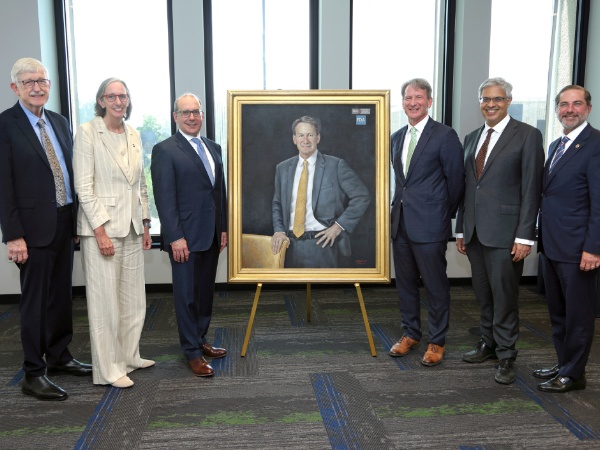
On this week’s episode, Paul and Sara Willa Ernst, reporter with The Cancer Letter, talk about last week’s meeting of the National Cancer Advisory Board, which featured a comprehensive report from NCI Director Tony Letai, and introduced two new big ideas: a cancer vaccine “roadmap,” and an ad hoc working group to conduct site visits.
“There are times when NCI is—as a news story—either so stable that it’s dormant or so active that it’s erupting all the time,” Paul Goldberg, editor and publisher of The Cancer Letter, said. “And we’re in a place where it’s news outbreaks all the time.”
“Stability, stability, stability” was the theme of Letai’s director’s report, and it’s a promise that he can deliver on, Paul said.
“Despite, I would say understandable uncertainty in 2025, the NCI is on a solid footing financially and programmatically,” Letai said in his directors report. “I think you are all aware that when appropriations came out, there was not a cut in the NCI budget. Rather, there was actually an increase of over $120 million to the NCI budget, which means that we can simply do more. We will execute the mission with whatever resources are provided to us.”
Also, a public-private effort, spearheaded by Letai, and led by the Foundation for the National Institutes of Health, was introduced at the NCAB meeting. With an aggressive funding goal, and a comprehensive “roadmap,” the team will develop a three-year clinical trial strategy for prioritizing which emerging cancer vaccine technologies are ready to advance—and which are not.
An ad hoc working group that will assess cancer centers as part of the designation process was also introduced and approved unanimously with one abstention at the NCAB meeting.
“Having covered cancer centers for a really long time, I think of them as a culture, a highly collaborative culture, and the scientists all speak to each other mostly,” Paul said. “When they say to you, ‘The enemy is not the excellent cancer center down the street, the enemy is cancer,’ they mean it. They really do.”
Stories mentioned in this podcast include:
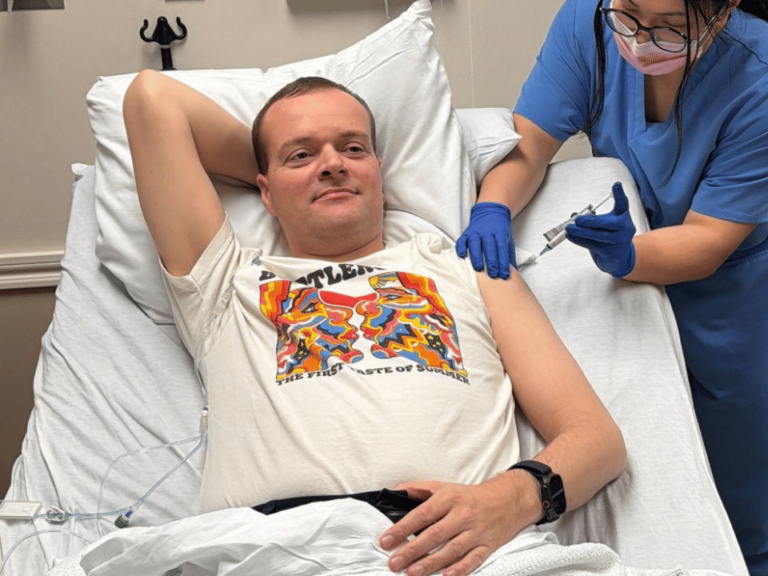
- Hoping to hit a $200M target, NCI and FNIH develop a plan for advancing cancer vaccines
- A new working group will conduct site visits and advise NCAB and NCI director on cancer center grants
- Letai: “From this point forward, it really is much more like business as usual at the NCI.”
- Early-onset colorectal cancer demands a new research playbook
This episode was transcribed using transcription services. It has been reviewed by our editorial staff, but the transcript may be imperfect.
The following is a transcript of this week’s In the Headlines, a weekly series on The Cancer Letter Podcast:
Jacquelyn Cobb: This week on The Cancer Letter Podcast…
Paul Goldberg: My big question is why is it better to have a roadmap? And then of course there was the other question about what do you do with site visits and how do you review cancer centers? Is Cancer Center really just another grant? It’s not. It’s not. It’s a culture. And we ran that as story two. And the story three, of course, it was the director’s report, which is not verbatim, but close enough. So, it was a very interesting package to put together. It’s kind of like a big news outbreak for us. And if you look at the readership, it was very interesting to look at what’s trending right now.
You’re listening to The Cancer Letter Podcast.
The Cancer Letter is a weekly independent magazine covering oncology since 1973. I’m your host, Paul Goldberg, editor and publisher of The Cancer Letter.
Jacquelyn Cobb: And I’m your host, Jacquelyn Cobb, associate editor of The Cancer Letter. We’ll be bringing you the latest stories, groundbreaking research, and critical conversations shaping oncology.
Paul Goldberg: So, let’s get going.
Sara Willa Ernst: Hi, Paul.
Paul Goldberg: Hi, Sara. How are you?
Sara Willa Ernst: I’m good. Okay. So, it’s Paul Goldberg and Sara Willa Ernst on the podcast. It’s a rare combo. I don’t think we’re often just the two of us, but I think it’s a special combo this week.
Paul Goldberg: It is. It’s going to be fun. Yeah.
Sara Willa Ernst: Yeah. And so, I’m filling in for Jacquelyn this week and we talked to her this morning from Big Sur and she’s in California right now. So, I think we’re kind of seeding with jealousy, but selfishly, I get to host the podcast this week. That’s what that means.
Paul Goldberg: Oh, this is great. It’s always great and it will be great this time as well. I wish we could all be in Big Sur, but then again, I mean, this week later, I’ll be in New York and I’ll miss next week’s event as well.
Sara Willa Ernst: Yeah. We should host a live podcast recording in Big Sur, right, Paul?
Paul Goldberg: Oh, that could be fun. Where The Cancer Letter reporters go. And she’s still working. She’s not on vacation.
Sara Willa Ernst: She is. Yeah, she’s doing both.
Paul Goldberg: It’s a working vacation.
Sara Willa Ernst: Yeah. So, she’s not totally ghosting us. And we know this because she wrote a story in last week’s issue from California. And that week’s issue was an NCAB issue through and through. We had three big stories coming from that meeting in last week’s issue. And I guess I could go through the headlines real quick and then we can drill in.
Paul Goldberg: Oh, please do. Yeah.
Sara Willa Ernst: Okay. Awesome. So, the cover story was about a new cancer vaccine advisory committee, and that’s the result of a public-private partnership between NCI and the foundation for the NIH.
So, the committee, they’re developing a roadmap and they have a goal to hit a $200 million target to advance therapeutic cancer vaccines. So, then we have story two, which is the story that Paul wrote. And it’s about a new working group that will conduct site visits and advise the NCAB and NCI director on cancer center grants. And then we have from our California girl, Jacquelyn Cobb: she wrote a story about NCI director, Tony Letai, his director’s report. And yeah, the last story was a sponsored article on early onset colorectal cancer, which we will be hearing much more about in this Friday’s issue.
So, yeah, I guess we can get started. I mean, in your reporting, Paul, from the NCAB meeting, just what really jumped out to you?
Paul Goldberg: Well, maybe we should even go back a little bit, kind of look at it more in perspective of how NCI is covered or what NCI is producing in terms of news. And this is an interesting time to be a journalist, as I may have mentioned.There are times when NCI is—as a news story—either so stable that it’s dormant or so active that it’s erupting all the time. And we’re in a place where it’s news outbreaks all the time.
And weirdly, FDA is kind of getting either dormant or it’s kind of really kind of very, very hard to understand, figure out, and maybe even premature to make sense of it. I mean, we try and we do.
And actually, if you look at the stories that are most read, there is an FDA story there, but it’s kind of personality driven about Vinay Persad. But also both of the big stories that kind of the more focused stories that we ran are the roadmap and that advisory committee on the site visits and…
Sara Willa Ernst: Why don’t we jump into that first story about the $200 million on cancer vaccines? So, in some ways, $200 million kind of sounds like an endorsement in some ways of cancer vaccines, but we’re also in this environment of vaccine skepticism. So, do you think at all when it comes to cancer vaccines, therapeutic vaccines, they’re kind of, for lack of a better word, immune from that?
Paul Goldberg: Ah, that’s real good. It’s not $200 million, by the way, because there’s no $200 million on the table right now. It’s a hope.
Sara Willa Ernst: They’re going to raise that.
Paul Goldberg: It could be a hundred and could be $50 million, but the objective is to show that this is what NCI together with Foundation for NIH can do. And here’s something I’m looking forward to learning, and we have a Q&A with Dr. Letai set up for early April. What I’d like to ask him is to kind of slowly walk me through kind of a question one, which is, why is it better to have a roadmap as opposed to just let science take its course? What does a roadmap do? And it’s an interesting question about how science should be funded now because the old systems for how science is funded goes back to World War II, when the U.S. government first became interested in funding a lot of science and bioscience and all forms of science.
So, in a way, it would be interesting to see how he sees it. And it would be interesting to have that kind of drill down into the bigger issue of how it should happen and why this. And it was very interesting to read that story to understand it. And it’s interesting also that Letai is being really very much an activist, NCI director, and he’s not doing it in a way that, or at least I haven’t seen him doing it in a way that kind of not respectful of the organization that he got. He’s very respectful of it. He can deliver on his goal and promise to bring stability to the place right now.
Sara Willa Ernst: Those are some of the famous words from Jacquelyn’s story, the third story about the director’s report, which was stability, stability, stability. That one is just kind of steered into my head from reading that article.
Paul Goldberg: Yeah. And that theme kind of begins with my conversation with him before his first NCAB. He just keeps on talking about stability, stability. So, I mean, my sense of it, and it’s probably too early to really say it, is that he had a plan as he came in and he’s working through the bits and pieces of this plan, and he’s doing it in a way that makes friends rather than enemies. Maybe it’s wishful thinking, but that’s what I’m seeing.
Sara Willa Ernst: Mm-hmm, yeah. Maybe we could also dig into the story that you wrote specifically last week about site visits. Do you want to give us a little primer on that?
Paul Goldberg: Well, yeah. Well, site visits are, most center directors would tell you have been… Well, it’s one of those curious institutions and traditions in cancer. It has been there for a very long time, and it’s basically what it means is that a bunch of cancer center people show up at every review of the cancer center, either a new center seeking designation or renewal of a designation, and they show up, and it’s a big to do, a big dog and pony show, and it’s really high level productions. And it’s actually incredibly useful to matrix cancer centers because the dean shows up, all these folks show up, donors show up, a house member shows up, a senator shows up perhaps, and it’s a big to do for everyone.
It’s a huge celebration of the cancer center, but does it really add to the scientific mission of the center? Well, maybe, because really, once you’ve reached comprehensive designation, you can’t stand still. You have to keep on improving, which means that you have to compete for the resources. So, that’s why it’s really important. Well, with this administration, what happened was all of the pieces of review, all reviews, including the cancer centers. And by the way, there’s nothing analogous to the cancer centers program in any of the other NIH institutes, because that’s kind of the specialness of cancer, both as a political structure of cancer research and also as a culture.
So, suddenly, it all goes to the central scientific review done by NIH. Now here, since it’s cancer centers, you really have to be open to nuance. And the nuance here is that it went pretty well even without the site visit, and NIH didn’t want to do the site visit. So, it went really well last year, from what I hear, mostly because reviewers were just exquisitely qualified, but people were still kind of asking for it. And then this idea came about to bring about a site visit, in person site visit, bring the cancer center directors together for that, to do that, and look at every cancer center each time it comes up for review. And this would not be done based on NIH sort of centralized review of the science.
It won’t be scored in the same way, but it would be considered by the NCI director who, by the way, has to sign off on the award and by the NCAB. So, it’s an interesting idea, could be Solomonic, could be not, could be… but yeah, who knows? But it’s an interesting way of letting the cancer centers have their review, their site visit.
Sara Willa Ernst: Yeah. Yeah. Yeah. I remember I spoke to you last week and I read your story and the immediate question that I have was, okay, they got rid of the site visits. Now they have a new site visit, but it’s not a kind of hard piece of criteria when it comes to decision. It’s more something that could maybe potentially influence more input. And in some ways, is this an appeasement of just the people that really wanted to have the site visit come back or are they potentially kind of humoring the people who missed the site visit or will this actually serve a legitimate function? I think it’s kind of hard to answer, but that was the immediate question I had.
Paul Goldberg: Well, I think the answer is all of the above. People want it and it’s useful. If they want it, it’s probably useful just because they want it. It’s not a waste of time for most people, especially if you do want those resources. You do want to know how the place is operating and why not? If that’s what the center directors want, why not give them that?
Sara Willa Ernst: There was also a lot of conversation in your story about community outreach and engagement. There’s one NCAB member, Karen Winkfield, who really harped on it, and she said some directors really think they understand it, but they don’t. So, I don’t know. What was she kind of getting at there?
Paul Goldberg: Well, community outreach and engagement is an important part of what NCI has to do. You could make an argument that it’s even in the National Cancer Act because of when it authorizes the 15 cancer centers in 1971 to be built. It doesn’t mention community outreach engagement, but it mentions the outreach, it mentions it more as a public health role of the cancer centers to bring out the science into the communities. And that’s been there really all along and an argument has to be made that it’s a good thing to have community outreach engagement. And as a piece of the cancer center designation, it became kind of very, very large part of the score. I actually hesitate to tell you when.
I can point to the story where it happens, but it was on Doug Lowy’s watch, and it was, I guess, at least 10 years ago, maybe 15, that it became a very big part of how you designate cancer centers, how you score that. That will continue to be scored, by the way, by NIH, within NIH. So, cancer center directors, some of them understand population sciences, and some say they understand that and probably even believe they understand that they don’t. So, that was the point that was being made, because once you’re in that world of the COE, probably there’s many places that have COE as… Well, if you’ve seen one cancer center, you’ve seen one cancer center.
And if you’ve seen one cancer center’s COE program, you’ve seen one cancer center’s COE program. So, it’s all very complicated. The concern at the beginning of this administration was that Musk and such, all those people with blunt tools would not understand what COE is and confuse it with DEI and whatever you think of DEI and just cut it as… Yeah. And most cancer center directors or most cancer centers that I am in touch with, most people I know really like COE. It’s like a site visit, and most wouldn’t know what to do, how to operate without COE.
I mean, you have basic scientists wandering out into the COE office to get leads and ideas and make better proposals for this. Now, another thing that I heard from Tony Letai in our first Q & A was that he wants to make it easier for cancer centers to get redesignated and how that fits into there. I think we have to wait for details on that one. I don’t want to sound partisan, but they’re decisions that are political decisions ultimately and regulatory decisions. It’s not something that came down as the truth. So, I don’t know who is to say how these things should be weighed. So, in a way, it’s really up to him.
We’re all looking forward to covering the new NOFO for cancer centers, notice of funding opportunity, and that should be coming out pretty soon in some form, so, looking forward.
Sara Willa Ernst: There was another point in the story where it was talking about the NCI designation process and how sometimes it would produce thousands of pages, reams of paperwork. And essentially, is anybody really reading all that is produced throughout the designation process?
Paul Goldberg: Well, the argument is no. I mean, that’s what the answer seems to be for a lot of this. When in doubt, you write a longer story.
Sara Willa Ernst: I think we’re familiar with that.
Paul Goldberg: Doesn’t work here, even though we publish some of the longer stories. Yeah. So, people write long sort of expansive exegesis about these programs that they have. It’s being said that no, the answer is no, a lot of the time. Is there harm from it? I don’t know. Probably not. Yeah. I mean, everybody has a good shredder.
Sara Willa Ernst: Yeah. But I guess the idea is that there’s kind of value in the process beyond just what is produced from the process. Kind of like why, I don’t know, this is kind of a silly analogy, but I’m like, we have a Christmas party every year or companies have retreats and in person types of experiences where they have a shared mission and goal, and in a lot of ways that kind of brings people together that wouldn’t otherwise talk to each other or interact or have the same type of buy-in. I’m guessing that’s really where some of the value in the process comes from.
Paul Goldberg: Yeah. Having covered cancer centers for a really long time, I think of them as a culture, a highly collaborative culture, and the scientists all speak to each other mostly. When they say to you, “The enemy is not the excellent cancer center down the street, the enemy is cancer,” they mean it. They really do. And this idea of the EABs, people serving on each other’s EABs and advising cancer centers about their grants, advising each other, it’s really kind of cool because these are people who have no secrets from each other in some ways, and it all works really well.
If there’s a few thousand extra pages per application for redesignation, then I am certainly not worried about it, but I’m not the one reading that track.
Sara Willa Ernst: Yeah. Yeah. Yeah, it’s not your homework assignment.
Paul Goldberg: No, no, no. So, it’s really kind of the problem to be solved by the Cancer Center’s branch and by Tony who has to read it.
Sara Willa Ernst: Well, I think a lot of the elements of this conversation when we’re talking about COE, when we’re talking about kind of collaboration with different types of cancer centers, when it comes to maybe external advisory boards or whatever, these are all little hints to maybe a story that we’re putting out this week and maybe the subject of next week’s podcast. So, I’ll just give you that little hint right there. But is there anything else that you’d like to add about the NCAB meetings, Paul?
Paul Goldberg: Well, it’s very interesting that we used a lot of words, speaking of long-winded presentations. We used a lot of words this week to cover this NCAB, which is great because I think it deserved it. It definitely, as news story, it definitely warranted all the attention we gave it. And it’s kind of going back to how we used to start, how we cover NCI sometime around really the beginning of Harold Varmus’s directorship at NCI, I realized that here’s this guy who is sitting there for 45 minutes without notes, holding forth, bringing out this precise, beautiful language of how he is going forward with NCI and what his plans are.
And I could kind of see how people within every grantee, every cancer center would sharpen the number two pencil, take the printout of whatever we ran and go through it and see how that affects them or whoever. And this is kind of when NCI is very, very interesting. And that since then, we’ve been doing the director’s report, if not verbatim, but close to it. And it’s always been very, very interesting. And this is where I can see how it’s very important to do that.
But then on top of the director’s report, there were also these stories which were more important than the director’s report, which one of them was this roadmap and that raises more questions in my mind than it answers and answers a lot of questions, answers all the questions it needed to answer. But my big question is, why is it better to have a roadmap? And then, yeah. And then of course, there was the other question about what do you do with the site visits and how do you review cancer centers? Is cancer center really just another grant? It’s not. It’s not. It’s a culture. And we ran that as story two. And then story three, of course, it was the director’s report, which is not verbatim, but close enough.
So, it was a very interesting package to put together. It was kind of like a big news outbreak for us. And if you look at the readership, it was very interesting to look at what’s trending right now.
Sara Willa Ernst: And all of this reporting builds on itself. So, it definitely informs a lot of our questions for maybe a future interview with Letai or just future reporting on NCI.
Paul Goldberg: Yeah, yeah, yeah, yeah. Yeah, it’s on the books. It’s on the books. I’m looking forward to it. So, all right. Well, thank you so much. This is a wonderful time.
Sara Willa Ernst: Thank you for your reporting.
Paul Goldberg: Well, thank you for your reporting, and this is a great time to be a journalist. It’s also a really interesting time to be covering cancer.
Sara Willa Ernst: Amen.
Jacquelyn Cobb: Thank you for joining us on The Cancer Letter Podcast, where we explore the stories shaping the future of oncology. For more in depth reporting and analysis, visit us at cancerletter.com. With over 200 site license subscriptions, you may already have access through your workplace. If you found this episode valuable, don’t forget to subscribe, rate, and share. Together, we’ll keep the conversation going.
Paul Goldberg: Until next time, stay informed, stay engaged, and thank you for listening.