“It’s really, really important that every year since 1991, cancer mortality has dropped by a little bit, and it did again!” said Paul Goldberg, editor and publisher of The Cancer Letter. “Now, mortality is a good metric, age-adjusted mortality. As far as survival, well, that’s not so good.”
This episode is available on Spotify, Apple Podcasts, and Youtube.
In last week’s cover story in The Cancer Letter, Paul and Jacquelyn Cobb, associate editor of The Cancer Letter, wrote about the annual cancer statistics report by the American Cancer Society. The publication reported that age-adjusted mortality has once again dropped by a small, not especially dramatic margin, but ACS focused its messaging around a different metric: the five-year relative survival rate for all cancers combined reached 70% for people diagnosed between 2015 and 2021 in the U.S. for the first time.
The finding was received with widespread fanfare, but epidemiologists had some qualms with the strength of the endpoint of five-year relative survival.
In this episode of The Cancer Letter Podcast, Paul and Jacquelyn talk about the nuances of last week’s data-heavy issue of The Cancer Letter.
“And in this case, [ACS] decided to go with this statistic, which is kind of unexplained, that shows that 70% survival is now happening in cancer. Does it mean that people are living longer?” Paul said. “No, not necessarily, even though they are, based on mortality numbers.”
Stories mentioned in this podcast include:
- ACS report trumpets 70% five-year survival for all cancers amid uncertain funding outlook
- New Medicaid work requirements could lead to 1.6 million missed cancer screenings over two years
- When “safe and effective” is not “reasonable and necessary” We can curb excessive drug dosing and improve the quality of cancer care
- A radiation oncologist’s perspective: Why we need to accelerate early detection strategies for lung cancers
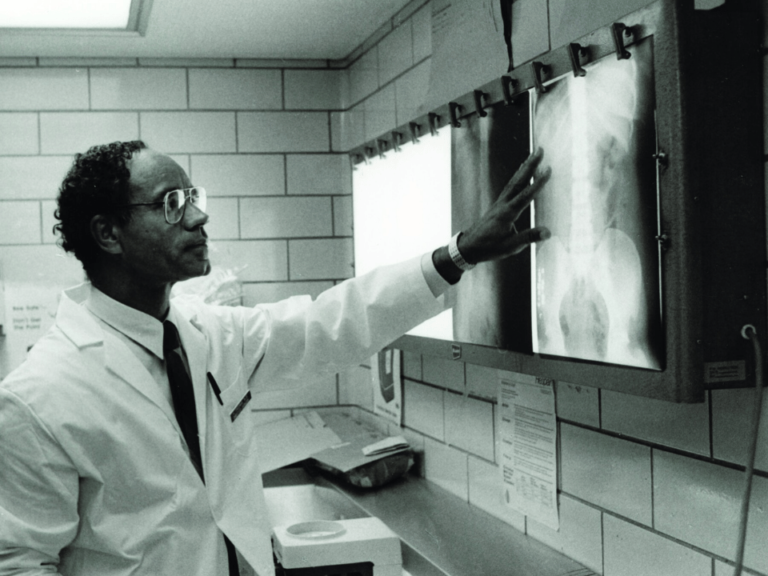
- Ben Seon, immunologist whose work led to development of lymphoma drug Polivy, dies at 89
This episode was transcribed using transcription services. It has been reviewed by our editorial staff, but the transcript may be imperfect.
The following is a transcript of this week’s In the Headlines, a weekly series on The Cancer Letter Podcast:
Jacquelyn Cobb: This week on The Cancer Letter Podcast…
Paul Goldberg: And it’s really, really important that every year since 1991, cancer mortality has dropped by a little bit, and it did again! Now, mortality is a good metric, age-adjusted mortality. As far as survival, well, that’s not so good. And in this case, they decided to go with this statistic, which is kind of unexplained, that shows that 70% survival is now happening in cancer. Does it mean that people are living longer? No, not necessarily, even though they are based on mortality numbers.
Jacquelyn Cobb: Yeah.
Paul Goldberg: So, I was just looking at the mortality number and then we just talked to them and they were very open about it.
Jacquelyn Cobb: Of course.
Paul Goldberg: That is a point that they considered to be a milestone. I think a lot of people would disagree that it’s a milestone, but it is a milestone that mortality went down.
Jacquelyn Cobb: Yeah.
Paul Goldberg: Thank God for that.
You’re listening to The Cancer Letter Podcast. The Cancer Letter is a weekly independent magazine covering oncology since 1973. I’m your host, Paul Goldberg, editor and publisher of The Cancer Letter.
Jacquelyn Cobb: And I’m your host, Jacquelyn Cobb, associate editor of The Cancer Letter. We’ll be bringing you the latest stories, groundbreaking research and critical conversations shaping oncology.
Paul Goldberg: So, let’s get going.
Jacquelyn Cobb: Hi, Paul. How are you?
Paul Goldberg: Hi, Jacquelyn, how are you?
Jacquelyn Cobb: I’m good. I just set up my fancy-schmancy mic stand, so now I’m part of the 21st century as well as you, because instead of having my broken mic stand, trying to keep my mic up. So, now I have it floating in front of me, very exciting.
Paul Goldberg: Welcome. Welcome to the 21st century.
Jacquelyn Cobb: Welcome, yes.
Paul Goldberg: I’m on the Luddite welcoming committee.
Jacquelyn Cobb: Yes, incredible. I’ve joined the club, finally.
I will walk us through last week’s headlines. We’re going to be talking in more depth about two of the stories basically, so I’m not going to go into too much detail right now. But our cover story was about the ACS 2026 basically cancer statistics report. The manuscript itself is called “Cancer Statistics, 2026.” And then there’s also a consumer-friendly companion as well that came out.
And we wrote about the report, as we do often, but this year was pretty interesting because it sparked a conversation about endpoints and metrics and how we measure our progress basically against cancer. But the tagline, headline was that there was for the first time, a 70% five-year survival for all cancers combined. So, it’s a really… Yeah, we’ll dive into it. It’s a very exciting stat. Just to give a little bit of a teaser, overall mortality also declined.
Paul Goldberg: That’s the important one.
Jacquelyn Cobb: Yeah, that’s the important one. And then story two. Story two was about a paper that found that the new Medicaid work requirements could lead to 1.6 missed cancer screenings over two years.
Paul Goldberg: Wait, how many? 1.6 million, you mean?
Jacquelyn Cobb: Did I say 1.6?
Paul Goldberg: Yes. Just want to make sure that we don’t have to run the correction later.
Jacquelyn Cobb: Can you imagine? This whole paper comes out and it’s just 1.6 screenings missed.
Paul Goldberg: Do you have coffee, by the way? Just checking. Do they have coffee in Maine?
Jacquelyn Cobb: They do, but not in this room, unfortunately. So yes, 1.6 million missed cancer screenings.
Paul Goldberg: Million.
Jacquelyn Cobb: Over the first two years following the implementation of the work requirements. And then we had a guest editorial about the concepts of safe and effective versus reasonable and unnecessary by Mark Ratain and David Hyman about how, basically a pitch for curbing excessive dosing. And then we had a guest editorial by Kevin King of City of Hope Chicago about early detection in lung cancer. And then we had another obituary of Ben Seon, an immunologist whose work led to the development of Polivy. He was 89.
So we can circle back to our cover story and second story. I feel like those were intertwined throughout the week. Editorially, I feel like it was an interesting week. It definitely evolved over the course of the week. I think when we first got the ACS report and the Medicaid screening story, they seemed really thematically tied.
Here’s this exciting milestone for oncology as 1.6 [million] cancer screenings are going to be missed or projected to be missed, and then it changed over the course. I mean, that’s still there, but I think that our editorial focus shifted as we were reporting on it. Do you want to talk about that a little bit, Paul?
Paul Goldberg: Yeah. No, it’s called the outbreak of news. You deal with it. Yeah, like an outbreak of disease, so you have to just be there to tend to it. But the ACS thing is really interesting because it’s an annual event that American Cancer Society publishes its cancer statistics. And how do you do it in a way that doesn’t put people to sleep from just, okay, so it’s like watching grass grow. And it’s really, really important that every year since 1991, cancer mortality has dropped by a little bit, and it did again. No, mortality is a good metric, age adjusted mortality. As far as survival, well, that’s not so good. And in this case, they decided to go with this statistic, which is unexplained that shows that 70% survival is now happening in cancer. Does it mean that people are living longer? No, not necessarily, even though they are based on mortality numbers.
Jacquelyn Cobb: Yeah.
Paul Goldberg: I was just looking at the mortality number, and then we just talked to them and they were very open about it.
Jacquelyn Cobb: Of course.
Paul Goldberg: That that is a point that they considered to be a milestone. I think a lot of people would disagree that it’s a milestone, but it is a milestone that mortality went down.
Jacquelyn Cobb: Yeah.
Paul Goldberg: Thank God for that. So, basically now, mortality dropped by about 33% since 1991.
Jacquelyn Cobb: Yeah.
Paul Goldberg: More than 30%. So about a third, that’s pretty good. Well, there is some discussion about why it’s happening, but then maybe we should just… Yeah, let’s keep going on that one. And then of course, story two combines with this story because it shows that screenings are going to be dropped.
Jacquelyn Cobb: Yeah.
Paul Goldberg: We don’t know exactly how many, and it’s a very interesting story to see what the actual projections would be.
Jacquelyn Cobb: Yeah. I mean, I’m just curious about if this is something you think would be interesting to our readers. The question that I asked you on Friday about the paper, so just to give listeners a little bit more actual data from the paper to orient you, basically it’s the JAMA Oncology paper that was looking at the impact of the new Medicaid work requirements included in President Donald Trump’s One Big Beautiful Bill Act. And so, it could result in as many as 1.6 [million] missed screenings for breast, colon, and lung cancers in the first two years, but there’s an expected loss of coverage for an estimated 1.5 million to 10.2 million Americans following the new work requirements. Medicaid covers around 70 million.
And so I guess the key thing here, and I got to scroll down basically to it, the researchers estimate that basically over 500,000 mammograms, over 900,000 colorectal screening tests, and 92,000 lung cancer screenings would be missed in the first two years. And there is some wonkiness with the data that’s the worst of three scenarios that the researchers focused on based on previous examples of this happening in state coverage.
But basically, as you get further and further down—so then it’s over two years, these missed screenings that I just explained are projected to result in basically 1,500 undetected breast cancers, about a thousand colorectal cancers, and a little over 700 lung cancers. And basically, my punchline basically is these misscreenings are predicted to result in 213 excess deaths, the paper states.
I think as a reporter of all of this stuff, I was a little surprised by that number just appearing small. And I came to my lowly, not lowly, the opposite, my esteemed editor to explain-
Paul Goldberg: Lowly is better.
Jacquelyn Cobb: Esteemed.
Paul Goldberg: I much prefer lowly.
Jacquelyn Cobb: I came as a lowly reporter.
Paul Goldberg: Lowlife is better. Do that.
Jacquelyn Cobb: I’m not going to stop you from identifying how you want to identify, but I don’t think you’re a low life.
Paul Goldberg: I don’t care because I’m old enough. I can do it with any-
Jacquelyn Cobb: Your explanation of how to wrap your head around that basically was really, really helpful for me, so I don’t want to put you on the spot and I don’t know that that is something you want to be authority on.
Paul Goldberg: I’m certainly not a, well, I’m not an epidemiologist, but it’s pretty straightforward. What they did was they looked at the drop in screenings and so forth that was observed in Arkansas. Is that correct?
Jacquelyn Cobb: Yes.
Paul Goldberg: When a work requirement was instituted, and then they looked at the highs and the lows and produced this nifty table with three scenarios of what could happen. It’s a wall of numbers that we cleaned up a little bit, but it is worth looking at. But I mean, really, it’s pretty straightforward. You need to do… You’re talking about screening just population levels, populations, large populations for diseases that may affect some of them. You have to qualify for the screening too. You’re looking at subsets of subsets of subsets eventually.
Jacquelyn Cobb: Yeah.
Paul Goldberg: For screens that are, they have a sufficiently high grade from USPSTF, I presume that’s how they probably do that. For example, look at lung screening. You have to meet the requirement for that screening. The number of screens, if you look at that kind of a number of population losing coverage, how many of them meet the criteria for say lung screening or colon or breast?
Jacquelyn Cobb: 100%. I think that was, maybe I was just having a brain fart on Friday. I’m reflecting, maybe that is what this is, but I think I was just conflating in my head Medicaid and Medicare. I was like, “Oh, screenings are so important.” But Medicare, almost everybody on Medicare is, I guess every, well, if not, I’ll just say almost everybody to be careful, but qualifies for screening. So, almost every individual for appropriate screening, or at least let’s even just say just screening for-
Paul Goldberg: Well, I don’t qualify for lung screening, for example.
Jacquelyn Cobb: Yeah, so that’s what I was going to say-
Paul Goldberg: And I don’t need breast cancer screening, I don’t think.
Jacquelyn Cobb: But colon cancer screening, you do.
Paul Goldberg: Colon cancer screening, I do. I’m qualified for, absolutely.
Jacquelyn Cobb: And so, I think it’s fair to say that most people-
Paul Goldberg: And I’m not on Medicaid, by the way.
Jacquelyn Cobb: You’re not on Medicaid?
Paul Goldberg: I’m on Medicare.
Jacquelyn Cobb: Yes, exactly.
Paul Goldberg: I’m old enough for that. Now you got that bit of information out of me. So, you call me a low life, and now you learned that I have an old low life.
Jacquelyn Cobb: Now I’m breaking HIPAA laws, basically.
Paul Goldberg: What you’re doing, yeah. Well, no, I’m making my own disclosures, so no crime is committed.
Jacquelyn Cobb: Crazy.
Paul Goldberg: I’m the idiot. There’s another one.
Jacquelyn Cobb: Oh my gosh, we could just keep a tally. That’ll be in our description this week. In this episode, Paul was called a low life, an idiot, old…
Paul Goldberg: Yeah, and old.
Jacquelyn Cobb: Yeah. No, but yeah, I just think that on Friday when you said that the Medicaid population, it’s 70 million people, which is already a small subset of the U.S. and then—
Paul Goldberg: It’s not that small.
Jacquelyn Cobb: Well, true, but it’s a subset still. And then it’s like the people who are being affected by the work requirements is a smaller subset, then the people who are affected by the work requirements who actually would require screening appropriately these three screenings at least—
Paul Goldberg: Qualify for screening, yeah.
Jacquelyn Cobb: Yeah, qualify for them, and then also who would then have a cancer that’s caught.
Paul Goldberg: Yeah, you’re talking multiple subsets.
Jacquelyn Cobb: Yeah, so that was just helpful for me—
Paul Goldberg: So, you’re not dealing with a huge number.
Jacquelyn Cobb: Yeah, 100%.
Paul Goldberg: Of deaths. But hey, screen the people.
Jacquelyn Cobb: Exactly. And I mean, I will say one of the authors on the paper had a quote about this that I think we don’t need to be the ones to say it, I’ll just let him say it.
But basically he said, “Keeping it in perspective, we model out only really two years of this policy. We projected 447 cancers that would be diagnosed at an advanced stage that otherwise would’ve been caught earlier. It doesn’t sound like a whole lot, but that’s really only two years of data and cancer is for the most part a slow, progressive disease. The fact that we saw a very robust, relatively large signal, even within just two years, was quite astonishing to us.”
And I think I’m with you, regardless of what these numbers look like. Why? It’s screening, it’s proven to improve outcomes.
Paul Goldberg: Yeah. So actually, I think an interesting piece of it, which is why these stories… It’s a good idea you just had to talk about these stories together because in the first story, Arif Kamal, who’s the chief patient officer of ACS, makes a very important point, which is that it’s not just the patients, it’s also the caregivers who are missing days and so forth. And that’s a whole other issue which is very much related. It’s really the same issue, but the work requirements, I don’t know what that actually does, what it teaches anyone, what’s the point? But hey, I’m not a policy maker, so.
Jacquelyn Cobb: Yeah, that was really fascinating to me. I can try to get his quotes up a little bit, but yeah, we were interviewing Kamal for our story, and yes, we asked him one of Sara’s questions since we had him on the line. It was perfect. But yeah, he made this really, I think, again, maybe this is obvious to people who are in this space more often, but to me, it was just very eye-opening I guess, the comment about caregivers. Just because even if I think about my family, I know people who are caregivers, and they’re not even trying to necessarily get into the Medicaid requirements, just the idea of caregiving and how important it is for survival outcomes.
There was something that really stuck with me about it was… Yeah, he said this, this is Kamal. He said, “The other concern is how many patients who are eligible for CAR T, ADCs, or transplants aren’t going to get those treatments because their caregiver has this terrible choice to make about continuing to work or taking time to be the caregiver.”
That was super interesting to me because I mean, we talk about the fact that obviously we love new effective therapies, who wouldn’t? But as we get into more and more specialized therapies, how that’s going to impact equity, that’s just a conversation we’ve always talked about, and I think that this is just another iteration of that that I hadn’t yet thought about, that literally if patients don’t have a dedicated, attentive caregiver, they cannot, I don’t know. It’s just another facet of the craziness that I think I was exposed to with Kamal’s comments.
Paul Goldberg: Yeah, no, it was a very interesting couple of stories, but go back to questions about epidemiology and screening. That’s a theme that we at The Cancer Letter rejoice in.
Jacquelyn Cobb: I know. I was wondering if it wasn’t you and me working on this story, how it would have been different potentially. Because I was looking back, I was like, “Wow, we really got to nerd out about our endpoints.”
Paul Goldberg: Yeah. Well, you would miss it.
Jacquelyn Cobb: Yeah.
Paul Goldberg: The entire… I don’t know anybody else who would have covered that story in this way.
Jacquelyn Cobb: Oh my God, no.
Paul Goldberg: I hope other people would be happy to show them, and there are lots of people who would be delighted to show them, and actually a lot of people do show them, but it’s just the coverage of screening is pretty poor.
Jacquelyn Cobb: Yeah. I mean, it’s a tricky topic. It’s a tricky topic.
Paul Goldberg: Yeah. I think there was this incredible quote in the first story, the ACS story, from Otis Brawley, who’s the former chief medical officer of the American Cancer Society and a friend of mine, and he and I wrote a book together once, which was largely partly about screening, but here he had a very specific point to make. And if you could read it, that would be pretty good. But try to read it as Otis, try to do his voice. Okay?
Jacquelyn Cobb: I think I’m going to respectfully…
Paul Goldberg: The people of America are listening. Go ahead.
Jacquelyn Cobb: I’m going to very respectfully decline that request, I’m sorry. I’m not going to do that, but.
Paul Goldberg: You don’t want to sound like Otis Brawley?
Jacquelyn Cobb: I would love to sound like him.
Paul Goldberg: I want to sound like Otis Brawley.
Jacquelyn Cobb: Of course.
Paul Goldberg: I can’t. I’ve got this Russian accent.
Jacquelyn Cobb: I don’t know what I have. A New Jersey accent.
Paul Goldberg: Well, there you go. Read it with a New Jersey accent.
Jacquelyn Cobb: There you go. Okay. “To the epidemiologist, survival is not always a good proxy for progress,” so this is what we were talking about earlier. “For example, the ACS press release notes that the five-year survival of liver cancer patients has gone from 7% to 22%. They do not note that mortality from liver cancer increased by 50% during that same period.”
That quote, I feel like really just captures the whole story and the gist of the whole topic is that, of course, we’re happy, potentially. We’re optimistic and excited about something like a 70-year survival rate for all cancers combined. It’s potentially exciting, but it could also be incredibly misleading as in this case. Or just not even misleading, just wrong.
Paul Goldberg: Yeah. I mean, if I’m given a drink, I will not discuss the length time bias, the lead time bias, and the Will Rogers effect. And this is not yet, this is the morning, but later. For a drink, I will not discuss these things, but most people, most of the media really can’t get that point and it’s really… But hey, that said, I’m really happy to see this metric, however, whatever it is, because there’s another metric undergirding it, which I think… It’s not, actually. There’s another metric. It has nothing to do with it, probably. That says it just keeps on dropping and it’s like watching grass grow and that’s boring and doesn’t create big stories, but.
Jacquelyn Cobb: And also doesn’t reach the public as well, or doesn’t impact the public in the same way. It doesn’t communicate that same sort of, it doesn’t resonate with them, I guess I’ll say.
Paul Goldberg: Well, what does a half percent drop in mortality mean to you?
Jacquelyn Cobb: Exactly.
Paul Goldberg: Over time, a lot.
Jacquelyn Cobb: Yes, exactly. Well, that’s the thing. It’s like it’s meant to deal with reality and actual probabilities and numbers and those things versus our brain and our intuition and how we experience, those things are just not quite compatible, so we have to keep those in our head. I was wondering if maybe if you have anything else to say, Paul, I’ll let you do it, but I was thinking we could maybe end on Dehat’s quote about basically why they chose it and their thoughts about it.
Paul Goldberg: No, no, this is a good line. And he does accept, I mean, he’s not arguing what we pointed out. We’re just doing our job.
Jacquelyn Cobb: Exactly. Yeah.
Paul Goldberg: Go ahead.
Jacquelyn Cobb: So, he says, “Changes in mortality is a better endpoint more broadly,” right? So we’re all on the same page. “The issue with five-year survival,” he said, “we all know is related to time of diagnosis.” So if you wind up seeing any massive amounts of early detection work, let’s take prostate cancer, for example. If you find very early stage cancers, it’s going to skew your five-year survival. However, he goes on, “For an individual to tell you, okay, if you’re diagnosed with cancer tomorrow in all cancers, that there’s about a seven out of 10 chance that you’ll be walking around assuming something else doesn’t happen in five years,” he said. And I think that’s a number to the general public that means more than changes in mortality, which I would agree is a more meaningful number when we think about going forward as far as health policy and otherwise.
So, I think that’s the point is that they have this annual statistics report, we got a 1% drop in mortality, it’s objectively good news by the gold standard metric. How do we create some relatively deserved fanfare? [That] is how I see it. I don’t know if that’s maybe an overstep, but I think 70% survival in terms of not metaphor, but in terms of narrative structure for the general public, I think is definitely an accessible and resonant finding.
Paul Goldberg: This is becoming a Jewish goodbye because I want to add something to this.
Jacquelyn Cobb: No, please. Yeah.
Paul Goldberg: We’re signing off, but we’re not leaving. But what I would also add to this is that most of that drop in mortality is occurring because of people not smoking as much as they used to. So that’s pretty great, but there was also something else happening and that could have been, that was visible in about five, six years ago when the slope of the mortality curve from lung cancer started to drop. I mean, it started to drop much faster than it had been, somewhat faster than it had been in the past. And that could very well be the effect of newer therapies for lung cancer, so it was started to get seen, and that’s great.
Jacquelyn Cobb: Interesting. Wonderful. Well, I’m glad you said that because I’m not as familiar with that and that’s a very exciting.
Paul Goldberg: Yeah.
Jacquelyn Cobb: Okay, wonderful. Well, thank you so much, Paul. I’m glad we got to nerd out a little together and I will-
Paul Goldberg: This is always fun.
Jacquelyn Cobb: Always fun. And what kind of time is it, Paul?
Paul Goldberg: What kind of time? Oh, my. Thank you. It’s a great time to be a journalist.
Jacquelyn Cobb: I promised I would cue you up and I did. My job is done. Thanks, Paul.
Thank you for joining us on The Cancer Letter Podcast, where we explore the stories shaping the future of oncology. For more in depth reporting and analysis, visit us at cancerletter.com. With over 200 site license subscriptions, you may already have access through your workplace. If you found this episode valuable, don’t forget to subscribe, rate, and share. Together, we’ll keep the conversation going.
Paul Goldberg: Until next time, stay informed, stay engaged, and thank you for listening.