Hale family gives $100 million to Brigham and Women’s and Boston Children’s

Share on facebook
Share on twitter
Share on linkedin
Share on email
Share on print

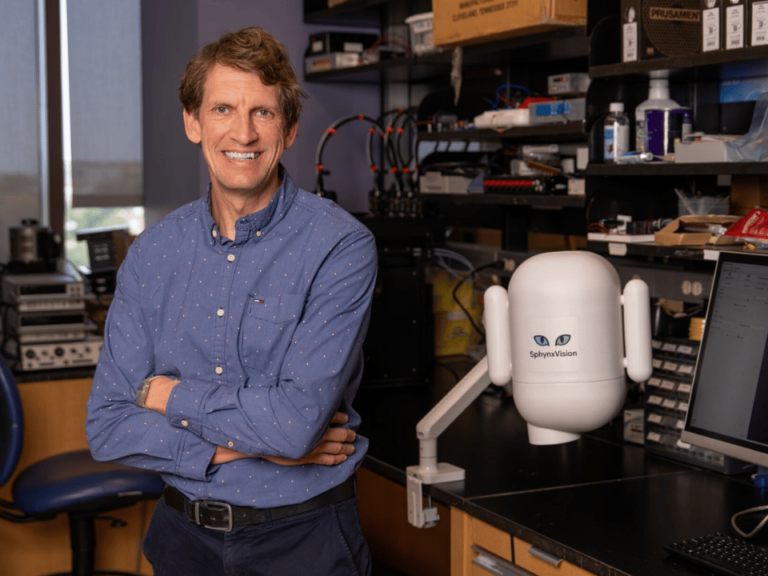
Boston Children’s Hospital and Brigham and Women’s Hospital received gifts of $50 million each from Rob and Karen Hale and their family to support innovation and patient care.

Karen and Rob Hale are Boston-area philanthropists with ties to BWH and BCH. Karen serves on BWH’s Cancer Advisory Board and Rob, who is CEO of Quincy-based Granite Telecommunications, serves as a chair of BWH’s $1.5 billion Life.Giving.Breakthroughs. campaign, as well as on the Steering Committee for Boston Children’s Dream, Dare, Deliver campaign.

In recognition of the gift, BWH will name their recently opened building the Hale Building for Transformative Medicine. The building houses the Ann Romney Center for Neurologic Diseases; the Evergrande Center for Immunologic Diseases; The Gillian Reny Stepping Strong Center for Trauma Innovation; The Neurosciences Center; the Orthopaedics and Arthritis Center, and the Brigham Innovation Hub.

The building is also home to an infusion suite and imaging center featuring technologies such as a 7 Tesla MRI, the first to be installed in a clinical setting in North America.


YOU MAY BE INTERESTED IN

Physician-scientists by day, a funk-loving musical troupe by night. You may have seen The CheckPoints—a 13 member cover band with a three-piece brass section and Jim Allison on harmonica—movin’, groovin’, and gettin’ down as a mainstay closing act at ASCO, AACR, or the Society for Immunotherapy of Cancer annual meetings.
At the 2026 Annual Meeting of the American Society of Clinical Oncology in Chicago, results from the phase III HARMONi-6 trial were presented at the plenary session and published simultaneously in The Lancet. The HARMONi-6 trial tested a novel bispecific antibody that engages PD-1 and VEGF (ivonescimab), given with platinum-doublet chemotherapy to patients with previously untreated advanced squamous non-small cell lung cancer. 
In 2026, more than 900 million people are estimated to be regularly using generative artificial intelligence—computer systems capable of creating human-like text, images, audio, video, and other original content. AI is becoming integrated into nearly every aspect of daily life. Health care is no exception. 

Never miss an issue!

Get alerts for our award-winning coverage in your inbox.

Login