The incidence of multiple cancer types in people under the age of 50 has been rising, with early-onset cancers now contributing to nearly 15,000 excess cases of cancer in the U.S. annually.
This group of cancers still lacks a formal, agreed-upon definition, but it broadly reflects cancers traditionally associated with aging that are now appearing in younger-than-expected age groups. These patients present us with challenges that mirror those long-recognized in cancers that commonly occur in adolescents and young adults.
Understanding early-onset cancers demands a multidimensional approach. Integrated analyses of gene-environment interactions, life-course exposures, metabolic and inflammatory drivers, and broader social determinants can help create a more complete understanding of cancer risk, initiation, acceleration, and progression.
At the same time, modernization of our healthcare delivery system—through risk-adapted prevention, early detection strategies, and patient-centered survivorship models—offers significant opportunities to reduce both incidence and downstream burden.
Seeing this spike in early-onset cancers, our response should be to adjust healthcare delivery to meaningfully impact disability-adjusted life years on a population scale. We must also recognize the enormous scientific opportunity to understand and confront these cancers.
National attention to this issue is growing. NCI has launched an Early-onset Cancer Initiative, including administrative supplements to cancer centers and new funding opportunities aimed at accelerating discovery in this area. The field has improved its ability to better identify early-onset cancers and personalize treatment.
On Jan. 31, Stand Up to Cancer, with its scientific partner AACR, convened an Innovation Summit focused on the emerging science surrounding early-onset cancers. Other recent scientific gatherings—including the EACR-Mark Foundation meeting, the AACR Special Conference on Early-onset Cancer, and a Global Early-onset Colorectal Cancer think tank, in addition to focused sessions in many forums—have come together to create momentum.
These convenings have enhanced collaboration, validated shared scientific and clinical insights, and seeded working groups that are now developing solutions for some of the most complex challenges.
Public engagement has also been powerful. Advocacy communities, social media discussions, and increased coverage in mainstream outlets have amplified this topic.
Being a firm believer that you make progress on topics you pay attention to, I am optimistic for the future in which we have integrated data streams and analytic solutions that provide evidence and answers.
Gatherings like the Stand Up to Cancer Summit bring people together so that we can accelerate progress. Creating platforms for broader discussion engages an even broader audience.
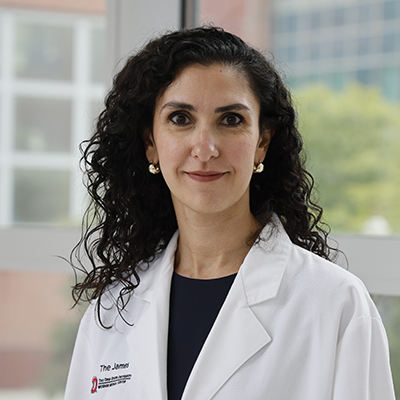
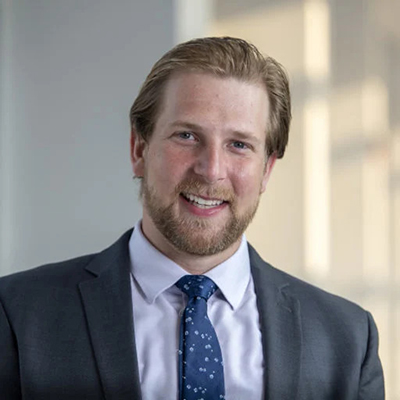
To raise awareness across the cancer research community, I thought I’d turn to two of the experts—Drs. Sara Myers and John Alexander, co-directors of the BRIDGE Program (Building Research, Innovation and Care Delivery for Groups with Early-onset Cancers) at the OSUCCC—James at The Ohio State University Wexner Medical Center.
Kimryn Rathmell: Dr. Myers and Dr. Alexander, thank you for taking the time to address this important topic with me, and for The Cancer Letter. I’ll dive right in!
Why did you both feel that now was the critical moment to create a dedicated program for young adult and early-onset cancers?
Sara Myers: Across our catchment area, we see thousands of patients diagnosed with young adult or early-onset cancer whose needs aren’t fully met by traditional pediatric or adult models. Despite advances, younger individuals still experience delayed diagnoses, fragmented services and modest survival gains compared with other age groups.
We view this as a call to action, and BRIDGE is our answer: A structured, sustainable model that unifies research, clinical pathways, and community engagement to improve outcomes now.
John Alexander: We are currently at an inflection point in cancer care. Since I started my medical career 15 years ago, we have seen incredible progress in the battle against cancer. Patients are living longer; treatments are more tolerable, but over that same period we have seen shifts in new cancer diagnoses towards younger patients.
Recent reports including the AACR Cancer Progress Report highlighted this nationwide trend, and we are seeing a similar phenomenon in Ohio.
In reality though, I think we have been seeing this play out in our own clinics and also in our personal lives with friends, family members, and colleagues diagnosed with cancer earlier and earlier in life.
At The James, the timing was right. Our Adolescent and Young Adult Program was started in 2020 and had developed into a fantastic program that integrated supportive care services and an amazing AYA social worker, Sam Hulett, LISW-S, but it lacked the comprehensive scope that we believe is needed to take on the challenge we face today.
What key trends in early-onset cancers stood out to you as the most urgent and concerning drivers behind launching BRIDGE?
JA: It’s not just the increasing incidence of cancer in this population that is concerning, but also that for most cancers, younger adult patients present with more advanced disease and have worse outcomes than either their pediatric or older adult counterparts with the same diagnosis.
The reason behind this is likely multifactorial, with differences existing in tumor biology, but also the patients themselves, including the psychosocial impact of a cancer diagnosis at this age.
Three trends are decisive: (1) Rising incidence of early onset malignancies especially across hematologic, breast, kidney, genitourinary, pancreatic, gastrointestinal, sarcoma and colorectal cancers; (2) Persistently lower clinical trial participation among this demographic, thereby limiting our ability to drive forward personalized and innovative care that is applicable to this cohort; and (3) Underutilization of germline and somatic testing despite clear guideline support.
Each of these gaps is actionable through our tripartite strategy.
Can you describe the core pillars of the BRIDGE strategic plan and why each is essential?
SM: BRIDGE addresses clinical excellence, community partnership and patient advocacy, and research and innovationm beginning with five strategic goals:
We first aim to describe, standardize, and implement age-specific clinical care pathways. Our existing age-specific clinical programming has really emphasized survivorship and supportive care for young adults aged 18-39.
With BRIDGE, we augment these resources with age-sensitive clinical care pathways that have been developed by disease-specific multidisciplinary teams and expand this work to include those outside of the traditional definition of “young adult,” who are aged 40-49.
For research and innovation, we will create funding lines and data infrastructure to promote the work of early investigators and research teams in several academic areas including cancer care and delivery as well as basic and translational science. A major goal of the program is to be able to support all patients with young adult and early-onset cancer in our catchment area, which requires partnerships with external and community providers.
We are working with our James Cancer Network to provide education and clear communication regarding early detection, advancements in treatment, and opportunities for referral when appropriate or desired.
In order to ensure that our care is patient-centered, we are enhancing our existing survivorship programming and improving navigation, including efforts toward fertility and financial navigation.
Finally, we are committed to the sustainability of our program, which we will build through an advisory board that engages patients, caregivers, and practitioners as stakeholders.
This program aspires to unify research, clinical care, and outreach across disease groups. Why is this integrated model so important for younger patients?
SM: Patients with young adult and early-onset cancer live at the intersection of biology and life stage complexity. Integration means their genomic data informs real-time care; navigation and psychosocial services are embedded, not bolted on; and community partnerships shorten the path from first symptom to expert care. Integration is how we close survival gaps while reducing long-term toxicity and financial burden.
JA: Disassembling siloed research and clinical teams across the university and integrating our efforts through disease agnostic approaches will be necessary to rapidly innovate and adapt discoveries to new populations and disease types.
The urgency of the issue will require us to think outside of the box and leverage partnerships within our university community, but also on a broader scale beyond our walls.
What does “age-appropriate care” look like in practice? For example, in communication, clinical flow, survivorship planning or supportive care?
SM: Concretely, it’s disease-specific, multidisciplinary clinics with dedicated hours.
These multidisciplinary clinics facilitate standardized age-specific treatment and survivorship protocols. To address access barriers, we must leverage embedded childcare so patients are supported to come to their appointments.
Proactive fertility preservation consults are needed, and navigation that links oncology with primary care for health maintenance during survivorship is crucial. It also means clear communication styles and visit flows tailored to adolescents, emerging adults, and young adults.
JA: Standardizing personalized care sounds like an oxymoron, but our mission is to build a sustainable program, the success of which is not dependent upon any one person, but instead to champion institutional expertise in caring for this population.
That means developing platforms and resources for young adult patients that are accessible, easy to navigate, and delivered in a way that engages them. It means developing programs that align their cancer treatment with the things that matter most to patients, like fertility preservation, financial navigation, childcare, and minimizing treatment toxicity and integrating these into standardized care pathways.
Finally, it means ensuring that age-specific, evidence-based protocols are being used to guide cancer direct therapies. And where these are lacking, we must be leading the way in developing pragmatic clinical trials for this population.
Why are fertility and financial navigation such critical components of BRIDGE’s early deliverables? What have you learned from patients about these needs, and how do those insights influence the program’s design?
JA: Fertility preservation and financial toxicity are among the first, most consequential decisions these patients face, often within days of diagnosis. Patients tell us they need timely, standardized counseling and someone to help them navigate insurance, work, school, and childcare.
Our early deliverables embed fertility prompts into care pathways and expand navigator roles to coordinate resources from diagnosis through survivorship. In addition, we need to develop resources to empower patients through financial literacy programs, connect them with financial assistance, and gain a better understanding of each patient’s situation through comprehensive assessments so that care teams can address their concerns.
The BRIDGE program includes an ambitious research agenda, from health services research to expanded genome sequencing. What scientific questions are you most eager to answer?
SM: We’re focused on why some early-onset tumors show distinct biology; how socioenvironmental factors shape outcomes; and which implementation strategies reliably deliver evidence-based patient care at scale.
JA: As a sarcoma specialist, I am most interested in two main areas. For osteosarcoma and Ewing sarcoma, we need to find out why young adult patients have worse outcomes compared to their pediatric counterparts, and then develop novel treatment strategies to overcome these differences.
Unfortunately, these are rare diagnoses which limits our ability to conduct young adult specific trials and frequently these patients grouped on the same study protocols as children.
The other area is treatment de-escalation. Specifically, we hope to identify areas where we can tailor treatment in lower risk groups in order to minimize long-term toxicity without compromising oncologic outcomes.
What were the most significant challenges in building a comprehensive young adult and early-onset program? How did you overcome them?
JA: I think this really comes down to the breadth and depth of what is needed to build a program that involves an entire cancer center.
We aren’t just talking about building a single, disease-specific program; those exist. We are building a program that spans all cancer subspecialties and includes innovation at the bench, the bedside, and in our communities.
Fortunately, the mission is pretty galvanizing; and the support from our colleagues, The James and OSUWMC, and our community allows us to build something to this scale.
Some specific challenges include aligning pediatric and adult workflows, closing genomic testing gaps, and standardizing care delivery. We’re meeting these challenges from an approach that borrows from implementation science principles and engages stakeholders from multiple cancer subtypes within our advisory structures.
Throughout this process, we will be continually measuring feasibility and outcomes.
What metrics or outcomes will tell you if the program is truly “moving the needle” for young adults and early-onset patients?
SM: We are interested in understanding efficacy from the perspectives of the health system and its practitioners but also from patients and their support systems. From a health system standpoint, we will be interested in time to diagnosis and therapy adherence, clinical trial screening and enrollment, and access to genomic testing, but also supportive care service performance, such as reproductive health counseling and fertility preservation utilization rates.
Patient-centered outcomes will include symptom control and quality of life, survivorship engagement. To understand sustainability, we have metrics to evaluate community outreach reach as well as the ability to successfully secure funding for research and programmatic efforts.
How are you partnering with community oncologists, primary care providers, and regional institutions to reach patients earlier?
JA: We are building a national presence and partnering with others to realize a multi-institutional collaborative. Locally, we are strengthening ties with the James Cancer Network and formalizing an Advisory Board of patients and caregivers to guide priorities, codesign materials, and support grassroots outreach and fundraising.
Community education and social media strategies will expand awareness and referral pathways, especially for underserved populations.
What role do patient advocates and survivors play in shaping BRIDGE?
SM: My clinical philosophy is deeply rooted in shared decision-making. I believe that engaging patients in their own care leads to better outcomes. It was very important to me to give patient advocates, caregivers, and survivors a voice in how we advance the care of those with young adult and early-onset patients.
We therefore included them in a patient advisory panel so that they can partner with us in developing new and improved programming and workflows. This also ensures that we as practitioners do not overlook the needs and priorities that patients feel are important.
Why is community outreach, particularly in underserved or high-risk populations, central to the program’s mission?
SM: First of all, patients with young adult and early-onset cancers are underrepresented, and therefore, our current models of care and many of our treatments were created without specifically considering their needs.
Furthermore, many of the treatments and services these patients need are only available at National Cancer Institute-designated centers and resource barriers are distance may be prohibitive to receiving care.
Some examples of these services and treatments include proton radiation, microsurgical reconstructive techniques such as those used in surgeries used to prevent lymphedema (which can be incredibly debilitating), and medications that may only be available through clinical trials.
By engaging community practitioners and primary care providers we can develop a true partnership that allows patients to get high quality care they need in any setting, whether they are referred to the James, or receiving treatment closer to home.
What do you hope younger patients and families will say about The James and BRIDGE in five years?
JA: I think this patient population often feels out of place regardless of where they receive care. They “aren’t supposed to get cancer,” and both pediatric and adult hospitals are not equipped to treat them. I hope that in BRIDGE and at The James young adult patients find a home where they feel they belong.
A place where staff, nurses, APPs, and physicians aren’t surprised to see a young patient, but instead are prepared to treat meet them where they are in life and develop a personalized, holistic treatment plan that not only allows them to survive their cancer, but thrive beyond their cancer.
Where do you see the greatest opportunities for innovation in early-onset cancer care over the next decade?
SM: There is an opportunity for seamless integration of germline–somatic insights into first-line treatment decisions. We also have the ability to create pragmatic trials built on real-world data and registries.
Advances in implementation science allow us to codify scalable, age-specific care pathways. Finally, we have the opportunity to leverage digital innovation and artificial intelligence to help us with some of the challenges previously faced in addressing the complex care of groups with early-onset disease.
If you could send one message to other cancer centers about this population, what would it be?
SM: Don’t wait for the perfect pediatric-adult merger to act. Start with shared protocols, embed fertility and financial navigation, and measure relentlessly. Integration can mature over time, but impact must start now.
JA: Across the country there are numerous advocacy groups, scientists, and physicians that recognize the issue we face as a society, but there has been hesitancy to collaborate on setting standards for how we care for this population.
To address this growing need, we need to collaboratively define the challenges, find solutions, and set national benchmarks for how these patients receive care. While developing a tailored young adult and early-onset program requires institutional investment, waiting to be reactive to this growing need is going to have immense patient- and societal-level consequences.