News AnalysisRegulatory News Trump’s FDA invents an unusual regulatory pathway to approve leucovorin for autismExperts call the move “extremely premature” September 26, 2025Vol.51 No.35By Claire Marie Porter and Paul Goldberg
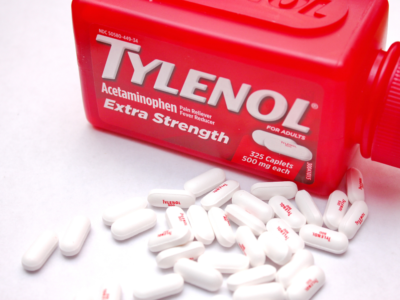
Cancer Policy Trump claims that autism is caused by Tylenol use during pregnancy, advises to “fight like hell not to take it” September 26, 2025Vol.51 No.35By Claire Marie Porter
Drugs & Targets FDA approves Keytruda Qlex injection for subcutaneous use in 38 tumor indications September 26, 2025Vol.51 No.35By Jacquelyn Cobb
Drugs & Targets FDA grants priority review to HER2-directed therapy as first-line treatment of HER2-positive metastatic breast cancer September 26, 2025Vol.51 No.35
Cancer Policy FDA cracks down on direct-to-consumer ads, including the Hims & Hers Superbowl blitz September 19, 2025Vol.51 No.34By Jacquelyn Cobb
Drugs & Targets FDA approves gemcitabine intravesical system for non-muscle invasive bladder cancer September 19, 2025Vol.51 No.34
Drugs & Targets FDA approves Bosaya and Aukelso, denosumab biosimilars, for osteoporosis September 19, 2025Vol.51 No.34
Drugs & Targets FDA approves selumetinib for pediatric neurofibromatosis indication September 19, 2025Vol.51 No.34
Drugs & Targets FDA, Telix agree on NDA resubmission pathway for TLX101-CDx, an investigational agent for glioma imaging September 19, 2025Vol.51 No.34
Cancer Policy Vinay Prasad regains role as FDA chief medical and scientific officer September 12, 2025Vol.51 No.33By Claire Marie Porter