With the pope’s lung cancer diagnosis jumpstarting conversations about lung cancer screening and the constant buzz surrounding multi-cancer detection tests, evidence-based evaluation of screening tests is more important than ever.
This episode is available on Spotify, Apple Podcasts, and Youtube.
In this episode of The Cancer Letter Podcast, Paul Goldberg, editor and publisher of The Cancer Letter, and Jacquelyn Cobb, managing editor, talk about this convergence of clinical and regulatory news and what it means for oncology.
“This idea that screening is always good is probably gaining traction right now for the lack of places that can evaluate these tests,” Paul said. “If you trust FDA on this, well, FDA is not going to tell you if you’re going to benefit, if you stand to benefit. NCI will tell you—if NCI has the resources to do this trial, which it should. We’re not entitled to opinions on many issues, but a clinical trial is better than no clinical trial.”
Also, the U.S. Preventive Services Task Force is currently at risk of losing the expertise, evidence-review infrastructure, and institutional culture that has made it a trusted model for evidence-based medicine.
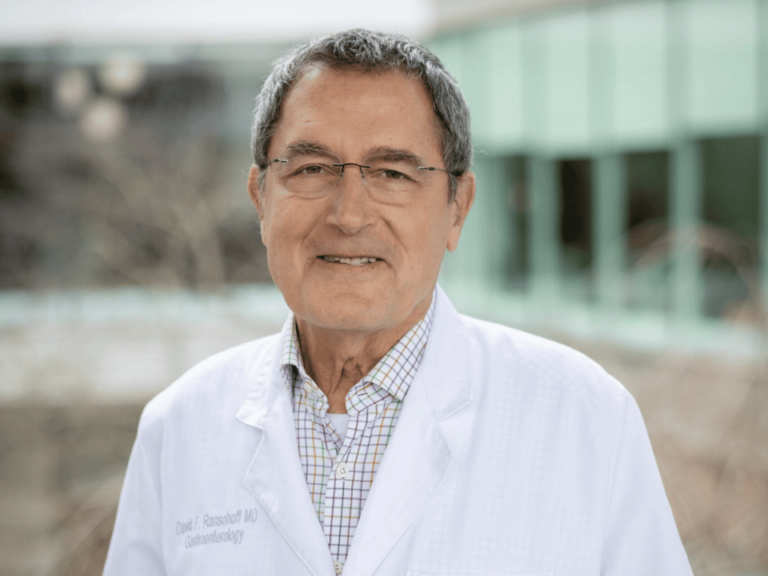
“Right now the task force is in the process of being destroyed,” David Ransohoff, a gastroenterologist and clinical epidemiologist in the Division of Gastroenterology and Hepatology at University of North Carolina School of Medicine, said in a conversation with The Cancer Letter published in last week’s issue. “And if we lose the task force, we lose an important institution that was the exemplar of evidence-based medicine.”
Ransohoff predicts a “Wild West” era without evidence-based screening guidelines.
“Right now, it’s not the Wild West,” Paul said. “We’re still in the prairies of the Midwest and the Wild West comes a little bit later. The Wild West is when you cross the Mississippi.
“So, we’re crossing the Mississippi.”
Stories mentioned in this podcast include:
- VCU’s Baskin and UNC’s Ferris weigh oncology’s looming dilemma—MCDs Center directors are strategizing for likely FDA approval of GRAIL’s Galleri
- As trust in USPSTF erodes, cancer screening is in peril David Ransohoff predicts a “Wild West” era without evidence-based screening guidelines
- Rachna Shroff, accomplished GI oncologist and “tireless mentor,” dies at 47 Her endowed award will live on
- The lung cancer diagnosis of Pope Leo—believed to be a never-smoker—sparks conversations around screening
This episode was transcribed using transcription services. It has been reviewed by our editorial staff, but the transcript may be imperfect.
The following is a transcript of this week’s In the Headlines, a weekly series on The Cancer Letter Podcast:
Jacquelyn Cobb: This week on The Cancer Letter Podcast…
Paul Goldberg: This idea that screening is always good is probably gaining traction right now for the lack of places that can evaluate these tests. If you trust FDA on this, well, FDA is not going to tell you if you’re going to benefit, if you stand to benefit. NCI will tell you if NCI has the resources to do this trial, which it should. We’re not entitled to opinions on many issues, but a clinical trial is better than no clinical trial. Mortality, power. It would be very nice if you can do it.
You’re listening to The Cancer Letter Podcast. The Cancer Letter is a weekly independent magazine covering oncology since 1973. I’m your host, Paul Goldberg, editor and publisher of The Cancer Letter.
Jacquelyn Cobb: And I’m your host, Jacquelyn Cobb, managing editor of The Cancer Letter. We’ll be bringing you the latest stories, groundbreaking research, and critical conversations shaping oncology.
Paul Goldberg: So, let’s get going.
Jacquelyn Cobb: Hello, Paul. How’s it going?
Paul Goldberg: Hi, Jacquelyn. How are you?
Jacquelyn Cobb: Good, good.
Paul Goldberg: I like your new background there. I like being able to see the back of your head.
Jacquelyn Cobb: I know. I know.
Paul Goldberg: So it’s like in stereo. Now, that’s an interesting concept.
Jacquelyn Cobb: It’s getting cooler in Maine now and I have a little fireplace heater thing just for the coziness and I haven’t turned on the heat in the house yet because I’m trying to avoid that as long as possible. So this will be my background for the next maybe month or so, I’m not sure, until I have the heat on to go back in the office. But I will take us through last week’s headlines. Yes?
Paul Goldberg: Please.
Jacquelyn Cobb: Yeah. So our cover story last week was an episode of The Directors, which I sound like a broken record here, but as always, please just go listen to that. You can listen to it in full on The Cancer Letter Podcast. It was VCU’s, Monica Baskin, and UNC’s, Ferris. And they came together and talked about MCDs, which is a very exciting topic that we’ll probably dive into in more detail in this episode.
Paul Goldberg: They actually talked about a whole lot more, we-
Jacquelyn Cobb: Yes. Sorry, sorry.
Paul Goldberg: … pulled out the MCDs to feature that because that’s what on a lot of people’s minds and was the most newsy thing, but it kind of came around then this long conversation, then we went, “Boom, there it is.”
Jacquelyn Cobb: Yes. Yes.
Paul Goldberg: So anyway, I interrupted and I feel really-
Jacquelyn Cobb: You should feel terrible.
Paul Goldberg: I feel guilty for having interrupted you. And it’s really strange to see you doing this when you can see the back of your head doing that. It’s really…
Jacquelyn Cobb: Is this distracting for you?
Paul Goldberg: … disturbing.
Jacquelyn Cobb: Okay. So our story two is probably what we’ll focus on mostly today. There’s a huge story with a conversation with Paul and David Ransohoff. And it’s basically just this incredible deep dive on the history and importance and role of the United States Preventive Services Task Force, USPSTF. And importantly, the trust in this independent body is really becoming a little bit more eroded as the administration is making changes to the type of personnel that it employs, or employs, is that the right word? It has on the panel. But we’ll dive into that more later. I think that’ll probably be the meat of this episode. But the rest of the issue was, we had a very tragic obituary, Rachna Shroff, a GI oncologist and described in the most loving language as a tireless mentor and many, many other descriptors, died at 47 from a cancer of an unknown primary, I believe. And she has an endowed award and Claire wrote a really beautiful story about the award, I think it was two weeks ago or last week. And now we have this obituary for Dr. Shroff, unfortunately.
Pope Leo has been diagnosed with a lung adenocarcinoma and that happened last week. And when I started reporting on that story, I expected it to be kind of straightforward in terms of a survey of what lung cancer treatment looks like now. Basically, a lot of the lay media coverage of the Pope’s diagnosis was in this vein where we kind of talk about, what does lung cancer treatment look like now that the Pope has it? What is available to him should he need it? And so when I was reporting on that, that was sort of what I was expecting. But then as I was reporting, I’m speaking to lung cancer experts, and basically, it was in an ideal world, the Pope will not be interacting with lung cancer treatment in any way besides surgery.
So basically, this is a lot of conjecture, but what seems to be the case is that the Pope has a very localized tumor, perhaps stage 1, perhaps, perhaps. We don’t know that for sure. But if he does have just a stage 1 tumor, then the lobectomy that he got is actually the extent of treatment for… That’s the standard of care, is this lobectomy. There’s no systemic treatment expected for a stage 1 lung cancer. I’m sure that there is nuance here that I’m missing, but that is sort of the general idea from the lung cancer experts that I spoke with. And so yeah, it kind of left me in a moment where I was like, “Okay, wait, we can’t just write about all of these treatments that the Pope ideally will never get.” That’s not super relevant. Of course it is a little bit and my story did touch on it, but a lot of the experts ended up talking about screening.
And I know Paul is going to have thoughts on this, so I will turn it over to you in just a second. But the Pope is a presumed never-smoker and we have this hopefully excellent prognosis for the Pope. I think the stage 1 five-year survival is upward perhaps above 80%. And yeah, it’s great. It’s good that the Pope has caught this finding earlier, et cetera, et cetera. But a lot of the experts that I spoke to basically just pointed out that if he was in the US or if he was relying on US screening guidelines, that he would not be screened for lung cancer. And there’s a lot of nuance there that I think I feel Paul is just rearing to go.
Paul Goldberg: Oh, boy. Well, yeah. It’s interesting because if the Pope should not have been screened and they found an adenocarcinoma, does that mean that everybody who has not been screened, who is at no risk of getting lung cancer should be screened in order to be like the Pope? Is this the logic that we should have?
Jacquelyn Cobb: Are you asking? I was waiting for-
Paul Goldberg: No.
Jacquelyn Cobb: … you to say, “No!” Yes.
Paul Goldberg: No. It’s really interesting because there was some of this discussion of like, “Oh, he doesn’t fit under any guidelines.” Well, he doesn’t, nor should he. It’s probably an incidental finding and screening, you got to get a risk group and his risk group was fairly low. So the question is, what do you do with people who do not fit into any risk group like he doesn’t? It’s weirdly one of the themes of this issue, because what do you do with GRAIL? To what use do you put it? It’s going to give you a bunch of false negatives. It’s going to give you a bunch of false positives. It’s going to make a bunch of people crazy about things, or lull them into an action. And then what do you do when they learn that they have one of a multitude of cancers and they have no idea what they are?
So does that improve medical care? Does it improve the system? Probably not. And then there’s this conversation I had with David Ransohoff. We had a very nice time talking. And David is a clinical epidemiologist who’s more qualified than anyone to speak about screening. And he is in a state of despair, I would say. And I’ve spoken with him for 30 years, maybe longer, I don’t know, a long time over the years. And I’ve never seen him like this where everything… One of the greatest institutions of evidence-based medicine, the envy of the world, US Preventive Services Task Force is morphing into something else, something that’s not going to give us any guidance, or would not be trusted to give us any guidance on what to do with this. His view is that USBSTF could have reviewed data on modalities such as Galleri. All MCEDs would be very helpful to have that right now.
And there’s no one, no institution that’s capable of taking its place. So basically, we’re on our own and that crazy idea that if the Pope doesn’t fit under any risk groups, therefore we should screen everybody who doesn’t fit into any risk groups-
Jacquelyn Cobb: Nobody said that, to be clear.
Paul Goldberg: … in order to save his life.
Jacquelyn Cobb: Nobody said that. I want everybody-
Paul Goldberg: No, nobody said that, but people get…
Jacquelyn Cobb: Yes.
Paul Goldberg: I’ve seen some coverage that was hair-raising, of here’s this modality and I’m glad I took the test and it came up negative. Well, it could be false negative, dude. I actually saw a story like that. Actually, it was in The Washington Post, about this guy who took the test and-
Jacquelyn Cobb: Well, you’re talking about a Galleri, right, or an MCED or an MCD, right?
Paul Goldberg: Yeah, Galleri.
Jacquelyn Cobb: Yeah.
Paul Goldberg: Well, it’s an MCED. So yeah, there is a new era of this and we don’t know what to do with this era.
Jacquelyn Cobb: Yeah.
Paul Goldberg: And there’s nobody-
Jacquelyn Cobb: And we’re losing our trusted source.
Paul Goldberg: Yeah. I don’t even know if people who are eroding this institution really understand what they’re doing and why. It’s like, “Oh, a bunch of…” I actually do not know what their logic is, so I’d be guessing and I don’t want to be guessing. It’s not stated in a way that can be understood or in a way that would tell you, “Hey, these folks get it.”
Jacquelyn Cobb: I think that’s the thing, right? Well, yeah, I’m not going to guess either, but I think that that is key, is that they are not necessarily as clued into what you just described as the USPSTF being the envy of the world for years. Its…
Paul Goldberg: Well, I mean, David goes on and on and I could never do this as well as David, this discussion, but the concern is that I’ve covered probably for maybe, well, decades really, the group brings together experts in medical evidence. It does not have any specialists on the board. Well, the specialist point of view is really well represented because these are people who judge evidence. They’re not specialists. These are people who live in the denominator. They don’t live in the numerator like specialists. In the numerator, you could be actually almost… I would hope nobody would take seriously what I’ve said about screening everybody without risk factors. I’m sure that’s not the case, but it gets pretty close sometimes.
Jacquelyn Cobb: Oh, yeah.
Paul Goldberg: This man would never have been screened in the United States. Maybe he shouldn’t have been.
Jacquelyn Cobb: Yeah. Well, I think one thing I will say, and this is just for people listening and aren’t as familiar with… Because Paul and I talk about this all the time, but for people listening, I think an important just sort of hedge or caveat, I guess, is that the Pope and the lung cancer screening is sort of, and Paul, maybe just correct me if I’m sort of saying this wrong, but MCEDs are untested, unvalidated. It’s a totally experimental… Well, I guess technically there’s probably an FDA approval coming, but as of now, there are no approvals. There’s no… You know what I mean? It’s sort of just like the Wild West, uncertain right now. But lung cancer screening, there is a validated lung cancer screening modality for a very specific group. So USPSTF did recommend that… Let me just get the correct thing.
So the USPSTF recommends annual screening for lung cancer with low dose computed tomography in adults age 50 to 80 years who have a 20 pack year smoking history and currently smoke or have quit within the past 15 years and then recommends… And then there’s a little bit of… Once a person has not smoked for 15 years or develops health problems that substantially limits the life expectancy or willingness to have a curative lung surgery, then the recommendation changes.
So all that to say is that I do think that there’s a little bit of nuance between comparing MCDs versus this lung cancer screening discussion, just because I’ve heard and we’ve written about people who… The lung cancer question is a legitimate question of scientific inquiry. There are people who are actually looking into, how do we capture people at high risk of lung cancer who aren’t smoking or haven’t smoked or whatever? Let’s look at these other risk factors and try to capture more people, because again, screening once validated is a good thing. It’s great. Prevention, and one’s validated and one’s actually proven to not cause harm is great and it’s a great way to prevent and help change the… What is it? Bend the curve, is the [inaudible 00:16:19].
Paul Goldberg: Yeah.
Jacquelyn Cobb: But that does not exist yet.
Paul Goldberg: But MCDs are also used for lung cancer, so somebody might forego the screening for lung cancer.
Jacquelyn Cobb: That’s true. MCDs have a very, I think a laundry list of concerns and how they play into the broader screening landscape, for sure. And I think that’s what you’re saying, Paul, and that’s an important piece of MCDs, excuse me, is just that they’re so easy, right? It’s just a blood draw. I mean, I’ve written this a million times, but it’s like this lung cancer screening, take it just the people who are actually recommended, who the USPSTF has said, “This will improve your outcomes or this will improve population level outcomes if you do the low dose CT.” The uptake of people who are actually doing the recommended screening is abysmally low and yet MCEDs with their highly, highly, highly easy, that’s not right, very easy sort of process-
Paul Goldberg: Convenient.
Jacquelyn Cobb: Yeah, convenient, exactly, are a little bit more appealing to a consumer of health services.
Paul Goldberg: Yes, absolutely. And here’s another bit, as you covered in your story about what FDA standard is for this. The FDA standard is not to look at whether anybody benefits, just look at the ability of Galleri to detect cancer. Okay, so it can detect it well enough. Other technologists can detect it well enough as well, so there you go.
So that’s kind of a very strange story. And the only place that will answer that question at the moment that is standing point is NCI, which by the way, is also very much like what NCI did with National Lung Screening Trial, NLST. People were trying to stop the NLST. I mean, Claudia Henschke worked really hard to stop NLST because she thought it was unethical because how can you randomize people when you already have the answer? Well, that’s really not true. We didn’t have the answer until we randomized people.
Jacquelyn Cobb: Wow.
Paul Goldberg: And actually, what it says, what the NLST results say is that if you administer screening to a defined group of high risk individuals at really the elite schools, elite medical institutions that are capable of giving them proper follow up and care, then you have an advantage. You can also do a ton of harm with lung screening. Well, there are interventions, you crack the chest sometimes.
Jacquelyn Cobb: Yep. And biopsies even are very… Yeah.
Paul Goldberg: Yeah. You have to have a good surgeon, for sure, and just good teams throughout to do this and good protocols, because you can actually… This idea that screening is always good is probably gaining traction right now for the lack of places that can evaluate these tests. If you trust FDA on this, well, FDA is not going to tell you if you’re going to benefit, if you stand to benefit. NCI will tell you if NCI has the resources to do this trial, which it should. We’re not entitled to opinions on many issues, but the clinical trial is better than no clinical trial [inaudible 00:20:45]. Mortality, power. It would be very nice if you can do it.
Jacquelyn Cobb: Yes.
Paul Goldberg: Yeah. You mentioned the Wild West. The Wild West is what’s happening after all of this. Right now, it’s not the Wild West. We’re still in the prairies of the Midwest and the Wild West comes a little bit later.
Jacquelyn Cobb: It’s coming. Yeah. It’s on the horizon. You can see it.
Paul Goldberg: Yeah. We’re in the cornfields of Iowa.
Jacquelyn Cobb: Yeah.
Paul Goldberg: And then Wild West is when you cross the Mississippi.
Jacquelyn Cobb: Yes, yes. Agree.
Paul Goldberg: So we’re crossing the Mississippi.
Jacquelyn Cobb: Yeah. This is a good metaphor. It’s helpful.
Paul Goldberg: Dodge City is not far. So this is Hollywood bullshit not…
Jacquelyn Cobb: Yeah. Oh my God. Lots of metaphors here.
Paul Goldberg: To keep what they…
Jacquelyn Cobb: Yeah.
Paul Goldberg: Yeah. Oh my God. We’re just drowning in metaphors as though it’s like the Mississippi River.
Jacquelyn Cobb: There we go.
Paul Goldberg: Falling off the raft.
Jacquelyn Cobb: Yeah. But I think that’s sort of key here, is just the fact that FDA, in sort of a lay or just a general audience, if FDA is giving an approval to something, you assume it’s good for you. You know what I mean? You assume it works. So that was just the… And again, technically, FDA has not given its approval to anything, so that’s an important caveat, but it is sort of expected based on what they said at the meeting.
Paul Goldberg: FDA did not want to see data on indicating stage shift. It just did not want the advisory committee to even consider it. Instructions to the jury is the most important part of almost any court proceeding. So here are the instructions of the jury, say, “We don’t care.”
Jacquelyn Cobb: Yeah, don’t worry about it.
Paul Goldberg: “Well, we don’t care.” Should it be approved? I don’t actually know what the standard should be. I just know that-
Jacquelyn Cobb: Well, that’s what I will say, the only thing… Sorry, Paul, to interrupt you, but I just want to say that the one caveat that might be helpful and may play out in the future, who knows, is that FDA has said that they don’t want to consider clinical benefit many times at a issues meeting, at this advisory committee meeting, et cetera. But technically, with GRAIL’s Galleri, what FDA said was that GRAIL didn’t apply with any clinical benefit data. So it’s basically, FDA was saying they’re not making any claims about whether it can actually save people’s lives. They’re only making claims about the fact that…
So I don’t know. I don’t see any sort of motivation for anybody in the future to include clinical claims, clinical benefit data, if FDA will decide based on just detection. But I do want to say that, I don’t know what FDA would do if an MCD company came and said, “Hey, not only do we detect cancers, we have shown a decrease in mortality, let’s say hypothetically, years from now.” Maybe FDA would consider that. I don’t know. But with GRAIL and Galleri-
Paul Goldberg: Who’s going to spend…
Jacquelyn Cobb: Yeah, I knew…
Paul Goldberg: Who’s going to spend hundreds of millions of dollars on a trial that will have to last… Except NCI, right?
Jacquelyn Cobb: Yeah.
Paul Goldberg: And in this case, what you have is, GRAIL ends up spending, I don’t know how much it was, couldn’t be less than a hundred million on the NHS trial. And it’s a three-year trial and it misses the endpoint.
Jacquelyn Cobb: And then they don’t apply with that.
Paul Goldberg: And then nobody looks at it.
Jacquelyn Cobb: Yeah, literally people are told to not look at it, to not consider it.
Paul Goldberg: See-
Jacquelyn Cobb: Oh, we’re getting in there.
Paul Goldberg: … I actually do believe that one of the most interesting conversations I’ve had on all of this over the years, many years, is my conversation with David Ransohoff, because he truly gets into all of this, and he can integrate it into a long historical view of the role of evidence-based medicine in American healthcare. And where we’re going right now with diagnostics and with the screening technologies is the Wild West. We’ve crossed the body of water.
Jacquelyn Cobb: I like this metaphor.
Paul Goldberg: Mississippi. Or the Rubicon. I don’t know.
Jacquelyn Cobb: I know. I was going to go there in my brain, but then I was like, “We already have too many rivers going on.”
Paul Goldberg: Too many rivers to cross. But we’ve crossed them and it’s good, and it’s a great time to be a journalist, no?
Jacquelyn Cobb: That’s true. Indeed, it is, Paul. Listeners, go listen or go read David Ransohoff’s Full Story to have a full, complete historical understanding of the issues that Paul and I are sort of chatting at today.
Paul Goldberg: More of an appreciation and there will be a quiz next week.
Jacquelyn Cobb: Oh, that’s fun.
Paul Goldberg: It will be a surprise quiz next week.
Jacquelyn Cobb: Yes. A surprise quiz with a weak heads up.
Paul Goldberg: Right.
Jacquelyn Cobb: All right. Well, see you next week for the quiz. Goodbye.
Thank you for joining us on The Cancer Letter Podcast, where we explore the stories shaping the future of oncology. For more in-depth reporting and analysis, visit us at cancerletter.com. With over 200 site license subscriptions, you may already have access through your workplace. If you found this episode valuable, don’t forget to subscribe, rate, and share. Together, we’ll keep the conversation going.
Paul Goldberg: Until next time, stay informed, stay engaged, and thank you for listening.