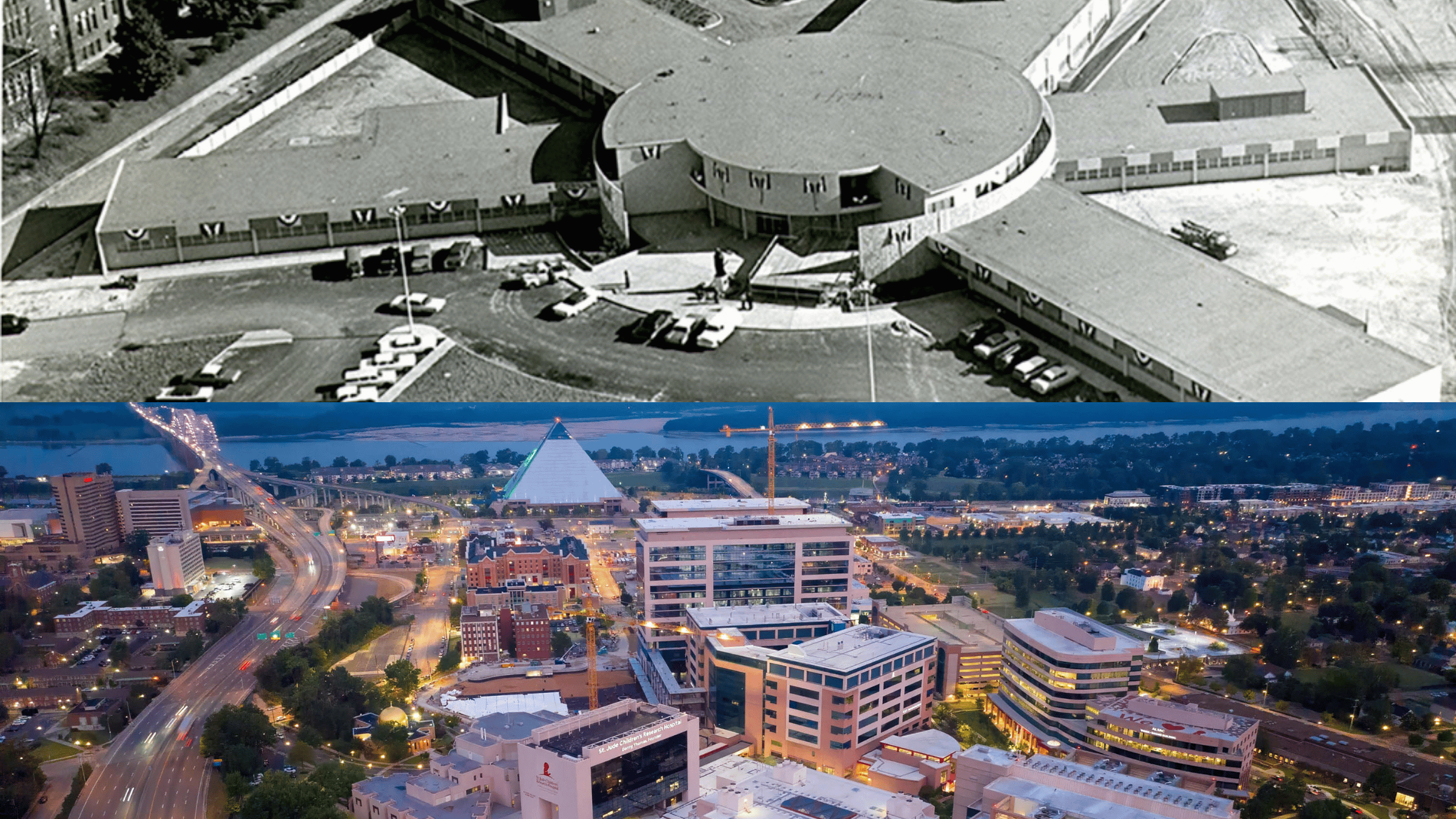
“Backwater to Blockbuster,” the first de novo book published by the Cancer History Project, traces the evolution of St. Jude Children’s Research Hospital to its current status of a powerhouse of research in pediatric cancer.
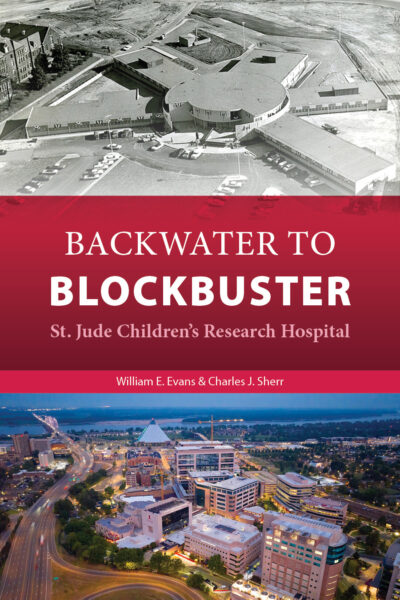
The book is available at no charge on the Cancer History Project website.
In a conversation moderated by Deborah Doroshow, the book’s co-authors Charles J. Sherr and William E. Evans discuss how their book project began, and their collaborative writing process.
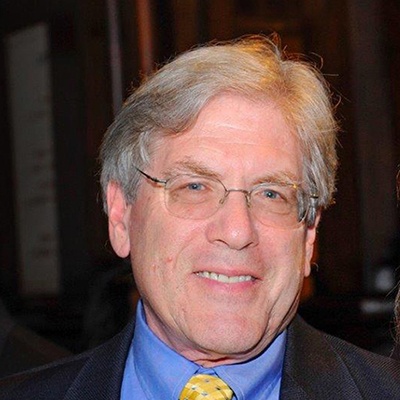
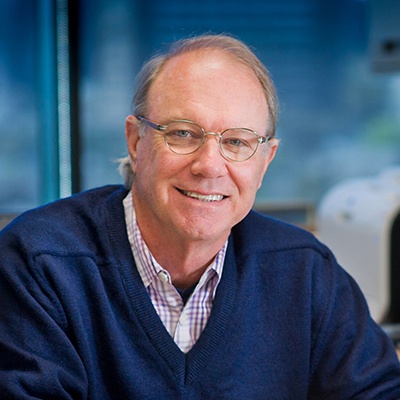
As long-time leaders, Sherr and Evans were a part of the institution’s rise and thus speak authoritatively about the institutional culture, leadership philosophy, and scientific ambition that shaped St. Jude.
Sherr, who joined St. Jude in 1983, served as chair of Tumor Cell Biology Department and Herrick Foundation Endowed Chair at St. Jude. Evans first came to St. Jude as a student in 1972 and served in many key positions including that of St. Jude’s fifth director and CEO.

Doroshow, a medical historian and an associate professor of medicine at the Tisch Cancer Institute at the Icahn School of Medicine at Mount Sinai, guides a podcast discussion exploring how Sherr and Evans approached the story of the rise of St. Jude from their different professional and personal perspectives, ultimately coming together to co-author a dual memoir and institutional history.
The project began during the COVID-19 pandemic, when Sherr started writing what he initially intended to be a memoir. Encouraged by a scientific publisher to focus instead on St. Jude, he turned his attention to the institution’s history.
After coming to St. Jude from NCI, Sherr played a central role in building the Cancer Biology Program. Sherr’s research is focused on oncogenes and tumor suppressors, mechanics of cell division cycle control, and perturbation of cell cycle regulators in cancer.
He is a member of the National Academy of Sciences, a fellow of the American Academy of Arts and Sciences, American Association for the Advancement of Science, and the American Association for Cancer Research. He has won the AACR Landon Prize for Basic Cancer Research and the Pezcoller Award as well as the General Motors Cancer Foundation Mott Prize.
At the same time as Sherr, Evans, a clinical pharmacologist and the director and CEO of St. Jude from 2004 to 2014, a faculty member in pharmaceutical sciences, and pioneer, together with his spouse Mary Relling, in developing the field of pharmacogenomics, had independently begun writing his own history of the institution.
Evans initiated and chaired the St. Jude Department of Pharmaceutical Sciences, and from 2002 to 2004 served as the hospital’s scientific director and executive vice president. He also currently holds the St. Jude Professorship and Endowed chair at the University of Tennessee College of Medicine and Pharmacy.
He is a member of the U.S. National Academy of Medicine, and the German National Academy of Sciences.
For the past 40 years his research has focused on the pharmacodynamics and pharmacogenomics of anticancer agents in children with acute lymphoblastic leukemia, for which he has received three consecutive NIH MERIT Awards from NCI. Evans is a past recipient of the Volwiler Award from AACP, the Pediatric Oncology Award from ASCO (with Mary V. Relling of SJCRH), the Team Science Prize from AACR (shared with SJCRH colleagues), the Remington Medal from APhA, and the Oscar B. Hunter Award from ASCPT.
As Sherr and Evans compared notes, they realized that their perspectives complemented one another and decided to merge their efforts into a single narrative.
“So, we came at the book from different points of view, and as we shared our stories, we realized that there were some interesting parallels, but also personal perspectives that added color to the story,” Evans said. “That’s how it started.”
I thought the book became more intimate as we went forward, and I’m happy to say that it expresses our personal opinions and our experiences, and it’s not an attempt to be anything else, other than sharing what we experienced, each of us over our many years there.
Charles J. Sherr
The book soon evolved into a first-person, dual memoir and history, emphasizing personal experience rather than an objective historical account.
“It’s important to note that Bill joined St. Jude 10 years before I did, and so, he was the ideal teller of the earlier history, from a very personal point of view. I think what evolved was a series of personal recollections from our histories rather than an attempt to write an omniscient third-person narrative,” Sherr said.
The idea of writing the book from a first-person perspective came from Paul Goldberg, editor and publisher of The Cancer Letter.
“It wasn’t until Paul Goldberg actually saw an early draft of what we had written that he came forward and said, ‘Look, write this in the first person.’ That crystallized the directions that we ultimately took,” Sherr said.
In addition to offering editorial advice, Goldberg said that The Cancer Letter’s Cancer History Project would be able to publish the book and make it available at no cost to readers.
The Cancer History Project, which was started in 2021 to commemorate the 50th anniversary of the signing of the National Cancer Act, has published several books, with the objective of making them once again available to wide audiences.
These include:
- Joseph V. Simone, “Simone’s Maxims: Understanding Today’s Medical Centers.”
- John Laszlo, “The Cure of Childhood Leukemia: Into the Age of Miracles.”
- Richard A. Rettig, “Cancer Crusade: The Story of the National Cancer Act of 1971.”
- Shirley Haley, “Angel in Mink: The Story of Mary Lasker’s Crusade for Medical Research and the National Institutes of Health.” The book was sponsored and produced by Act for NIH and is distributed in the electronic format by the Cancer History Project.
“Backwater to Blockbuster” becomes the first book edited and published by the Cancer History Project.
As Sherr and Evans experimented with Goldberg’s editorial suggestion, the writing became more personal.
“I thought the book became more intimate as we went forward, and I’m happy to say that it expresses our personal opinions and our experiences, and it’s not an attempt to be anything else, other than sharing what we experienced, each of us over our many years there,” Sherr said.
The story Sherr and Evans tell is, in many ways, an improbable one.
In the early 1960’s, St. Jude was founded in Memphis, Tennessee, a place that at the time was not considered a major academic hub. During that era, childhood leukemia survival rates hovered around a 4% five-year survival rate.
The institution also committed itself from the outset to racial inclusion during segregation, and provided free care to all patients, regardless of background or ability to pay.
Spawned literally by the vision of the entertainer Danny Thomas, the hospital grew from a small and unconventional experiment into the largest medical charity in the U.S. and the only NCI-designated Comprehensive Cancer Center devoted solely to children.
Thomas founded the hospital to fulfill a vow he made to St. Jude Thaddeus, the patron saint of hopeless causes. While a struggling entertainer in the 1950s, Thomas promised to build a shrine if the saint helped him find success. After achieving that success in television, he founded the American Lebanese Syrian Associated Charities to raise the necessary funds from supporters and donors.
“Memphis was a segregated city. It was a Jim Crow city when Danny established the first interracial, intercultural hospital scene in Memphis,” Sherr said. “I mean, that was a huge step forward, right? This was years before Martin Luther King was assassinated in ‘68. The hospital opened in ‘62, and this was an amazing thing to do. And so, if you were betting that a hospital for children of all races would prosper in Memphis, Tennessee, what would be your bet? So, I think that in itself was extraordinary. Absolutely extraordinary.”
Its success was therefore highly unlikely.
“I mean, if you were a betting person, you wouldn’t go all in on the idea of this institution,” Sherr said. “St. Jude has a distinct origin story.”
The book traces St. Jude’s transformation through the eyes of two people who helped shape it—from the hospital’s early struggles to its scientific breakthroughs, including pioneering clinical trials that contributed to the first cures for childhood acute lymphoblastic leukemia and advances across pediatric oncology.
“It’s a behind-the-scenes look at how the organization evolved and many of the obstacles it had to overcome,” Evans said. “Millions and millions of people in the U.S. have heard about St. Jude, but they’ve heard the story about patients and successes and accomplishments, accolades, and they haven’t really seen the struggles behind the scenes that occur at any organization that is trying to be innovative, trying to do something no organization’s ever done.
I mean, if you were a betting person, you wouldn’t go all in on the idea of this institution. St. Jude has a distinct origin story.
Charles J. Sherr
“You’re going to have challenges along the way and have to face obstacles,” Evans said. “And to us, it was interesting how we addressed and overcame those. And I think this could be interesting to others, people who are trying to launch new organizations. It doesn’t have to be a cancer program or a pediatric hospital. It could be any kind of new organization being launched. A startup is going to have challenges.”
Now, the St. Jude and ALSAC Boards of Directors and Governors function as volunteer-led governing bodies that provide strategic oversight, financial management, and policy approval for the hospital and its fundraising organization. They ensure the mission to cure pediatric cancer is met, managing a billions-dollar budget while keeping free care for families.
According to a combined financial statement by St. Jude and ALSAC, the revenues, gains, and other support totaled $3.79 billion in fiscal year 2024, the most recent year for which these numbers are available.
That sum is equivalent to 52% of the 2024 NCI budget and is 4.5 times higher than the revenues, gains, and other support reported by the American Cancer Society that year.
“We do speak about the board and its governance role at St. Jude periodically throughout the book,” Evans said. “Sometimes we’re unhappy with the board; sometimes we’re saved by the board. It is an interesting board—they’re amazing. They’re too big. They’re 50 people, roughly, but they’re all enormously dedicated, and they all do things like pay their own travel, their own housing. They each raise a million dollars a year on average for the organization.”
Millions and millions of people in the U.S. have heard about St. Jude, but they’ve heard the story about patients and successes and accomplishments, accolades, and they haven’t really seen the struggles behind the scenes that occur at any organization that is trying to be innovative, trying to do something no organization’s ever done.
William E. Evans
In the early days of St. Jude, the board contributed a lot of services to the organization, including legal and business expertise, because St. Jude had no lawyers, he said.
The conversation with Doroshow also turns to leadership philosophy and mentorship, including the culture of collaboration cultivated at St. Jude.
“One of the things I’ve learned, fortunately early, and I passed on to many of my postdocs and junior colleagues over the years, is when you’re engaging in a collaboration on a project, first of all, I encourage them to think about collaborators, and St. Jude certainly encourages that, but then I encourage them to go after the strongest person in that area to collaborate with,” Evans said. “Don’t go after the nicest person, the kindest person necessarily. They may have those traits, they may not, but if they’re the best scientist in genomics or in tumor cell biology, whatever, those are the people you want to work with. When I put my senior management team together at St. Jude, I didn’t pick my friends to be on that team.”
Sherr reflected on how institutional wisdom and leadership “maxims” are often borrowed, adapted, and passed along through generations of scientists and administrators.
“I have a maxim where I tell people working in the lab, ‘Fast is slow, and slow is fast,’” Sherr said, explaining the importance of building research on a rigorous experimental foundation rather than rushing toward results. “I realized years later that ‘fast is slow and slow is fast,’ which I thought was my idea, really comes from a guy named Steve Covey, who has written about human behavior. And in researching it myself, I was embarrassed to see that there was essentially the same maxim put forward years before by someone else. So, I think it is common that we hear things that we like and they become part of our lexicon along the way.”

The Cancer History Project Podcast is sponsored by City of Hope, the American Society of Clinical Oncology, the Sidney Kimmel Comprehensive Cancer Center at Johns Hopkins, and the University of Texas MD Anderson Cancer Center.
The episode is available on Spotify and Apple Podcasts.

Former Director of the National Cancer Institute
Former Acting Commissioner,
U.S. Food And Drug Administration
Two of America’s most gifted and observant scientists tell the remarkable and largely untold story of a key effort to transform the tragedy of childhood cancer into a story of hope. They trace the path from Danny Thomas’s answered prayer to St. Jude, the patron saint of lost causes, through some of the first curative therapies for children with leukemia and other cancers, to a cascade of remarkable scientific breakthroughs. Backwater to Blockbuster captures the improbable rise of a nascent hospital landing in a racially divided community and becoming a clinical and research powerhouse that changes the world. It is an inspiring testament to vision, persistence, and the lives saved when science refuses to accept defeat.

Founding Director, Koch Institute for Integrative Cancer Research at MIT,
President, Break Through Cancer
From Backwater to Blockbuster is a highly engaging read from two individuals who helped shape a national treasure. This first-hand account from Bill Evans and Chuck Sherr tells the story of how St. Jude Children’s Research Hospital rose from a twinkle in Danny Thomas’s eye to the powerhouse that it is today. Those interested in what goes into institution building will learn a great deal from the twists and turns of this part of the story. Evans and Sherr also write in depth (and with great passion and good humor) about the science and the scientists that shaped their own illustrious careers. For those of us who know many of these players, it is a very fun ride down memory lane. For others, the book delivers a heartfelt and rich picture of progress in cancer science through dedication, culture, and commitment at all levels.
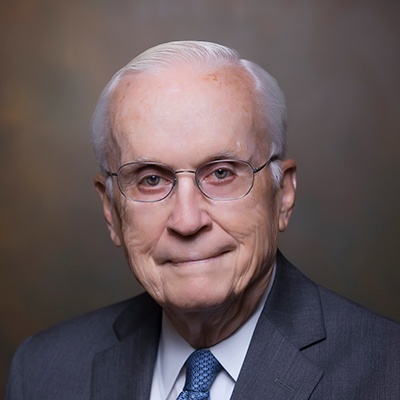
Chief Executive Officer Emeritus, Mayo Clinic
The authors, distinguished scientists/administrators of the highest order, have documented in remarkable detail the journey of St. Jude Children’s Research Hospital from conception to the current era of exponential growth…a story of medical discovery and human spirit which justifiably could be characterized as beyond extraordinary.