Vote for The Cancer Letter Podcast at the 2026 Webby Awards!

Colorectal Cancer Awareness Month is putting a sharper edge on an uncomfortable question: if colorectal cancer is now the leading cause of cancer death in people under 50, why aren’t more people getting screened?
This episode is available Spotify, Apple Podcasts, and Youtube.
The incidence of early-onset cancers have been rising for years, with colorectal cancer at the forefront of that shift. Thirty years ago, colorectal cancer ranked fifth among cancer killers in younger adults and rarely topped the list of concerns for physicians treating patients in their mid-40s.
Today, the risk profile has changed—but awareness and action haven’t kept up the pace.
“Early-onset cancer in general has been on the rise, but early onset colorectal cancer obviously has been on the rise at a much higher rate than the other early-onset cancers,” said Jacqueyn Cobb, associate editor at The Cancer Letter.
On this week’s episode, Jacquelyn and Sara Willa Ernst, reporter with The Cancer Letter, discuss the still-uncertain “whys” of the upswing in early-onset colorectal cancer mortality, and why screening uptake for people aged 45-50 is so low.
“Colorectal cancer is the leading cause of cancer death and it’s been rising 1.1% [on average] annually since 2005 for people under 50,” Sara said. “That’s a big shift, or there’s a big contrast when you compare that to other types of cancer deaths such as brain cancer, breast cancer, leukemia, lung cancer. All of those have been pretty much flat or trending downwards. To see colorectal cancer as this outlier when in general, deaths, maybe not incidence, but deaths are declining, raises a lot of question marks.”
In response to this trend, the U.S. Preventive Services Task Force changed its clinical guidelines to recommend colorectal cancer screening for people ages 45-49 in 2021 (The Cancer Letter, Oct. 30, 2020). Despite this, screening prevalence has only budged incrementally.
“It’s 2026 now, maybe we finally have a little bit of a sense as to what happened after that policy change,” Sara said of USPSTF screening updates. “According to a study published in the journal of the NCI, they found that the rates of CRC screenings for people under 50 are pretty low. Only 22.5% of respondents reported any form of colorectal cancer testing.”
Those CRC testing methods could include colonoscopy, fecal occult blood test, multi-targeted stool, or DNA testing.
The average screening rates for adults aged 50-75 years old—a cohort that has seen consistent declines in incidence and mortality since the mid-1980s—was at 72% in 2021.
Sara said that “22.5% is not nearly, I think, where most oncologists hope it would be.”
Other stories mentioned in this podcast include:
- The Directors: Wistar’s Altieri and ChristianaCare’s Petrelli say partnership of their institutions will go on as the guard changes
- Early-onset cancer is on the rise. Here is how OSUCCC–James is adapting to the needs of younger patients
- In the era of immunotherapy, response rate alone fails to predict true patient benefit—Regulators must adapt
- Colorectal cancer is now the leading cause of cancer death in patients under 50—Why aren’t 45-year-olds getting their recommended CRC screenings?
- Michael Bishop, Nobel-winning cancer researcher, dies at 90
This episode was transcribed using AI transcription services. It has been reviewed by our editorial staff, but the transcript may be imperfect.
The following is a transcript of this week’s In the Headlines, a weekly series on The Cancer Letter podcast:
Jacquelyn Cobb: Before we get into today’s episode, just a quick moment because this is huge for us. The Cancer Letter Podcast has been nominated for a People’s Voice Webby Award. We are blown away. It’s the first time we’ve entered. I personally was not expecting this. It’s my first foray into podcasting, so we are overjoyed. If you support the show, please take just five seconds to vote. The link is right in the description. All right, with that aside, let’s get into it. This week on The Cancer Letter Podcast.
Sara Willa Ernst: I was actually thinking recently, and my brother might hate me for this, but my brother is not 45, but inching closer to there. I was like, “Do I just be that annoying family member where I’m like, you got to get on your cancer screenings?” In some ways I’m a little nervous because I’m calling him out as an aging person who’s growing in age. To be reminded of the fact that there are things out there that could get you. Maybe it’s one reason behind the resistance, just not wanting to admit like, “Hey, my body is aging and there are risks involved with that, and so I should be on top of my health.”
Paul Goldberg: You’re listening to The Cancer Letter Podcast. The Cancer Letter is a weekly independent magazine covering oncology since 1973. I’m your host, Paul Goldberg, editor and publisher of The Cancer Letter.
Jacquelyn Cobb: I’m your host, Jacquelyn Cobb, associate editor of The Cancer Letter. We’ll be bringing you the latest stories, groundbreaking research, and critical conversations shaping oncology.
Paul Goldberg: Let’s get going.
Jacquelyn Cobb: Hi, Sara. Sorry for that giggle right away.
Sara Will Ernst: Instant giggle.
Jacquelyn Cobb: Yes. That’s the way to go on the Sara-Jacquelyn podcast, for sure.
Sara Willa Ernst: Yeah, and just the joy and radiation of having just come back from vacation is just beaming off of you.
Jacquelyn Cobb: I’m glad to hear you say that. I was wondering, I just saw an SNL skit at the airport that was like Ginger’s just back from vacation. Did you see that? It’s like a new one, I think, and I was like, “I am worried I’m going to be that.” But I don’t think I’ve gotten to burn. I don’t have my sunglass marks, I think.
Sara Willa Ernst: Got you. Yeah. It’s a glow. It’s not a sunburn.
Jacquelyn Cobb: Hell yeah, I did it. That’s the goal. That’s always the challenge with me whenever I interact with the sun. Well, thank you for being here, Sara. I will take us through last week’s headlines. We had an episode of the directors as the lead story, and we’re going to talk a little bit about that because there’s a fun behind the scenes info about it that we could dive into.
But I’m not going to get into too many details as always because you can go and listen to the podcast itself, also on Spotify, YouTube, Apple, etc. Then we had the rest of the issue, or a big chunk of the issue, I should say, is really dedicated to early onset colorectal cancer.
It was the last week of Colorectal Cancer Awareness Month last week. We have three really strong, interesting stories about this issue that is, it’s now making mainstream headlines. It’s coming into the public consciousness, to say a little bit of Sara’s language from her story, where this is now the leading cause of early onset cancer deaths in people under 50, so early onset.
Then finally, just before we dive into those two ideas, that’s what we’re going to be focusing on. I just wanted to definitely really give a lot of time and space as much as I can in the headlines about Michael Bishop, who died last week. He was a Nobel Prize winning cancer researcher.
He really changed the entire scope, field, trajectory of oncology. He, along with Harold Varmus, basically discovered that cancer is a genetic disease and that every cell in the body has the ability to become cancer. Especially now, starting as a little mini-cancer researcher now covering oncology, it’s weird to think of a world where that wasn’t known, but it’s incredible, the work that he did. Definitely want to honor him. We have a really beautiful obituary and some really, really cool photos of him in the 70s, I believe, with Varmus, so definitely check that out. Really beautifully done by UCSF staff.
I’m going to now give it over to Sara a little bit.
I did a very poor job of alluding to the fun secrets, but basically The Directors this week was Sara’s first time writing it. It’s a weird, quirky story for us. It was definitely, it was exciting, so I wanted to let Sara talk about the process and how that was for her, and then also maybe talk a little bit about The Directors itself.
Sara Willa Ernst: Yeah. We had Dario Altieri with, I’m probably going to mess up all their names, but Dario Altieri with Wistar, and Nicholas Petrelli with ChristianaCare. Basically, the two of them, they’ve been longtime partners when it comes to basically merging a cancer research focused NCI-designated cancer center with a place that’s very focused on clinical care. Trying to take a place where they excel at basic science research, and then a place that excels at taking care of patients, and how do we merge them together to create something bigger than them separately. There’s a bit of change that’s happening because Dario is stepping down by the end of the year.
But they seem like they’ve really hardwired the system and that they’ve built a system that can sustain itself no matter what the leadership is, as they said in the interview. But yeah, it seemed like really the big thing is that they’ve been able to cut a lot of the red tape, things that maybe would take five to 10 different approvals might take months and months.
There are many examples in which Nicholas was like, “Yeah, I just called Dario up and he said, sounds good. Then it was done within 15 minutes.” Whether that was getting funding for 1,000 more patients to really verify and validate the results of a study, just the normal bureaucracy of academic research,—it seems like they’ve created a model in some ways that’s been able to counteract that.
Jacquelyn Cobb: Yeah, and it was so cool. You could tell that they’ve worked together for 15 years without red tape in the conversation. It was just fun and easy. I don’t know. It’s cool. I feel like I think of Wistar as just such a powerhouse, and obviously, ChristianaCare as well.
There was a little bit of a conversation about the challenges that they face trying to apply for NCI designation as a consortium together, because like you said, they have these complimentary strengths that are often found in related consortia structures, but that they faced a lot of challenges and continue to.
Sara Willa Ernst: Yeah. Those were definitely a lot of the questions that Paul asked, was wondering about like, “Hey, how about NCI consortia designation? What’s going on with that?” It seems like it’s something that ChristianaCare is interested in, but it isn’t the main priority. At the end of the day, they’re focused on taking care of patients and finding the next treatments and cure to cancer.
If NCI consortia designation comes along and it boosts them, then that’s great, but it might be a secondary or tertiary priority for them.
Jacquelyn Cobb: Yeah. They have what they need; right? They have the basic stuff and the clinical stuff and together they got it going on. That’s awesome. Okay, that’s great. Well, actually, no, I’m sorry. I’m going to go a little bit deeper. I did want to say, I just wanted to ask about the writing side of it. I know it’s maybe a little bit vulnerable to talk about it on a podcast, but I just wanted to know if… I guess I’m also thinking broader in terms of just you stepping up and you really coming to your own as a reporter. I feel like it’s just been really nice to see. Maybe I’m just trying to be like, “Yay, Sara.”
Sara Willa Ernst: Yeah. Well, to be honest, it reminded me a lot of my experience as a radio reporter and producer, that’s my background. Because a lot of it, of being a radio reporter is just listening to tape all the time and then picking out the best pieces and really taking something and then creating a better version of it. A better version is maybe not the right word, but like a more succinct version, a more listenable version, the cliffsnotes essentially. Picking out the best pieces so that we’re not wasting people’s time with all of the little minutiae or the ums and the stumbling over our words, like I may or may not be doing during this podcast right now.
Jacquelyn Cobb: I was literally thinking the same thing for myself.
Sara Willa Ernst: But yeah, it just fit on like a glove.
Jacquelyn Cobb: Awesome. Yeah. It definitely showed. I opened your first draft and I was like, “Perfect. That’s it.” It was fun to do that. Cool.
Sara Willa Ernst: We should have a section during every podcast that we do where you just shower me with compliments.
Jacquelyn Cobb: That’s my favorite thing to do in life, so definitely it can be arranged.
Awesome. Well, I think that’s a lovely transition to the early onset cancer topic. Like I said in the headlines, this has been in our awareness, it’s been on the rise. Early onset cancer in general has been on the rise, but early onset colorectal cancer obviously has been on the rise at a much higher rate than the other early onset cancers or cancers in younger people. There’s different definitions depending on who you’re talking to and the cancer type. I’ve covered ACS and how they’ve reported on this trend over the last couple of years.
It was cool to be able to pass it off to Sara and work together on what is actually new here. I feel like there were two big things. The main one, not to steal your thunder, but it’s in the headline, is the colorectal cancer is now the leading cause of cancer death in patients under 50. I’m excited to talk about each individual one, but I will let Sara talk about the really interesting detail of her story that she found with the ACS thing.
Sara Willa Ernst: Yeah, ACS has been on it with multiple publications related to colorectal cancer in people under 50. Actually, the story incorporates two publications, but really the focus is about how colorectal cancer is the leading cause of cancer death and that it’s been rising 1.1% annually since 2005 for people under 50. That’s a big shift or there’s a big contrast when you compare that to other types of cancer deaths such as brain cancer, breast cancer, leukemia, lung cancer. All of those have been pretty much flat or trending downwards. To see colorectal cancer as this outlier when in general deaths, maybe not incidence, but deaths are declining, raises a lot of question marks.
Naturally, when I was interviewing one of the epidemiologists, I was like, “Why is this happening?” He’s like, “Well, that’s the question that we’re wondering.” There are not a ton of great answers at this moment, which makes sense, to establish causation is very difficult. But there’s a couple of risk factors that are of interest or suspected obesity being one of them, diet being another one. In the publication, there was actually mention of research into microplastics and into ultra processed foods and antibiotics. Not saying necessarily that is the cause or those are the defined risk factors, but these are some of the questions that researchers are asking themselves to really pinpoint the drivers behind this phenomenon right now.
Jacquelyn Cobb: Yeah. It’s so interesting. I forget exactly when I covered it, but it was several years ago. Like you’re saying, I’m not expecting that they’re going to have answers yet, but I am, more as an individual, I think, than a reporter being like, “What is going on? What is happening?”
Sara Willa Ernst: Yeah, as somebody who’s under 50 too. What’s going on?
Jacquelyn Cobb: Yeah, and it’s weird because when I think of… with colorectal cancer, I think it’s hard to separate, again, as more of just a lay person, the idea of that cancer type with diet, just because it’s so related, and like you’re saying, these other cancers are going down or mortality is going down in people under 50. Yeah, definitely something I think I’m struggling with as a reporter on that, and I’m really hawk-eyed waiting for someone to have some answers. I cannot wait till we understand this because when it’s such a distinct phenomenon like this, again, lay opinion, but there has to be almost like an answer when it’s just such a specific thing, this phenomenon happening. I was desperately hoping that might be this year, but not this year.
Sara Willa Ernst: Yeah. That’s definitely the more squishy part of the story. I think what was more defined while I was interviewing people that are steeped in this world is, okay, we don’t have a lot of answers, but what we do know, what is evidence-based is CRC screenings.
Actually, in 2021, the US Preventative Services Task Force, they lowered the age for recommended screenings to 45 years old. It’s 2026 now, maybe we finally have a little bit of a sense as to what happened after that policy change. According to a study published in the journal of the NCI, they found that the rates of CRC screenings for people under 50 are pretty low. Only 22.5% of respondents reported any form of colorectal cancer testing.
That could be colonoscopy, that could be a fecal occult blood test, that could be multi-targeted stool, DNA testing. This is pretty much just since the update. Yeah, 22.5% is not nearly, I think, where most oncologists hope it would be.
Jacquelyn Cobb: Yeah. I remember this in your story. For people over 50, it’s like 72%, right?
Sara Willa Ernst: Yeah. Exactly. I’m actually looking at it right now. In 2021, yeah, the rate for people 50 to 75 was 72%, so there’s a pretty big gap.
Jacquelyn Cobb: Yeah. It’s so weird because, again, we have to remember where we’re coming from. We are so steeped in this, but even then, I feel like I’ve seen it in lay publications. I was really surprised by that personally. I thought that, again, like you’re saying, being a person under 50, I was like, if the recommended screenings went down, I would be all over that. Maybe that’s a follow-up story, honestly, is really digging into what’s happening because I’m sure that there are outreach people who are looking at this and being like, “How do we actually get people to follow these recommendations that could help improve survival?”
Sara Willa Ernst: Yeah. I was actually thinking recently, and my brother might hate me for this, but my brother is not 45, but inching closer to there. I was like, “Do I just be that annoying family member where I’m like, you got to get on your cancer screenings.” In some ways, I’m a little nervous because I’m calling him out as an aging person who’s growing in age and to be reminded of the fact that there are things out there that could get you. Maybe it’s one reason behind the resistance, just not wanting to admit like, “Hey, my body is aging and there are risks involved with that. I should be on top of my health.”
Jacquelyn Cobb: That is such a good point, Sara, because I never really thought about the fact that 50 is this generally accepted age of… I don’t want to say it because I feel like being a almost 30-year-old and there’s a lot of ageism that might be coming up, but I really don’t mean it that way. I just mean that I feel like people are like 50 is over the hill or that you’re starting to look toward the real second half of your life. Honestly, I don’t think that, or I do think that colonoscopy screenings and this marker, because colonoscopy is not a blood test. You know what I mean? A colonoscopy is a pretty intense—
Sara Willa Ernst: Oh, it’s not fun.
Jacquelyn Cobb: It’s not fun.
Sara Willa Ernst: Yeah, it’s not fun.
Jacquelyn Cobb: I feel like it’s in this general consciousness that it’s like people are approaching their colonoscopy age. Yeah, I think that there’s something interesting there, like sociologically almost, of that age going down to 45 where I feel like a lot of people, especially now, people having children later, et cetera, 45 still feels young, like really young. You know what I mean? We’ll figure it out for ACS. We got it. We’ll figure out why it’s happening. Okay. Is there anything else about that story that you wanted to touch on before we switch over?
Sara Willa Ernst: I think people should just read it. That’s it.
Jacquelyn Cobb: Heck yeah. Awesome. Okay.
Then, so yeah, the other two are, I’m going to just summarize them and maybe, Sara, if you have additional thoughts, I just wanted to, because again, because we’ve been reporting on this for a while, I feel like it’s just really exciting when we have a new angle, new news coming out of this space. Kimryn Rathmell, former director of NCI, and now she’s at the Ohio State University James as CEO, and then also director of the Cancer Center. She did a Q&A with Sara Myers and John Alexander, who are co-directors of the BRIDGE Program at the OSU CCC James. The Bridge Program stands for “Building Research Innovation and Care Delivery for Groups with Early Onset Cancer.”
It’s like very specific to that. It was just a really, really cool conversation to hear very specifically how they are addressing the needs of these patients.
The one that stood out to me the most and that I’m going to talk about, and I think maybe, Sara, you might have some thoughts, was really informed by our coverage of oncofertility. We’ve written about the tragedies that can come from a lack of awareness of the needs of oncofertility care for early onset or just generally young patients.
The BRIDGE program, it seems really wonderful because everybody in the bridge program knows any young person, you need oncofertility care. It’s a program that’s designed to care for these people. I think, again, being informed by our coverage of oncofertility where it’s more of just like a, not ignorance, but just not being aware, not being prepared for these patients, seeing that is just a really cool model, I feel, for this, again, unfortunately rising trend.
Sara Willa Ernst: Yeah. Just oncofertility in general is usually at the bottom of the list. But in some ways I’m wondering if this symbolizes or signifies big institutional cancer centers really paying attention to this issue of young people having cancer. Because generally, if you need oncofertility counseling, it’s because unfortunately you’re on the younger side. Yeah, I wonder if there are conversations at the top of leadership at different cancer centers that are saying, “How do we really support for this growing group of patients?”
Jacquelyn Cobb: Yeah, absolutely. To have Rathmell be leading that charge, people should be listening.
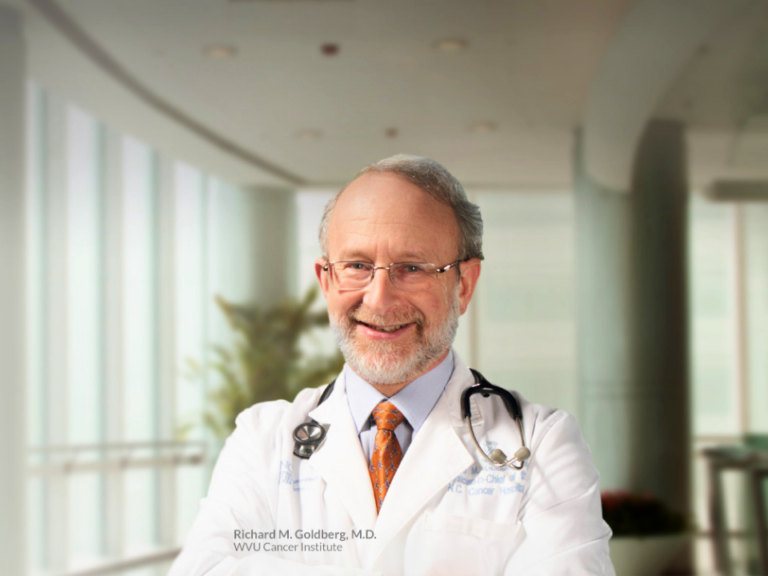
Then the other thing was a guest editorial or trials and tribulations article by Richard Goldberg, and he just had such a… For my science nerd brain, this was such a… it scratched an itch for me, for sure.
But he talked about the fact that … and again, it was in the context of the early onset colorectal cancer because these patients have, depending on the stage at diagnosis and other factors, they have a pretty standard course of treatment involving surgery and chemo and radiation sometimes. I’m not a clinician, but there’s this process specifically with surgery.
But then, oftentimes the cancer, even if it becomes in remission, it oftentimes comes back. If that is the case or if it just doesn’t work for a patient, there’s really not good secondary therapies. If they are available, they’re very toxic, patients are sacrificing quality of life or quantity of life. In most cases, it’s very little quantity, it’s on the order of months. With that thought process, Goldberg talked about immunotherapy as a potential way forward. Obviously, there’s a lot of really interesting things to say about that. Remember our story, Sara, he mentioned the microsatellite stable versus microsatellite unstable disease.
How for the tiny percentage of people, it was like 5% of people who have this mutation, immunotherapy does work incredibly well for those patients, but obviously again, only 95%. As immunotherapy researchers are trying to broaden the impact of these therapies on people, on patients, he basically was talking about some really cool nitty-gritty regulatory stuff that I always love, but it was just really interesting.
Again, maybe a lot of our listeners will be familiar with this phenomenon, but basically, immunotherapy is different from chemotherapy or traditional chemotherapies in that the response rate is not necessarily a good predictor of actual benefit to the patient.
Because in chemotherapy response rate, the chemotherapy is working, the tumor is shrinking, it’s linear, it makes a lot of sense, but with immunotherapy, it’s not so straightforward. In fact, what’s happening is that after immunotherapy, immune cells, other healthy immune cells flood to the tumor to do their work of ultimately hopefully killing it. That actually can appear as the opposite of, I don’t know if it technically can appear as progression, I don’t want to go that far, but tumors can look bigger and it can look like the tumors are not responding even though they might be. That was just such an interesting little niche topic within the early onset.
Honestly, early-onset cancers and more broadly than even just early-onset, but just the immunotherapy world, this was really interesting to see. You really have to be thinking really critically and really in a nuanced way when it comes to this problem. That was really cool. I like it.
Sara Willa Ernst: That’s very counterintuitive. I’m just wondering about the researchers that conducted any of the research that underlies this. Were they seeing how their patients reacted and thinking, “Wow, this is really not helping at all,” and holding their breath for a while and then just suddenly being like, “Wait, what’s happening? Wait, they’re actually getting better?” That being just a moment in which maybe this trial was heading in a certain direction, but then totally did it in about face and then something was learned in that moment. I’m just wondering what it was like for them.
Jacquelyn Cobb: Oh my gosh, another story idea in the books because that does sound like a really interesting narrative, like you’re saying on a personal level, were they shocked, were they like, “Oh my gosh.” But I don’t know.
I feel like if I really searched my memory, I might have more details, but it’s going to take too long. It’s definitely not worth it. I’ll do some research, maybe we’ll do some reporting and it could be a cool avenue, but awesome.
Well, thank you, Sara. Thank you for also letting me nerd out about all my little facets of early onset oncology. I thought it was very, very interesting to finally have some real meat to talk about rather than just incidence and mortality.
Sara Willa Ernst: Yeah. Well, thank you.
Jacquelyn Cobb: Thank you. Well, I probably won’t see you next week, but I will see you as in the listeners next week. I will be on the podcast again moving forward. Sara and Claire really stepped up and gave me a break for the last two weeks. I am rejuvenated and ready to keep chatting with you all. Thank you very much and I will see you next week.
Before you go, we’ve got a favor to ask. The Cancer Letter Podcast has been nominated for a People’s Voice Award at the Webby Awards. This one is completely decided by listeners. If this podcast has informed you, supported you, or meant anything to you at all, please just take a moment to vote.
The link is right in the show notes, and if you really want to help, can you send it to just one person who cares about cancer reporting and patient stories? We don’t say this lightly, this could genuinely help us grow and reach more people who need this information. Thank you so much.