On Feb. 19, GRAIL Inc. announced that its pivotal NHS-Galleri trial failed to meet its primary endpoint of reduction in advanced stage cancers. The media and the market reacted as one would expect: GRAIL’s stock price halved the day after the announcement and at least three law firms said that they are conducting investigations in preparation for filing investor suits.
This episode is available on Spotify, Apple Podcasts, and Youtube.
Despite this, GRAIL has been doggedly positive in its press about the results.
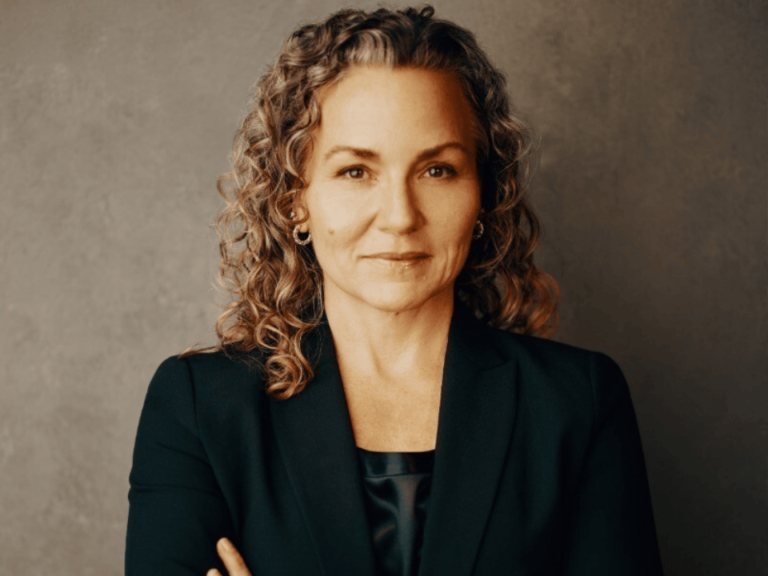
In this episode of The Cancer Letter Podcast, GRAIL’s vice president of Medical and Corporate Affairs, Megan Hall, says that GRAIL is “really excited about it, despite the missed primary endpoint, and we’re excited enough that we announced publicly that we’re expanding our sales and medical teams in response to this, because we expect that when we’re able to talk about the data much more fulsomely, that there will also be some excitement about this.
“We are confident that [Galleri] is showing clinical benefit,” Hall said.
The company says it will submit the full data for presentation at ASCO in late May and early June.
Multi-cancer detection screening has been a hot button topic for the field, and interested readers can dive into a comprehensive story about the trial results in last week’s issue. But for this podcast, we decided to feature GRAIL’s perspective directly alongside NCI’s.
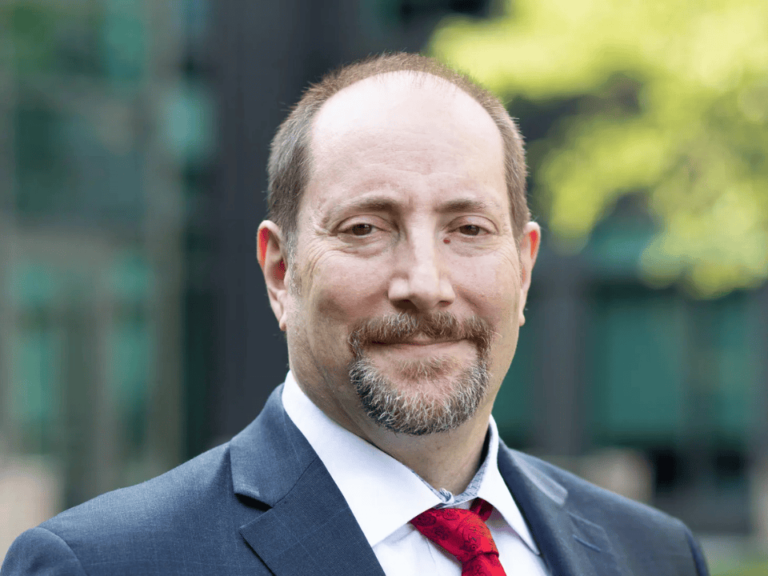
First, Megan Hall explains why GRAIL is excited about the results of the negative study. Then, Philip Castle, director of NCI’s Division of Cancer Prevention, laments the trial’s unfortunate result.
This episode of The Cancer Letter Podcast was sponsored by City of Hope. Learn more at http://www.cityofhope.org.
Stories mentioned in this podcast include:
- GRAIL presses on with Galleri test despite missed primary endpoint in pivotal study
- GRAIL’s Megan Hall: “I think we can be confident that there is clinical benefit to implementing this technology. And I think that’s really hard to argue with.” Mainstream epidemiologists beg to differ
- NCI’s Philip Castle on NHS-Galleri results: “I’m sorry that it didn’t work, but it keeps the national conversation going.”
- Erin Cummings, Cancer Nation advocate, dies of stomach cancer at 68
- Mt. Sinai forms committee to probe Epstein links to breast center founder Eva Dubin, other faculty members
This episode was transcribed using transcription services. It has been reviewed by our editorial staff, but the transcript may be imperfect.
The following is a transcript of this week’s In the Headlines, a weekly series on The Cancer Letter Podcast:
Jacquelyn Cobb: Hi, everyone. Today, we have kind of a funky episode for you. Rather than a typical sort of walking through last week’s issue like I normally do with Paul, we’re going to let you hear directly from our sources.
So, last week, we had sort of a GRAIL multi-cancer detection test issue. The whole issue was kind of revolving around, or most of the issue, I would say, was kind of revolving around this news that came out. This story took the news circuit by storm over the last week or so. And we were able to do some really neat reporting, which is why this podcast is a little bit odd.
We were able to have a really lengthy interview with Megan Hall, GRAIL’s vice president of Medical and Corporate Affairs, who, along with other GRAIL executives, made it really sound like the results of the NHS-Galleri study were a cause for celebration. Despite the failed primary endpoint or negative endpoint, Hall explained why she thought the results were something to be excited about and reason to double down on marketing and sales efforts for GRAIL’s MCD test Galleri.
Then, we were able to have a lengthy conversation with Philip Castle, director of NCI’s Division of Cancer Prevention. He has been a vocal advocate of the importance of testing screening modalities or new screening modalities with a mortality endpoint or two mortality endpoint in order to reliably measure clinical benefit.
Basically, these two speak for themselves way better than Paul and I ever could, so we decided to let you hear directly from them.
Before I pass it over to Hall, who is going to play first, I wanted to just mention that we published a couple of their stories in last week’s issue. We had an obituary for Erin Geddis Cummings, advocate and founder of Hodgkin’s International. And Cancer Policy had a story about Mount Sinai’s Eva Dubin being named in the Epstein files.
And with that, I will hand it over to Dr. Hall. Enjoy.
Megan Hall: Well, first, thank you so much for the time. I appreciate the opportunity. My name’s Megan Hall. I lead the medical affairs team at GRAIL. I’ve been here for about eight years, so have been here through a lot of our study readouts and development and commercialization and launch and all the things.
You already know this is a 142,000-person randomized controlled trial. We did this in collaboration with the NHS in the UK. It’s the first and only randomized controlled trial of a multi-cancer early detection test that is out in the world right now.
As you’ve seen from the press release, we just read out the final results of the study. And the study was designed with three years of annual screening with a year of follow-up. And the primary endpoint was a statistically significant reduction in Stages III and IV cancer. That endpoint was really designed in collaboration with the NHS in the UK based a lot on what the National Cancer Plan was at the time we were designing the study.
We also designed a number of key secondary endpoints that included things like a Stage IV reduction. It included things like an increase or the incidence of Stages I and II cancers and performance metrics were a key secondary endpoint of the study as well. Safety is a key endpoint of the study. And so what we found was that unfortunately the study did not reach the primary endpoint, which as I mentioned, was a statistically significant reduction in Stages III and IV cancer. What we did find was that there was a substantial reduction in Stage IV cancers overall across all three years. And that also, when you look year over year and you look at years two and three, that reduction in Stage IV cancers is more than 20% for this grouping of 12 deadly cancers that we talk about often. And that trend was also present across all of the cancers.
So, that is really a significant finding, in our view, in that we are unaware of any other screening study that has been able to show a greater-than-20% reduction in Stage IV cancers in year-over-year screening, especially on such a short timeframe.
The other piece is that we were able to show a substantial increase in Stages I and II cancers, and that’s focused on those 12 deadly cancers, which also suggests to us that we are not overdiagnosing very indolent cancers. We’re detecting these aggressive cancers at early stages, like pancreatic cancer, liver cancer, a host of other aggressive cancers that don’t have screening tests currently at all. We’re really confident in the results.
The other pieces, let me kind of get through the other pieces because there’s a lot of really interesting stuff in here that we have disclosed publicly that at least I get really excited about.
So, I’m going to come back to the primary endpoint because I think I forgot to mention this, but we didn’t see a statistically significant reduction. What we did see was… And that’s across all three years of screening. When we look year over year, what we do see is we start to see a trend towards a decrease in Stages III and IV in the intervention arm versus the control arm. It just didn’t reach statistical significance when you look at all three years overall. So, that, for us, is also very encouraging that we are starting to see separation in the curves. It just didn’t hit that statistical significance of the primary endpoint. Couple that with the Stage IV reduction that is, in our view, really substantial and clinically significant.
We also saw, and also now you can infer, and we mentioned this in the press release, we’ve decreased Stage IV, we’ve increased I and II. So what’s happening with Stage III? We have more Stage IIIs in the study than we expected. And so there’s some interesting shift that’s happening where there’s more Stage III cancers than we expected. And that could be leading to why we’re not seeing the statistical significance. I mean, that’s a pretty easy logical leap to make.
The other piece is that, and this is a really interesting piece of data that is, I think, going to become increasingly important as we really get into the details of this study and as we do some analyses in the U.S., is that we saw a substantial reduction in cancers that were diagnosed through emergency presentation in the intervention arm compared to the control arm. When you’re diagnosed through the emergency room, through emergency presentation, usually something catastrophic has happened, outcomes are really poor, and it’s very expensive to treat through the emergency room. So, that reduction, we are very optimistic, is going to translate to real clinical value for patients, for their caregivers, as well as for the healthcare system and costs incurred. Excuse me. So, that was another encouraging piece of information that we’re pulling out of this really rich data set.
I’ll talk about performance really briefly. And just to say, we’re very encouraged by the performance of the test. So consistent with what we’ve seen in other studies. We’re seeing consistent positive predictive values. We’re seeing consistent specificities or, conversely, false positive rates. We’re seeing very consistent cancer signal origin prediction accuracy. So where in the body the cancer is located. That’s really important and was a very intentional design feature of our technology. The last thing we want to do is send a positive signal out into the world and say, “Good luck, go find it.” We want to direct and we want that to be very accurate.
So, we’re excited that we’ve seen… Look, I’m a molecular biologist by training. So the performance consistency across our studies and that now we’re seeing in the real world really sings to the molecular biologist in me. I’m very excited by that. And we hear a lot about safety concerns. “Oh, you’re going to have diagnostic odysseys. You’re going to have harms from the workups.” We’re just not seeing that. We didn’t see it in PATHFINDER II when we released that data at ESMO. I’m sure you saw that earlier this year. We’re not seeing it in this study. We didn’t have any serious adverse events from this study at all. And this is over 70,000 people who got multi-cancer early detection testing. And you can imagine a good handful of those had positive tests. So we’re just not seeing that kind of safety concern that has been sort of continually popping up from people in the field.
So, if you think about a cancer screening program, right now in the States, obviously, we’re only screening for five cancers if you include prostate cancer. In the UK, they don’t have a prostate cancer screening program, so they’re only screening for four, breast, cervical, colorectal, and for high-risk patients, lung. So, that’s the current screening program in the NHS in England.
If you add multi-cancer early detection to that screening program in the confines of this trial, what we’ve done is quadrupled the number of cancers that are being detected. And you can imagine that most of those cancers are not the breast, colorectal, prostate, lungs. Most of those cancers are cancers that don’t have a recommended screening type at all. Couple that with the Stage IV reduction, the Stage I and II increase, and we actually think we’re seeing a really strong clinical utility story come out of this data.
So, again, I know we’re really excited about it, despite the missed primary endpoint, and we’re excited enough that we announced publicly that we’re expanding our sales and medical teams in response to this, because we expect that when we’re able to talk about the data much more fulsomely, that there will also be some excitement about this.
Jacquelyn Cobb: Life moves fast. It’s fierce, persistent, determined. At City of Hope Cancer Center, they are, too. Their groundbreaking research and discoveries have impacted millions of lives globally. They’re moving science forward with the hope, passion, and speed every diagnosis deserves for a cancer-free future, City of Hope, Pursuing Cancer Cures at the Speed of Life. Learn more at www.cityofhope.org.
Now that we’ve heard from Megan Hall, we’re going to switch gears and let you hear from Dr. Castle from NCI. Enjoy.
Well, hello, Dr. Castle. Thank you so much for being with us here today. I’m really excited to dive into this big story that’s been covered, getting a lot of attention. Welcome first, just to actually say hello.
Philip Castle: Hello, it’s great to see you again. It’s been a while since I had the opportunity to talk to The Cancer Letter, so it’s good to be back.
Jacquelyn Cobb: Yes, yes. It’s overdue, I’d say. And now we have a very good reason to chat, as you know, and as our listeners will probably know in the future when they’re hearing this, GRAIL put out a press release that did eventually say that it did not meet its primary endpoint in the NHS study.
So, basically before we get into details, I wanted to just open the floor to you and just get a sense of what your initial reaction was upon seeing the press release, seeing the coverage of it in general.
Philip Castle: Well, I can talk about the science. What they propose to do is very ambitious and very hard to do.
We know early detection or screening in general, it’s a pretty high bar. It’s pretty difficult to show it. It takes a lot for a test to do well.
In many cases, we might suspect that the things for which we already have a screening test were the low hanging fruit, and now we’re going after the hard stuff just by virtue of the order in which things have occurred over the history of screening.
A whole ‘nother podcast could be on why [cervical cancer screening] worked, which is a totally remarkable thing.
But it has some underpinnings to it of why it ended up being probably the most effective screening methods. It’s useful often to review that history to understand why it was so successful and why the other ones are so difficult.
So, let me start off by saying that, of course, it’s disappointing.
We want technology to go forward. We want to help populations… And data are data. And keep in mind that this was only to show reduction in advanced stage cancer.
This is not even the real endpoint here in terms of what actually benefits the population, which is saving lives. A big debate in the field even is whether reducing advanced-stage cancer is a reliable, rigorous surrogate endpoint for mortality benefit. So, having failed this, for this technology, it doesn’t bode well for a mortality benefit.
Now, let me say a couple things about that, which is, in a way, they’ve catalyzed this field. And there are probably 50 to 100, maybe more, if I include academic institutions, in which every academic center of any consequence is trying to develop their own.
I do think it’s a promising approach, a promising technology. I think that if you look across the landscape, it’s not just that there are many tests, there are many different technologies trying to get after the same thing.
So one of them could very well work. The problem is, and I don’t have an answer for you [of which ones work], I wish I did.
How do we sort through all those technologies to find the winner or several winners?
Even better would be several winners. And the important part of that is that these tests often target different cancer groups. And so, it’s not going to be one size that fits all.
The example I always give is, if you’re a woman and you’re a BRCA carrier, you’d want something for breast, ovary, and pancreas for example. If you are a woman and you were a Lynch syndrome carrier, you’d want colorectal and endometrial.
It’s not complicated that way, but one could imagine that if we had five different tests that were validated and proven to be effective, it’s not even clear to me that if you got a test and I got a test, we’d get the same test. It would depend on our underlying risk profile, ideally.
On one level, it’s disappointing—and it was a high bar, this is a high bar technologically. But the field has exploded, and there are a lot of great technologies. And I think the challenge in front of us is to demonstrate their effectiveness, and then figure out who should get what, and making sure that they get the appropriate care on the backend.
And I think this is also a big issue because there are no guidelines for the management of these positives. And I’ve talked to people about the need to, even if the test doesn’t work, we need to have guidelines on what you’re going to do with the a positive test result.
And pretty much every cancer center I’ve gone to, and I’ve talked about multi-cancer detection, notice I’m not talking about multi-cancer early detection, because nobody’s earned the ‘E’ yet.
And that’s actually kind of the title of one of my talks about this. But people are coming in with these results, and there are no guidelines to manage the positive results.
The physicians don’t know what to do with positive results. And so, I do think there’s still, even without a proven test yet, people are still going to get these tests and get the new ones.
And we really need national guidelines on the management of the positives. Is it a biopsy? Is it imaging? Is it MRI? Whatever it might be, is the next step in the path care way, we should iron it out?.
And I think it’s also important, as you know, I’m pretty sure it got passed that they would reimburse for multi-cancer detection in 2029.
But there also has to be coverage for the downstream procedures for a positive result.
And I’m not sure that that was approved. There was no conversation about that, but that’s a critical piece of this.
It’s easy to focus on a test, because it’s something we can wrap our brains around, but screening and early detection is not a just test, it’s a process.
And the fact that I still have to emphasize this is a big problem. That it’s the whole package. It’s not one piece of the package. And so, completion of care is what we evaluate, not the test performance unto itself.
Now, and the other thing to say is they did this in the UK, and they have a more organized healthcare program than we do. It’s quite possible that whatever non-significant results they did see in terms of reducing advanced stage cancer would be even worse here, because of the lack of a universal healthcare system in the United States.
So, there’s some real issues that kind of come up from this as a learning opportunity for all of us.
Again, I’m sorry that it didn’t work, but it keeps the national conversation going and highlights the importance of the work we’re doing at the NCI or the work that we’re sponsoring through the NCI, which is a few years ago we established the Cancer Screening Research Network, which is to evaluate new screening technologies in the average risk population, not exclusively, but that the goal was to really reach the average Joe walking down the street and do these tests work for them?
And the first study is Vanguard, which is a feasibility study to look at two alternative MCD technologies.
They’re not looking at the GRAIL technology, they’re looking at two different technologies, one from Guardant and one from ClearNote.
And the results of that, it’s not an endpoint trial, but we wanted to see if we could randomize people, if we could work out the diagnostic pathways.
Can the companies actually deliver results in a clinically meaningful timeline? Those kinds of pragmatic issues before we try to launch a larger, endpoint trial..
We still aspire to have a larger trial to one—evaluate these two promising technologies and see if they are effective, but we’ll need some significant, additional resources to do that.
But the other piece of this is we would then create potentially an incredible, if any of them worked, biobank that could be used to evaluate emerging MCD technologies. We’d have a quicker way to get a preliminary evaluation of technologies that would help us decide what the next one to evaluate without going de novo.
The other topic that I often talk about, and I don’t think people fully realize, is that if one of these technologies actually works, we’re going to see cancers at a molecular stage that we’ve never observed them for.
And that could catalyze a whole new wave of therapeutics. Because we will see those pathways that are obfuscated because the cancers are too far advanced. Whatever intermediate changes have occurred have come and gone, and now we’re at sort of later changes in the tumorigenesis.
So, there’s a real reason to continue to pursue this. And blood is easy to collect, and something that pretty much everybody will accept. Some more than others.
But I don’t think that the disappointing news from this last week should dim our hopes for the future of these technologies. It’s just, it’s hard, but we need to keep going. Rather than running away from it, we need to lean into it and we need to double down and get this right because an awful lot of people are dying from cancers for which we don’t have a strategy now.
So, ovarian, pancreatic cancer, we could do better on lung cancer. Because as good as the LDCT is, it’s only covering a fraction of the cancers, because it’s all targeted to high-risk smokers at the moment.
But if we had a blood test as a frontline, and then use the LDCT amongst people who were biomarker positive, that has a lot of appeal.
And it’s a lot easier to screen a bigger population with blood than it is for an imaging technology.
There’s a lot of reasons to continue this work despite the outcome. Things often fail.
And even if it didn’t, that wouldn’t mean that we should stop there or that that was the best test. The Pap test, quite honestly, is not a great test, but it worked.
Jacquelyn Cobb: Interesting.
Philip Castle: It contributed greatly to the revolution of HPV targeted technologies. And in the meantime, it saved millions of lives.
We don’t toss it away willy-nilly here, but we keep moving forward. We try to make it better.
And that’s true across medicine and it’s true in screening. So, hopefully somebody can build off of what we learned from the GRAIL trial in the UK to build a better test.
And I think I would call out the company to say, open up your results as much as you can to help us learn and make a better test. They probably won’t do that, but one could hope.
Let me say something about screening because we’re doing it wrong. I’m going to take advantage of this interview to say we’re doing it wrong.
Screening should be a two-step process, not a one-step process, for the testing part.
There should be a rule out, telling people they’re at lower risk and they need less. And then there should be a second part of it, which is the high risk that needs intervention.
So, to me, the struggle is offering this to the population before there was any evidence of any benefit, even reduction in advanced stage cancer. We can get in a whole debate about the endpoints.
Essentially what you get minimally is three tiers. You get a high risk, in which you’re going to go do a biopsy or something more invasive, an intermediate risk, in which you are going to watch them carefully, but you’re going to wait for some indication that the risk is higher than what it is now.
And then, the low risk and you do less. And this is risk adapted or risk stratified, but it can be all part of the front end of screening.
So, in the case of multi-cancer, they’ve been focused on identifying the high-risk, but they have not been focused on ruling out, to the extent that we can rule out, in the low-risk population, which means that we screen those people less frequently, less false positives.
And I think their high cut point, what I’m calling, which is their current cut point, is totally fine, which is to have a very specific high positive predictive value, all that’s great.
But people forget that this more sensitive cut point, less specific, is incredibly useful because it’s telling relatively healthy people, we think you’re pretty healthy.
It’s not going to be perfect, but it’s going to be pretty darn good. And that’s really the right way.
And the other reason for doing this is then you also enrich. So, now you’re focusing all of your interventions in this sort of higher risk group, and you’re leaving the lower risk people alone to the extent that you can.
You extend intervals. You don’t screen them every year, you screen them every five years or something like that. Whatever’s appropriate.
So all right, now coming back to your drill down.
Jacquelyn Cobb: Well, I love the Philip Castle exclusive right now. Is NCI doing anything about this?
Philip Castle: Well, I said it to several of the companies. I said, ‘You actually probably have the data to get this more sensitive cut point for the rule out.’ Nobody’s taken me up on this. I’m hoping that if we do the big trial, we can retrospectively look at what this more sensitive cut point or lower cut point, if you will, might look like and simulate that.
You have to understand that they’re all going to the FDA. They’ve got to come with their tests. They can’t come in with something that’s speculative.
But on the other hand, if we were to do the big trial, we would have the data to kind of simulate what this would look like. And then, rather than screening everybody every year for who’s positive, you could imagine three years, let’s say, or five years of the ones below the low cut point. That intermediate group gets every year. And the high ones, of course, go on to get biopsy or whatever the guidelines should be for that.
So, the idea is that you’re shifting resources according to risk, and you’re shifting how invasive you’re going to be.
Jacquelyn Cobb: I think it’s really interesting because how I was conceptualizing the story, it does transition nicely, was sort of that you and NCI in general, and I think a lot of the epidemiologists I’ve spoke with last time we talked, were kind of screaming like, ‘This is a really potentially awesome technology.
We’re all really excited about it, but we kind of have to do this right. There are no shortcuts. There’s no shortcut for mortality. Stage shift isn’t really going to cut it.’ And of course there’s some flexibility there thinking about feasibility. That’s sort of the whole conversation we had.
But to me, it seems like GRAIL ran ahead, tried to be this one-size-fits-all, like you’re saying, one blood test, and now with this failing, which is a question I’m going to get back to later, with this collapse of this promise, I guess, at least in the general media and the general public, it feels like we’re like, “Okay, yeah, now we have to do it right.”
It feels like a collapse of the hype a little bit. And it’s like, “Okay, back to the drawing board, back to actually where we’re at with the science of MCDs, and hopefully we can progress, and we can move forward like any other screening test would.”
Philip Castle: Hopefully we can graduate [from MCDs] to MCEDs at some point.
Jacquelyn Cobb: Yes, exactly. So, I just wanted to get a sense of that, if I’m missing anything, if that’s off-base.
Philip Castle: No, again, it was disappointing. The problem is that they were out giving this test to the consumer who, in my opinion, can’t make an informed decision. They just can’t.
In fact, I would even ask The Cancer Letter to do this experiment. Okay? So, here’s the experiment. Do it in Bethesda, which is on average pretty highly educated. Walk down the street with a microphone and ask the first 100 people, “Do you want to test for 50 cancers?” And everyone would say, “Yes, of course.”
Because they can’t differentiate what it means to detect cancer and to save their lives from it. And I feel like by just sort of saying, “We can detect 50 cancers,” you’re kind of taking advantage of that lack of knowledge. And it’s pretty universal. There are probably some really good scientists who don’t understand that difference either.
So, to me, the struggle is offering this to the population before there was any evidence of any benefit, even reduction in advanced stage cancer. We can get in a whole debate about the endpoints. And the field is debating this now. And it’s worth coming back and talking about that a little bit more.
And my own feeling has softened a little bit, and I’ll come back to that, or at least I struggle with it a little bit more, let’s say. But offering the test to the public before there was evidence was taking advantage of that lack of knowledge.
Jacquelyn Cobb: It’s not just the lack of knowledge. I think that there was sort of this marketing push about early detection…
Philip Castle: Well, it’s banking on people’s fear of cancer; right?
Jacquelyn Cobb: Yeah. And early detection in certain cases is awesome, is great, and is admirable. You do want to try to do that.
Philip Castle: Well, and the other piece of this, of course, is then what they will do is in their offering to test to the public or even in their clinical trials, there would be these examples.
They would roll out somebody who’s detected with stage one pancreatic cancer. And the immediate conclusion is, “You saved my life.”
And those people would be trotted out on scientific and clinical conference stages, and here it is. It is compelling. And on the individual level, you’d like to believe that. There’s even a story of this technology in ESPN, right?
Jacquelyn Cobb: I don’t think I know that one.
Philip Castle: So, it was with the Dallas Cowboys, and Dak Prescott got one of the coaches to get the GRAIL test.
And they found early stage head-and-neck cancer in a football coach. And the story is basically stating that this technology saved his life.
But that’s the point. You don’t know.
When you find that cancer early, you don’t know if it’s actually going to be a lethal cancer. On the other side of this, you may find cancers that it doesn’t matter when you find them—it’s the runaway freight train. It’s the bad actor and it’s going to be lethalirrespectiveof when it is diagnosed or how it is treated. Both of those things can happen and nullify any benefit from “early detection.”
You got to find things that could kill you but that you can effectively intervene on before it becomes lethal.
Jacquelyn Cobb: Yeah, absolutely.
Philip Castle: But this gets out to the public. I don’t know how many tests—it was two years ago or a year and a half ago, they were up to 185,000.
They just published a paper in Nature on the first 100,000 that they tested in some healthcare system.
So, they have to have sold probably, I don’t know, 500,000, maybe, to the population. And some of the healthcare systems covered the cost. Some people just paid out of pocket.
Jacquelyn Cobb: Yeah. And now they’re joining with Hims and Hers and Function Health…
Philip Castle: They’re advertising through these venues, but they know exactly what’s going on.
So, I just think it’s easy to get excited about something that they believe is solving a problem.
And I think at some level their intentions were good. They wanted to come up with a test that would address these cancers, particularly ones we don’t have a screening test. But it’s one thing to say you can detect cancer, and it’s quite another to say you’re going to change the course of cancer and actually save people’s lives.
Now coming back to the advanced cancer versus mortality endpoints.
Jacquelyn Cobb: You read my mind.
Philip Castle: The challenge, there’s sort of this natural tension. So, I think everybody would agree, a priori, that the mortality endpoint is the better endpoint, and it’s the most definitive endpoint.
But it’s hard, because of the cost and the time to have that kind of endpoint, you put promising technologies at jeopardy.
I have enough training to understand you can’t argue with that mortality endpoint.
Like by the time they actually could show the thing (mortality benefit) that you want them to show, they could go out of business. So, what’s the right answer?
This is what I struggle with. Because I’m trained as a—I wouldn’t call myself a cancer epidemiologist—but I have enough training to understand you can’t argue with that mortality endpoint.
Well, some people can argue e.g., there’s a few anti-screeners out there, but you can’t really argue with it, but at the penalty of killing some great technologies because they don’t have deep enough pockets to last the decade or more it takes to do the clinical trial to get the definitive results.
I think that’s a dilemma for the entire field and we need to come up with a better strategy so that we can more quickly assess a technology and decide at least it’s more or less promising…
We can then at least triage the technologies in a way that we can focus on the ones that are the more promising. We need some way to sort these and sort them quickly so that the promising technologies don’t go out of business.
I don’t know what that would be. Maybe if they hit an early endpoint, the U.S. government or somebody throws some additional money into it to keep them alive until… who knows? I’m making this up. But the problem is we want these technologies.
Fundamentally, we wanted GRAIL to succeed, because we’re public health scientists. Nobody wants to get cancer and nobody wants to die from it.
Jacquelyn Cobb: Thank you for joining us on The Cancer Letter Podcast, where we explore the stories shaping the future of oncology. For more in-depth reporting and analysis, visit us at cancerletter.com. With over 200 site license subscriptions, you may already have access through your workplace. If you found this episode valuable, don’t forget to subscribe, rate, and share. Together, we’ll keep the conversation going.
Paul Goldberg: Until next time, stay informed, stay engaged, and thank you for listening.