When The Cancer Letter founder Jerry Boyd carried the first print run of his little eight page oncology newsletter into an NCAB meeting in 1973, he certainly could not have predicted that, half a century later, his experiment would branch out into this thing called “podcasts.”
This episode is available on Spotify, Apple Podcasts, and Youtube.
On this week’s episode, Paul Goldberg, editor and publisher of The Cancer Letter, and Jacquelyn Cobb, associate editor, celebrate the one year anniversary of The Cancer Letter Podcast.
Boyd understood that oncology was a community, and a community is engaged in storytelling. Once you get past the sci-fi hurdle of explaining podcasting to a time traveler from the 70s, he would have seen the impact it could have.
“When you publish a story, there is, you hope, conversation. And this way, we can be part of the conversation,” Paul said.
For Paul, who started at The Cancer Letter when it was still a “Washington newsletter” and watched it grow over the proceeding three decades into what we now describe as a magazine. The Cancer Letter Podcast is the next iteration of this continuous experimentation with storytelling.
“We started doing that some years ago. So, it’s always experimentation and storytelling. There’s really nothing more complicated or more important than storytelling, so here we are,” Paul said.
The Cancer Letter Podcast began last year after Donald Trump began his second term, with two regular segments: In the Headlines, like this episode, and The Directors, a monthly series where Paul asks directors of cancer centers what is keeping them up at night.
The Directors, in particular, plays an important role in the current political climate, creating a space for leaders in the field to address the significant changes and challenges that have emerged under the MAHA agenda.
But for Boyd, time traveling from 1973, the most shocking realization would have been that the oncology community is still around, and still relevant. An optimist, he strongly hoped that, through the great efforts of the War on Cancer, the disease would long since have been eradicated—and The Cancer Letter with it.
This episode of The Cancer Letter Podcast was sponsored by City of Hope. Learn more at http://www.cityofhope.org.
Stories mentioned in this podcast include:
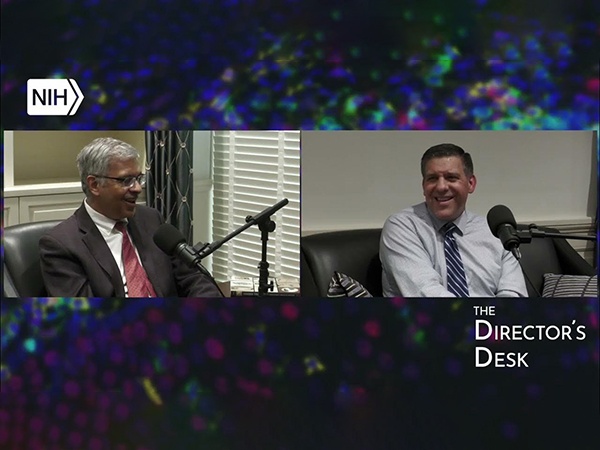
- On Day 2 as director of NYU Perlmutter, Anirban Maitra talks about the advantages of running a matrix cancer center
- Letai: NCAB’s ad hoc working group plays major role in advising NCI on extramural research
- Black History Month: Otis Brawley shares how lessons learned in West Side Detroit shape his stance on cancer prevention
- The National Highway Traffic Safety Administration has a profound, albeit not immediately obvious, impact on cancer
The following is a transcript of this week’s In the Headlines, a weekly series on The Cancer Letter Podcast:
Jacquelyn Cobb: This week on the Cancer Letter Podcast…
Paul Goldberg: It’s interesting because we started two podcasts; right? The weekly podcast, which is—
Jacquelyn Cobb: In the Headlines.
Paul Goldberg: Which we were talking about right now, but also at the same time, we started a monthly podcast called The Directors.
Jacquelyn Cobb: Yeah. Yeah.
Paul Goldberg: And that’s a really important one, too, for me at least.
Jacquelyn Cobb: Yeah. That’s like your baby, I feel.
Paul Goldberg: Yeah. What that means is, I mean, the whole purpose of that one was to bring cancer center directors together two at a time, and with me as a moderator, no moderator is really needed, but as a convener, I guess, and ask them, “Well, what’s keeping you up at night?”
It’s also really entertaining because, as you said, these are people much smarter than I am, and it’s a pleasure to hear smart people talk.
Jacquelyn Cobb: Yeah. Totally. I wrestled with myself and would be like, “No, they’re not smarter than you.”
Paul Goldberg: Oh, please.
Jacquelyn Cobb: You know? My instinct was to do that, but I was like, “Yeah, these people are brilliant. They’re geniuses.”
Paul Goldberg: Yeah. Well, you’re smarter than I am, and they may not be smarter than you are, so …
Jacquelyn Cobb: We’re not going to have this fight on the air.
Paul Goldberg: Yeah, let’s argue about it later.
You’re listening to the Cancer Letter Podcast. The Cancer Letter is a weekly independent magazine covering oncology since 1973. I’m your host, Paul Goldberg, editor and publisher of The Cancer Letter.
Jacquelyn Cobb: And I’m your host, Jacquelyn Cobb, associate editor of The Cancer Letter. We’ll be bringing you the latest stories, groundbreaking research and critical conversations shaping oncology.
Paul Goldberg: So, let’s get going.
Jacquelyn Cobb: Hi, Paul. How are you?
Paul Goldberg: Oh, hi, Jacquelyn. How are you? How is your skiing going?
Jacquelyn Cobb: Skiing. Well, I didn’t go skiing actually this week, but we went south and in Massachusetts, there was like eight inches, 10 inches. And in Portland, there was absolutely nothing. So, it was nice. We got like a winter wonderland and then got to escape up to the nice bare roads and no ice and everything like that. It was great.
Paul Goldberg: Oh, that sounds fantastic.
Jacquelyn Cobb: Yeah.
Paul Goldberg: I went skiing in Stowe. It was bitterly cold, which is no problem with me. But there is-
Jacquelyn Cobb: I think it’s really cold.
Paul Goldberg: … a bit of a problem when it’s so cold and so windy that they close the lifts, except for a couple. And then it turns into a-
Jacquelyn Cobb: Wow.
Paul Goldberg: … It’s about as restful and pleasant and about as much Zen as shopping at a Walmart the day after Thanksgiving.
Jacquelyn Cobb: Yeah. Yeah. I totally understand.
Paul Goldberg: No, I haven’t done that, but still, I can imagine it being unpleasant.
Jacquelyn Cobb: Yeah. Yeah. I think I even mentioned this last week or whenever I had gone skiing, the sort of outdoor … To be frank, it was a bar area that had that energy. It was like the crowds were insane. It was just like a perfect day or something. It was like a ridiculously crowded day there and it is, I don’t know, something about skiers needing to get up there. They’re getting urgent. They want their beer. Like something goes down there. I don’t know.
But I’m glad that you got out there, honestly, Paul. I feel like that’s the main thing-
Paul Goldberg: No, it’s great. It was really fun. I’d do it again, but I have a feeling that switching almost entirely to cross country, which is still gorgeous-
Jacquelyn Cobb: Whoa.
Paul Goldberg: … I would still-
Jacquelyn Cobb: Yeah, you avoid that-
Paul Goldberg: Yeah. So-
Jacquelyn Cobb: … running-type sport, rather than more of like a … Skiing sometimes feels very much like I’m at an amusement park. Like that’s really the energy for me.
Paul Goldberg: It does. It does. It can.
Jacquelyn Cobb: So cross country is different. Yeah, it can, exactly, if the lifts are closed.
Paul Goldberg: Yeah. It used to be gorgeous and there are still places where it is and where I go is not, so what-
Jacquelyn Cobb: Well, you have a nice house, you got the bookshelf, you got downtown Stowe, you have the … It’s balanced out, I’m sure, and you got cross country.
Paul Goldberg: It’s nice, so I’m not … Yeah. But let’s talk about this week.
Jacquelyn Cobb: Yeah.
Paul Goldberg: You’re in oncology. What’s-
Jacquelyn Cobb: Yes, in oncology. Not in skiing. We’re not a skiing podcast.
Paul Goldberg: Not skiing, yeah. We’re not a skiing podcast. Otherwise, we’ll be supported, we’ll be sponsored by equipment manufacturers.
Jacquelyn Cobb: Yeah. Sounds pretty nice. I don’t know. Get REI… I’ll take us through the headlines.
Last week we had a really cool issue, a really awesome issue, but not so much to sort of report on the podcast here because a lot of the things that we published last week were actually podcasts or something you can listen to online.
So our cover story was Paul did a conversation with Anirban Maitra, the director of NYU Perlmutter. It’s Perlmutter, Paul?
Paul Goldberg: Perlmutter.
Jacquelyn Cobb: Perlmutter? Okay.
Paul Goldberg: Mother of pearl.
Jacquelyn Cobb: Does it, actually?
Paul Goldberg: It does. It’s …
Jacquelyn Cobb: Wow. Oh, my gosh. Learned something. See, that’s some fun cancer trivia or oncology trivia. That’s what we’re here for.
Paul Goldberg: Oh, it’s just German, Yiddish.
Jacquelyn Cobb: He’s German. Anyway. So Paul talked to him about his stepping into the role as director.
And our second story is huge. It is the first meeting of the NCAB ad hoc working group. We’ve covered that extensively as sort of the NCI struggled to figure out what its role was, et cetera, et cetera. Basically, the group replaced NCI’s former or board of scientific advisors, and now they are in charge of advising NCI on extramural research.
That happened on Thursday. It was like a semi-full day meeting. And so we did publish NCI Director Anthony Letai’s remarks, but that’s going to be a huge part of our upcoming issue is what else happened at that meeting. So that’s lots to plumb there. Very, very fun. There’s a canine oncology session. There was a part about multi-cancer detection tests, and, of course, acting or acting, former acting, acting director, Doug Lowy, and now principal deputy director, I believe. Doug Lowy also has his remarks.
We also had a story about Black History Month, or in honor of Black History Month. Otis Brawley gave a incredible sort of explanation of his path to where he is in his career, starting on, or in West Side Detroit, and basically how that sort of shaped his approach to oncology in his career as well. That is a really, really awesome episode. And we’re going to have more Black History Month episodes as well. So that will be a weekly thing for the remainder of February.
We had a guest editorial that was really interesting. It was about the impact of the National Highway Traffic Safety Administration on oncology and cancer outcomes. Not something we’ve ever covered before, but it was very, very interesting to see sort of this new perspective.
And then, yeah, we had a lot of cancer policy. I’m not going to get into it, but the big reason we’re here today is that this is a year anniversary of the In the Headlines, the Cancer Letter Podcast.
So we’re not going to really dive into too much of what our previous issue was like normal, but we’re going to just kind of talk, wax poetic about podcasting.
Paul Goldberg: Yeah. It’s interesting because I can see how people want to use podcasting as their way of getting information and actually in presenting information. You can see why it’s important right now because it’s so human at a time when so much of news casting is becoming sort of less human, more technological and even, God forbid, AI. And this is about as far as you can get away from AI.
Jacquelyn Cobb: Maybe a little too far.
Paul Goldberg: Yeah. No, probably not. I mean, I listen to a lot of podcasts. It just sort of crept up on me. I mean, I also read the New York Times, but I don’t know how my life would right now, how my news, both news-gathering and really taking in the news would happen without podcasts.
Jacquelyn Cobb: Now, let’s take a quick break to hear from our sponsors.
Audio: Life moves fast. It’s fierce, persistent, determined. At City of Hope Cancer Center, they are, too. Their groundbreaking research and discoveries have impacted millions of lives globally. They’re moving science forward with the hope, passion, and speed every diagnosis deserves for a cancer-free future. City of Hope, pursuing cancer cures at the speed of life. Learn more at cityofhope.org.
Jacquelyn Cobb: I didn’t really think about this until right now, but I think the fact that there’s such a high volume of news, maybe it’s just my learning style or whatever, but being able to just sort of listen while I do the dishes and do, when I’m doing other things that have to get done, but there’s just a higher volume of things I need to know, podcasting is very helpful.
But I think you’re touching on something a little bit more like, yeah, a little bit deeper where people want to, they want to hear me struggle to find the word deeper, like even might take a little extra time. It’s a little bit less polished, but it’s so much more human, and it’s so much, I think, more reflective of, yeah, like there’s a lot of news. I’m a little overwhelmed. I have to find the right word, like that type of thing.
And that’s a big part of why people listen to any sort of human conversational content is to almost like pseudo work through whatever they’re working through. What is that word? Isn’t that a therapy word, like transference? I think that means something else.
Paul Goldberg: Transference?
Jacquelyn Cobb: That’s a different thing. We’re not doing that.
Paul Goldberg: We’re not doing transference.
Jacquelyn Cobb: But there’s something like that where it’s like you kind of maybe projecting, I don’t know, something like that.
Paul Goldberg: Oh, projecting, yeah.
Jacquelyn Cobb: But anyway, all that to say is that I think it’s really valuable.
And I think it’s been valuable for me, too, as like the person podcasting, I guess. I hesitated to say podcaster, but yeah, just like having-
Paul Goldberg: You are a podcaster!
Jacquelyn Cobb: I am, yeah. It’s a new, well, a year-old title now. But yeah, it’s nice to have sort of that continuing conversation, even if it didn’t go beyond you and me and Claire and Sara and just to sort of … I guess that was the word, process is really what I was … Co-process? Something like that.
Paul Goldberg: Yeah. Yeah. What I think is really useful is when you write, when you publish a story, a particularly important story, or really almost any story, there is, you hope, conversation that takes place after people read it. And this way we can be a part of that conversation, and we can remove the barrier, which is a very artificial barrier, between us as people who report news in a very traditional way and our readers who are talking about it. So we’re part of the conversation and we have been.
Obviously, there’s bias in the kind of feedback you get. People aren’t going to stop you generally, and tell you you’re full of it, and you should just stop. But most of the people who sort of tell me about, talk to me about what, react to it, usually give very positive reaction to it. So bias, of course. Yeah, yeah, yeah.
And also, you know, what else, what I’ve enjoyed is just bringing in sources. Like, “I have a question. Well, we just happened to have Doctor So-and-so right here. Let’s ask her.”
Jacquelyn Cobb: Yeah. Yeah. No, I love that. Yeah. We had some really cool guests specifically, too, and they were sources.
I’m sure we had people who weren’t necessarily sources that were on the podcast, but most of the guests, I think either are sources or for that particular story that they were talking about or just are sources in general. Like our readers and our sources have a lot of overlap, but our…
Paul Goldberg: You would hope.
Jacquelyn Cobb: You’d hope. True.
Paul Goldberg: I don’t read it, I’m just a source.
“No self-respecting fish would find itself wrapped in The Cancer Letter.” That’s Otis Brawley’s favorite saying, or one of them.
Jacquelyn Cobb: Oh, my gosh. Otis Brawley. There we go.
Paul Goldberg: Hang on. He shows up in The Cancer Letter a fair number of times.
Jacquelyn Cobb: Well, I fully lost my train of thought now. Oh, the guests. Yes.
Paul Goldberg: Sorry.
Jacquelyn Cobb: Oh, no. It was kind of a fun little detour.
No, we had just really awesome guests with Kimryn Rathmell comes to mind, of course, and Cliff Hudis from ASCO after they released their AI guidelines. And yeah, so it was really nice to sort of have them speak.
I’ve always felt that every interview I’ve ever done, I’m like, “I know that my job as a reporter, I know that I have like a useful labor here to bring this to the readers.” But in some ways, like nobody can say it better than you sometimes with the hard science or really complex policy stuff. And so it’s just nice to hear directly from the sources like intonation and even just the fact that there’s a conversation, we can interrupt and ask questions. And yeah, I’m a huge fan. That’s one of my favorite parts of this job is interviewing. So it’s just like more of that.
Paul Goldberg: Yeah. Yeah. Yeah. No, that’s kind of an amazing thing about being a science writer. People you talk to and people who read you are much smarter than you are.
Jacquelyn Cobb: Yes, exactly. Yeah. Yeah. So let them, we’ll just facilitate that, the high-level conversations.
Paul Goldberg: Yeah. Yeah. And skating by on this for a long time. But seriously, this is an important self-deprecating humor aside, it’s still really a privilege, this job. And it’s interesting because we started two podcasts, right? The weekly podcast, which is-
Jacquelyn Cobb: In the Headlines?
Paul Goldberg: … what we were talking about right now, but also at the same time, we started a monthly podcast called The Directors.
Jacquelyn Cobb: Yeah. Yeah.
Paul Goldberg: And that’s a really important one, too, for me at least.
Jacquelyn Cobb: Yeah. That’s like your baby, I feel.
Paul Goldberg: Yeah. What that means is, I mean, the whole purpose of that one was to bring cancer center directors together two at a time, and with me as a moderator, no moderator is really needed, but as a convener, I guess, and ask them, “Well, what’s keeping you up at night as you run your institutions?” And then going from there. Because I never write down the questions because I want to hear, more than I want to … and I want to follow up on the answers to the first question.
Jacquelyn Cobb: Exactly.
Paul Goldberg: Yeah. But what’s important here is that it tells this community in a very … Well, it’s very important time to do it. It tells this community that it has more than one leader, it has more than just the NCI director. The leadership is all of the cancer center directors, and that’s a large number of people.
And having two of them at a time means that we don’t really have them focus on their center alone. They’re focused more on kind of the intersection, and the intersection is going to be different just based on who they are, and where they are, and what they do, and what they run.
It’s also really entertaining because, as you said, these are people much smarter than I am, and it’s a pleasure to hear smart people talk.
Jacquelyn Cobb: Yeah. Totally. I wrestled with myself and would be like, “No, they’re not smarter than you.”
Paul Goldberg: Oh, please.
Jacquelyn Cobb: You know like my instinct was to do that, but I was like, “Yeah, these people are brilliant. They’re geniuses.”
Paul Goldberg: Yeah. Well, you’re smarter than I am, and they may not be smarter than you are, so …
Jacquelyn Cobb: We’re not going to have this fight on the air.
Paul Goldberg: Yeah, let’s argue about it later.
Jacquelyn Cobb: Yeah, about who’s-
Paul Goldberg: Yeah. It’s a-
Jacquelyn Cobb: Who is smarter, but in a nice way?
Paul Goldberg: It’s fun to keep up with the media that exists, but I was just thinking about this. The Cancer Letter started out as a newsletter. Newsletter as Washington newsletter is a long dead genre. There aren’t any. We now refer to ourselves as a magazine.
But in between, there were these periods in between, but we never did what was sort of what made sense to the majority of the publications. Everybody was writing kind of brief articles or writing crap that the internet, ultimately, was able to provide, and that was never our product. So we’ve always just done things differently.
And also, we threw out this idea, which I think is one of the things that killed journalism, that people want to read on sixth-grade level, even if they’re very smart. That’s just nonsense. We killed that. We never really did that.
Or that people want to read small tidbits. No, no, no, no, no, no, no. Our stories can be 15,000 words, and we don’t care if there are 15,000 words. And in fact, I’ve written 15,000-word stories, and I think you might have as well.
Jacquelyn Cobb: No, no. I think my longest-
Paul Goldberg: Well, you’ve certainly done six, seven.
Jacquelyn Cobb: Yeah, six, I think was … I think the ODAC marathon must have been the longest, right? Especially for counting transcript words. Oh, my gosh.
Paul Goldberg: Yeah. Yeah. Yeah. And the Q&As and the kind of the … When you start bringing together spoken word with written word, just humanizing the news at the time when people are trying to dehumanize it and make a whole ton of money through AI, which is utter nonsense-
Jacquelyn Cobb: Absolutely.
Paul Goldberg: … well, you know-
Jacquelyn Cobb: Here we are.
Paul Goldberg: … here we are. And we’ll be here as AI devours the world, giving human voices of our own, as well as the voices of our sources.
Jacquelyn Cobb: Yep. Yep. Yep, our community, which is, again, they’re smarter.
Paul Goldberg: Yeah. And it’s also interesting when you talk about some of the techie stuff, it’s really nice to have kind of a conversations-
Jacquelyn Cobb: Yeah. Yeah, 100%.
Paul Goldberg: … that approach of … So we started doing that some years ago. So it’s always experimentation and storytelling. There’s really nothing more complicated or more important than storytelling so here we are.
Jacquelyn Cobb: We could go on a whole tangent about that. I’m going to have to …
Paul Goldberg: Aren’t we on it now?
Jacquelyn Cobb: I guess that’s true. It’s true. But yeah, I could keep going and I will spare our listeners, but, yes, yes.
Paul Goldberg: We will spare our patient listeners.
Jacquelyn Cobb: Our patient listeners, yes, we’re thankful for you. Awesome.
Well, thank you, Paul. I think that this is lovely.
Paul Goldberg: Well, thank you, Jacquelyn.
Jacquelyn Cobb: Is there anything that we missed?
Paul Goldberg: I don’t think we missed anything, other than this is a great time to be a journalist.
Jacquelyn Cobb: A great time to be a journalist. As we said, storytelling is the finest of the arts.
Paul Goldberg: Indeed. Noblest of.
Jacquelyn Cobb: Thank you for joining us on The Cancer Letter Podcast, where we explore the stories shaping the future of oncology.
For more in-depth reporting and analysis, visit us at cancerletter.com. With over 200 site license subscriptions, you may already have access through your workplace. If you found this episode valuable, don’t forget to subscribe, rate, and share. Together, we’ll keep the conversation going.
Paul Goldberg: Until next time, stay informed, stay engaged, and thank you for listening.