In last week’s issue of The Cancer Letter, Jacquelyn Cobb, associate editor, wrote a story about the then-promising legislative package that was passed by the U.S. House of Representatives Jan. 22. At the time, the package was expected to pass in the Senate, provide funding for the federal government through fiscal year 2026, and prevent a government shutdown that looms Jan. 30.
This podcast is available on Apple Podcasts, Spotify, and Youtube.
Then, on Jan. 24, 37-year-old ICU nurse Alex Pretti was shot in Minneapolis while trying to document the actions of U.S. Immigration and Customs Enforcement agents.
In this week’s episode of The Cancer Letter Podcast, Jacquelyn and Paul Goldberg, editor and publisher of The Cancer Letter, talk about how the future of the House-FY26 spending package—and its implications for NIH and NCI funding, as well as pediatric cancer initiatives and other important healthcare stipulations—has dissolved as lawmakers refuse to move forward a spending bill without changes to ICE and the Department of Homeland Security.
“There we were, staying in our lane covering nothing but the stuff we cover, which is oncology,” Paul, editor and publisher of The Cancer Letter, said. “So, suddenly, a 38-year-old nurse from the VA gets killed while trying to document what ICE is doing in Minneapolis.
“And suddenly the bill, the spending bill, which includes the Department of Homeland Security spending, is derailed. So, we are trying to stay within our lane and cover only oncology and then the world catches up, which also kind of tells you that there are no safe places anymore,” Paul said.
The events of the last week reminded Paul that “staying in our lane” is not always possible.
“I’m seeing one thing only,” Paul said. “There is no safe harbor that I thought we were kind of seeking so we could focus only on our stuff because The New York Times does a very nice job of covering the rest of the administration. We cover our part of the administration. Well, now we are seeing that our part of administration is becoming more like ‘Well, there’s no safe harbor. It’s very hard to delineate.’”
Stories mentioned in this podcast include:
- Premarin’s 84-year hold on the market ends as FDA approves a generic version
- Spending bill passed by the House gives NIH $415M raise, NCI gets $128M Legislation caps proportion of NIH grants to receive multiyear funding; indirect costs remain untouched
- Fifth time’s a charm? Mikaela Naylon Give Kids a Chance Act is included in FY26 spending bill
- Blood Cancer United: A new name at the right moment
- NIH ends fetal tissue research—again
This episode was transcribed using transcription services. It has been reviewed by our editorial staff, but the transcript may be imperfect.
The following is a transcript of this week’s In the Headlines, a weekly series on The Cancer Letter Podcast:
Jacquelyn Cobb: This week on The Cancer Letter Podcast…
Premarin, just the name alone is literally pregnant mares’ urine, P-R-E, Premar, M-A, MA, urine, R-I-N—Premarin. That almost is my favorite part of the story, to be honest.
Paul Goldberg: Yeah. And I kind of knew that it was kind of in the back of my head, but this is a drug that’s what, 83 years old. It’s really hard to make because you’re making it out of urine of pregnant horses during various periods of gestation. So you have to catch it just at the right moments and mix it up just so. And therefore, this drug remained every time anybody tried to challenge the patent. And by the way, it’s not just, this is trade secrets that they were doing. You were spared. Poor Claire had to listen to me making horse sounds as I was editing the story. That wasn’t good.
Jacquelyn Cobb: I was spared. I will admit that.
Paul Goldberg: You were spared.
You’re listening to The Cancer Letter Podcast. The Cancer Letter is a weekly independent magazine covering oncology since 1973. I’m your host, Paul Goldberg, editor and publisher of The Cancer Letter.
Jacquelyn Cobb: And I’m your host, Jacquelyn Cobb, associate editor of The Cancer Letter. We’ll be bringing you the latest stories, groundbreaking research and critical conversations shaping oncology.
Paul Goldberg: So let’s get going. Good morning, Jacquelyn. How are you? How are you doing in this cataclysmic snowfall, which in Maine they call weather?
Jacquelyn Cobb: Yeah. We’re doing okay. I think the main thing about Maine that maybe is worse or more challenging, the one thing that we have that might be more challenging than you guys, because I’ve heard some crazy stuff about what D.C. is going through in terms of driving and plowing and that type of thing. But I think that here it is just so cold and the windows are so big and the heat costs so much money. So, that’s honestly, the snow is beautiful. I love skiing, love cross country skiing, but the indoors have really been a challenge.
Paul Goldberg: Oh, really?
Jacquelyn Cobb: Yeah.
Paul Goldberg: Yeah. Yeah. We’re off to Vermont on Saturdays. Our next podcast is going to be from Vermont.
Jacquelyn Cobb: Oh, with the bookshelf background. That’s my favorite.
Paul Goldberg: Yeah. Yeah. Yeah. So I can’t wait to get out there because I just got a notice that they have 10 inches of powder snow.
Jacquelyn Cobb: Easily. Oh my gosh. Yeah. Yeah. I can imagine.
Paul Goldberg: We’ve got six inches of ice here and it’s…
Jacquelyn Cobb: So, not so much.
Paul Goldberg: I don’t care.
Jacquelyn Cobb: Not so fun for cross country skiing though.
Paul Goldberg: No, this was not a cross country skiing kind of snowfall here, but in Stowe there’s no cross country skiing and the dogs are going nuts.
Jacquelyn Cobb: Oh, yeah. Oh, that’s awesome, Paul. I’m excited for you. You got to send pictures.
But before we kind of, you and I can chat for hours. So I will go through last week’s headlines. We had a really, really, really incredible story. I honestly almost want to let you gush about it a little bit, Paul, but Claire’s cover story last week was incredible. It was about Premarin, the history of Premarin and in the context of the new generic estrogen formulation that has been approved just a few months ago as part of the, it was approved actually just as a small paragraph at the end of the press release about the black box warning on hormone replacement therapies being removed, which also Claire did an incredible story on when that happened.
But yeah, she just found this one paragraph and she really drilled in and she was like, “What is this?” And there was no coverage. And she did an incredible job and we had incredible art. It’s just one of those Cancer Letter stories that is just really fun to work with and edit and be a part of. So awesome on that. Definitely would recommend reading it.
And then we had a story about the appropriations, which is now basically nearly moot, I would say. And we’ll dive into that. That’s what our-
Paul Goldberg: Strike the “nearly.”
Jacquelyn Cobb: Yeah. Well-
Paul Goldberg: Kaput.
Jacquelyn Cobb: Yes, yes. We can talk about that in more detail.
And then we had another story, a shorter story about the Michaela Naylon Give Kids a Chance Act and sort of focusing on that. But really that was part of the larger spending bills as well. But that’s a crazy story because it was the fifth time that it had been approved by one of the House or the Senate, one’s piece of Congress. So that was just an interesting sort of story on that end. And definitely going to have to follow up with that because now this is going to be fifth and it’s dead again. So that’s going to be an ongoing story. I really had hoped that this would maybe be the end, but maybe I was naive.
And then we had a guest editorial by E. Anders Kolb about Blood Cancer United, which formerly was the Lymphoma and Leukemia Society and they changed their name. So they kind of just wrote a little editorial about their logic behind that and that was very nice.
And then we have a bunch of cancer policies as always. NIH ended fetal tissue research again. And yeah, there’s a whole bunch from cancer policy that there is to explore. So I would strongly suggest reading through that.
And I think that’s it, Paul. Really, I think I’m just getting a little bit caught on the spending bill, so we should probably just dive into that because that’s really the focus. And then maybe we can end on a higher note of Claire’s awesome story.
Paul Goldberg: Yeah. It’s so fascinating to see what happened because there we were staying in our lane covering nothing but the stuff we cover, which is oncology. Then a half trained, I guess, or maybe not even half trained paramilitary dude in Minneapolis decides in tactical gear, I mean, you have paramilitary guys in tactical gear wandering around with guns. It’s unexpected things will happen. Maybe they’re very much expected. So, they suddenly, a 38-year-old nurse from VA gets killed while trying to document what ICE is doing in Minneapolis. So basically his First Amendment right and also also his Second Amendment rights because he had a weapon which he carried gets killed in the street.
And suddenly the bill, the spending bill, which includes the Department of Homeland Security spending is derailed. So we are trying to stay within our lane and cover only oncology and then the world catches up, which also kind of tells you that there are no safe places anymore.
Jacquelyn Cobb: Well, I just wanted to, before, just to touch on that, Paul, is that when I was reporting and writing the story last week, God, it’s so sick to talk about it this way. But the first shooting, so Renee Good had already happened and that was already part of sort of the conversation. The bills that were passed last week that I wrote about included some changes to the Department of Homeland Security in relation to ICE. So they had like more, I forget, like you said, this isn’t typically our lane, but of course it was relevant last week where they did have some sort of stipulations about DHS. And so that was part of it.
But then of course this happens and now the bill is really, really fallen apart and a lot more of the Democrats are refusing to sort of sign on, which I think what you said about how nothing is safe is like, I don’t think there’s really any Democrats that are anti-passing a bill for HHS or labor HHS, but I think it’s just the seriousness of what’s happening with ICE. It seems to me, again, I’m coming at this from a science perspective. I can’t even believe I’m talking about politics like this, but it seems to me that it’s more about having the weight of such an important, well, the government shutdown is looming as well, January 30th. We didn’t technically say that out loud, but that is now much more of a likelihood, probably a hundred percent likelihood based on what you’re saying, Paul. And then-
Paul Goldberg: I don’t know. I actually do not know.
Jacquelyn Cobb: Yeah. But all that to say is just that we’ve now turned a corner that wasn’t necessarily the case quite as much last week.
Paul Goldberg: Well, look at it this way. The story you did, four bills moved, right? DHS, DOD, Transportation, HHS. HHS is important to Dems as well as Republicans. DOD is vitally important to Republicans. Transportation is important to everyone because it’s full of pork, so everybody loves it. And then of course there’s DHS, which includes ICE. And the question is going to be more than ICE, a lot more than ICE, but the question is going to be what happens here and Senate has to come back and resolve it. And I don’t know if there’s enough time.
That’s kind of one of the perils of writing any stories about this, is that everything you wrote on Friday, Thursday and Friday is now moot, right? It’s just draus. I mean, it was beautifully written, beautifully reported, but it’s draus, gorgeous draus, but draus. And then everything that I’m seeing now is utter nonsense and totally by the time we post it. So we should probably post it really soon because it’s accurate right now. It may not be accurate by tonight. Tonight being Monday night, by the way.
And I’m told to just, Monday night is going to be, if things are going to become a little more clearer or very much more clear, but everybody really has a reason to resolve this.
Jacquelyn Cobb: Of course. Yeah.
Paul Goldberg: But you can’t, Dems are saying, “Hey, you can’t just leave.” And a lot of Republicans too.
Jacquelyn Cobb: Yeah. Yeah, they are. Yeah. Yeah. And I think it was a weird thing, and not to circle back, but I mean, I was watching House Speaker Mike Johnson talk, they had a press release after the passage of the bill just in the House. And they were cheering, there were cupcakes, it was a bipartisan bicameral victory. It was such fanfare, and now it’s totally set back. And I mean, not to be biased, I think that there’s very, very good reason that it’s set back. I think that the shooting of an American citizen, that is a good reason, but it is just definitely unsettling and a little bit, especially because we just had the longest government shutdown in U.S. history a few months ago. So I don’t know, just not very uplifting news that is coming out of Washington and Minneapolis.
Paul Goldberg: God, we’re speaking in such cautious terms. There’s a very interesting history to kind of speaking in very cautious terms about these phantasmogorias. Let me tell you about this friend of mine who was actually my mentor, her name was Lyudmila Alexeyeva. She and I wrote a book together about the Soviet Human Rights Movement. She was one of the founders of the Moscow Helsinki Group. Then she returned and was kind of pain in the neck to Putin in many ways. And she died of natural causes, thank God at an advanced age. But she used to have a very nice way of describing things that are just not nice, such as killing people in the streets is not nice.
Jacquelyn Cobb: Oh, my God.
Paul Goldberg: And putting innocent people in prison, not nice.
Jacquelyn Cobb: That’s not very nice. Yeah.
Paul Goldberg: And the way she used to say it, she had kind of an operatic voice. “ну некрасиво,” she used to say.
Jacquelyn Cobb: Wow. That has a different tone.
Paul Goldberg: It’s not beautiful. It’s not pleasant. I mean, this is like somebody who’s my parents’ generation, maybe a little tiny bit older, who was essentially speaking a very different kind of Russian, which is kind of full of these inflections and operatic. You listen to people my age, you can still understand them, but they’re a lot flatter. And then you listen to younger people, I can barely understand it because there’s no emotion.
Jacquelyn Cobb: Wow.
Paul Goldberg: So, kind of like, I think actually all of this is having an impact on language too. It can’t not. So here we are starting this conversation. Well, we’re trying to stay in our lane. This is, as my friend Lyuda would say, “некрасиво.”
Jacquelyn Cobb: Yes, yes.
Paul Goldberg: Not pleasant.
Jacquelyn Cobb: Not beautiful.
Paul Goldberg: Not pretty.
Jacquelyn Cobb: Yeah. Yeah.
Paul Goldberg: And I think it’s bipartisan, this concern about ICE. If it isn’t, it soon will be.
Jacquelyn Cobb: Yeah.
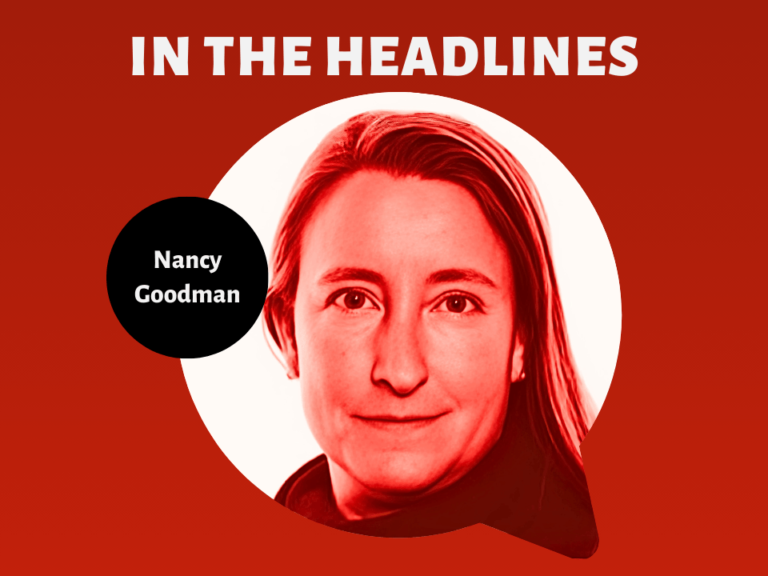
Paul Goldberg: This is not going to go away. But meanwhile, here’s HHS that’s hanging in the balance. The entire U.S. government funding is hanging in the balance and here we are. Oh, and let’s just not forget about the Michaela Nalan Bill, which is a part of the HHS situation. And is it going to go forward in the next version of the bill? I assume that if there’s a next version, if anything moves forward, it will be there. Otherwise, we’ll have a continuing resolution. Poor Nancy Goodman is at it again for the sixth time. And you were the one who wrote that headline unless I did fifth time.
Jacquelyn Cobb: I think I wrote it, but that was definitely that was inspired by Nancy because she said, “We’ve been here five times before.” So I was like, that just-
Paul Goldberg: Well, and by the way, that is not a partisan issue entirely.
Jacquelyn Cobb: Oh, no.
Paul Goldberg: The poor kids with cancer get beat up by both Democrats and Republicans who knock it back over and over that bill. So I mean, my God.
Jacquelyn Cobb: Yeah. I mean, I think that bill, to be fair, has really just been over and over collateral damage. But I do think that that’s an interesting point. It’s important to humanize what the impacts are of a spending bill getting pushed off. Everything else the government does, like you said, is very important. And yeah, in some cases is life or death as well. So it is very, very tricky. It’s just a terrible situation.
Paul Goldberg: I’m seeing one thing only, and don’t cut that, is that there is no safe harbor that I thought we were kind of seeking so we could focus only on our stuff because the New York Times does a very nice job of covering the rest of the administration. We cover our part of the administration. Well, now we are seeing that our part of administration is becoming more like what, well, there’s no safe harbor. There’s a lot of, it’s very hard to delineate.
Jacquelyn Cobb: Absolutely.
Paul Goldberg: I’m not sure it’s necessary to delineate. In this case, it isn’t.
Jacquelyn Cobb: Yeah.
Paul Goldberg: It’s to do a good job. We have to just stay with the stories as they go. So that was a very interesting lesson in civics that we all got in your story that is just completely outdated.
Jacquelyn Cobb: Yeah. Should we maybe switch over to Claire’s story just to kind of end on a little bit more of a less devastating story, a little less devastating of a topic?
Paul Goldberg: Well, Premarin.
Jacquelyn Cobb: Yes. Premarin is, I mean, I want to say this part just in case readers might not know. I didn’t know. Premarin, just the name alone is literally pregnant mares’ urine, P-R-E, Premair, M-A, MA, urine, R-I-N, Premarin. That almost is my favorite part of the story, to be honest.
Paul Goldberg: Yeah. Yeah. And I kind of knew that it was kind of in the back of my head, but this is a drug that’s, what, 83 years old. It’s really hard to make because you’re making it out of urine of pregnant horses during various periods of gestation. So you have to catch it just at the right moments and mix it up just so. And therefore, this drug remained every time anybody tried to challenge the patent.
And by the way, it’s not just, this is trade secrets that they were doing. So nobody could make it until now somebody has synthesized it. And the question is, of course, the HRT question, which is how Claire got into it. She started writing about the new decision to make HRT more used.
Jacquelyn Cobb: Well, removing the black box warning. Let’s just say that.
Paul Goldberg: The black box warning is right. Removing the black box warning. And early in my career, there was the Women’s Health Initiative, which actually showed that perhaps overuse of HRT is not a good thing. And so that question is now getting a new look. [inaudible 00:19:44]
Jacquelyn Cobb: Which is funny. I do want to say one thing about what you said where maybe overuse of this drug is not a good thing. And please listeners refer back to Claire’s original story on that, the black box warning, because it is way more complicated than we can get into now. However, the only thing I will say is that, let me try to find the actual, basically, Paul, you’re going to have to help me with the language here, but the part of Claire’s story that was like, yeah, maybe giving a horse level estrogen to post-menopausal women is maybe a bit too much. Maybe we don’t need to give them-
Paul Goldberg: Oh, the Janet Woodcock interview. That was a get.
Jacquelyn Cobb: That was crazy.
Paul Goldberg: She got Janet talking. That was great.
Jacquelyn Cobb: Fascinating. Fascinating. But yeah, the point of that is just that horses produce a lot more estrogen than pregnant women, which I think is very logical. They’re much larger. I don’t know if that’s a real biological mechanism, but that seems reasonable to me. And it’s just very funny to me to think about this whole debate between, is it too much estrogen? Are we over-prescribing? It’s like maybe just don’t give them horses. I don’t know. For some reason that tickled me really hard.
Paul Goldberg: Well, the worst part of it, you were spared. Poor Claire had to listen to me making horse sounds as I was editing the story. That wasn’t good.
Jacquelyn Cobb: I was spared. I will admit that.
Paul Goldberg: You were spared.
Jacquelyn Cobb: I’m not surprised. I should have expected that to happen after.
Paul Goldberg: I was just really having entirely too much fun with that story because this is where history kind of starts meeting the present and it’s really a cool thing with how the science evolves, how it doesn’t evolve.
Jacquelyn Cobb: We’re still with horses, yes.
Paul Goldberg: And then the horses. And then the ending took a bit of work. So we were both really having entirely too much fun with the story, and I hope the readers will too.
Jacquelyn Cobb: Yeah.
Paul Goldberg: Oh, the coolest bit. The coolest bit was the history of how they were really marketing the bejesus out of it in the 1950s by putting out ads on how, what was it kind of outliving their ovaries and women?
Jacquelyn Cobb: Yes.
Paul Goldberg: It was misogyny at its best, at its most spectacular. So my horse sounds got really loud at that one. It’s just, please don’t make me do it. But it was-
Jacquelyn Cobb: I’m trying to find the ads because they are really funny. They were-
Paul Goldberg: And then the collage on the cover. My God, that was so cool.
Jacquelyn Cobb: Yes, incredible. So cool. The collage-
Paul Goldberg: Oh yeah, yeah. The marriages and because women have outlived their ovaries and therefore just pump them full of horse estrogen and they’ll be more whatever.
Jacquelyn Cobb: So the funniest one to me, I just want to say is he suffering, no, no, sorry, sorry. He is suffering from estrogen deficiency. She is the reason why. Talking about their husbands, it’s so, these are so good.
Paul Goldberg: Try that now. Try to put that kind of horseshit. Horseshit.
Jacquelyn Cobb: Horseshit!
Paul Goldberg: See, so it got really bad. And I don’t know. Yeah. It got very interesting to edit.
Jacquelyn Cobb: Well, I’m-
Paul Goldberg: This story was a breath of fresh air.
Jacquelyn Cobb: Yeah. Yeah. Give it some creativity and silliness. Yeah.
Paul Goldberg: It’s a good candidate for an award next year, I think.
Jacquelyn Cobb: Oh, yeah. Absolutely.
Paul Goldberg: The writing is just…
Jacquelyn Cobb: Beautiful.
Paul Goldberg: Exquisite.
Jacquelyn Cobb: As always with Claire. Love her writing. She’s a genius. But okay. I think that is-
Paul Goldberg: Good writing.
Jacquelyn Cobb: I think we’ve chatted plenty. I think we’re at a full episode here, but a whole-
Paul Goldberg: I have a question now. I’m going to end with a question.
Jacquelyn Cobb: Okay. Yes.
Paul Goldberg: What time is it?
Jacquelyn Cobb: What is it? Great or excellent? Wonderful. Wonderful. It’s a wonderful time to be a journalist.
Paul Goldberg: Indeed.
Jacquelyn Cobb: Bye, Paul.
Paul Goldberg: Bye.
Jacquelyn Cobb: Thank you for joining us on The Cancer Letter Podcast, where we explore the stories shaping the future of oncology. For more in depth reporting and analysis, visit us at cancerletter.com. With over 200 site license subscriptions, you may already have access through your workplace. If you found this episode valuable, don’t forget to subscribe, rate, and share. Together, we’ll keep the conversation going.
Paul Goldberg: Until next time, stay informed, stay engaged, and thank you for listening.