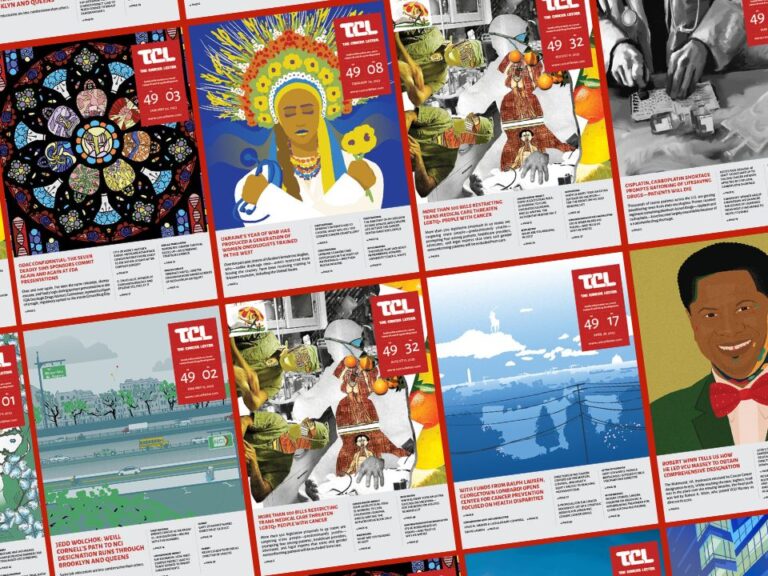
A year like 2025 has demanded a lot from all of us, between the Trump administration’s flooding of the zone, the impact of DOGE and MAHA initiatives on the National Cancer Program, and the personal toll of living amidst uncertainty. In many ways, 2025 was a test. Did the field of oncology pass? Did The Cancer Letter?
This episode is available on Spotify, Apple Podcasts, and Youtube.
Reflecting on a year of cancer news coverage and our readers’ most-read stories, Paul Goldberg, editor and publisher of The Cancer Letter, and Jacquelyn Cobb, associate editor, talk about how this year of change has impacted how The Cancer Letter serves the oncology community.
“You had to stay calm because that kind of was the whole purpose of the exercise, is for people to not be calm,” Paul said. “And catastrophizing was easy, but I think all of us tried to keep catastrophizing to a personal level.”
A legacy publication from 1973, this year has demanded The Cancer Letter step into the new century. Between launching this podcast, a new Cancer Policy section, and “The Directors” monthly series, The Cancer Letter has expanded.
“You had been thinking about the idea for ‘The Directors’ for a while,” Jacquelyn said, “but I think that was definitely kind of a kick in the butt to get it going—where we have sort of a leadership vacuum at NCI once Kimryn Rathmell stepped down.”
Hearing from the leaders in the field has a stabilizing impact, and many of these podcast episodes appear among the top stories of the year.
“Stability. That’s what we were bringing to this thing all through the year, because instead of catastrophizing, suddenly you could see once a month, two directors of cancer centers who are really leaders of the National Cancer Program saying, ‘Okay, we’re doing this. Okay, here’s what I’m worried about. But this is what I’m doing.’ Basically, two leaders of this field practice psychiatry without a license. That’s really what it’s about.”
The field of oncology changed this year. So did we.
“In the mess, there is movement,” Paul said.
Jacquelyn agreed. “That really shifted my perspective when all of this started.”
Stories mentioned in this podcast include:
- The Cancer Letter’s most-read stories of 2025
- The Directors, a monthly podcast series featuring two cancer center directors in conversation about what’s keeping them up at night
- 17 and Onward, a series of guest editorials by former NCI Director Kimryn Rathmell
This episode was transcribed using transcription services. It has been reviewed by our editorial staff, but the transcript may be imperfect.
The following is a transcript of this week’s In the Headlines, a weekly series on The Cancer Letter Podcast:
Jacquelyn Cobb: This week on the Cancer Letter Podcast.
Paul Goldberg: In May, our readership went way up. We were just kind of right around 100,000 users just reaching that from below. And that’s just on the people who’d come to the website, we were a little under. But now we are easily at about 200,000 unique users, which is enormous. And I think maybe it’s the events, maybe it’s the podcasts. Maybe it’s a combination.
Jacquelyn Cobb: I think probably both, right? Yeah. I think it’s the combination.
Paul Goldberg: Yeah.
Jacquelyn Cobb: Yeah. Even like we were saying, there’s too much news for just Friday, we put out news sometimes on the podcast. And I also think just because since it’s so chaotic and since it’s so complicated and so much is happening, I think the fact that we were able to bring just like a conversational reiteration of what we already published couldn’t have hurt. It could not have hurt to help people really understand what was going on and feel more secure in their knowledge, and to feel less overwhelmed by it.
Paul Goldberg: You’re listening to the Cancer Letter Podcast. The Cancer Letter is a weekly independent magazine covering oncology since 1973. I’m your host, Paul Goldberg, editor and publisher of The Cancer Letter.
Jacquelyn Cobb: And I’m your host, Jacquelyn Cobb, associate editor of The Cancer Letter. We’ll be bringing you the latest stories, groundbreaking research and critical conversations shaping oncology.
Paul Goldberg: So let’s get going.
Jacquelyn Cobb: Hello, Paul. How’s it going?
Paul Goldberg: Oh, everything is great. How are you, Jacquelyn?
Jacquelyn Cobb: I’m good. I went home to my parents’ house in New Jersey this weekend, and so I’m feeling rejuvenated by that. That was very fun. And I’m going back to New Jersey this weekend, so it’s going to be a lot of traveling for me, but all very good. Lovely things, lots of snow. It’s looking like a winter wonderland outside. I’m cruising. I’m having a good time. What about you?
Paul Goldberg: But you’re in Maine, so you get real snow. I’m still-
Jacquelyn Cobb: Yeah, we do have real snow.
Paul Goldberg: I’m in DC where we had a little bit of a sprinkling, which was great because we could just drive around anywhere we wanted, because nobody else drives in the snow, where everybody is … Yeah, it’s great.
Jacquelyn Cobb: Too scared.
Paul Goldberg: Traffic is light and it’s great.
Jacquelyn Cobb: Awesome.
Paul Goldberg: So yeah, it’s nice to see the year almost over. And that was a really hard year for us, and it was a test.
Jacquelyn Cobb: Yeah. Yeah.
Paul Goldberg: I don’t know, I think we kind of survived.
Jacquelyn Cobb: In the mess, there’s meaning?
Paul Goldberg: Oh, no, no, no. In the mess, there is movement.
Jacquelyn Cobb: Movement. Yeah, yeah, yeah. That really shifted my perspective when all of this started. Trump came in, it was really overwhelming. I wasn’t here for the first Trump administration, so it was just like, ‘Oh my gosh.’ There were 20 executive orders on day one. It was crazy, classic flood the zone. And you said that, and I was like, “Okay.”
And then, not to steal your thunder, I’m sure you’re going to talk about this, Paul, but as we went through the year and we made changes to accommodate this level of news output and kind of shifted our coverage to focus a little bit more on that because it’s so important to our readers, I think that our readers responded. I think that those stories became some of our most popular stories. And once again, it’s because our readers really needed to know this stuff. And so, I think that was really lovely to be a source of news in a really chaotic time for people who needed that info.
Paul Goldberg: Well, you had to stay calm because that kind of was the whole purpose of the exercise, is for people to not be calm. And catastrophizing was easy, but I think all of us tried to keep catastrophizing to a personal level.
Jacquelyn Cobb: Yes.
Paul Goldberg: Nobody knew just what was happening to our intestines.
Jacquelyn Cobb: That’s true. That’s true. That’s true.
Paul Goldberg: I hope no one knew. But really—I don’t know if you had the same experience—the source of calm for me was reaching out to my friends in this field and seeing how they actually feel about all of this. In the mess there is movement, that’s true, but also the leadership in the field is what mattered. And I keep thinking of Joe Simone an awful lot because he had this amazing line that leadership does matter. It sounds like not even very much of a bit of wisdom, but it’s a lot if you let it be.
Jacquelyn Cobb: Yeah.
Paul Goldberg: So in a mess, there is movement, yes, but leadership does matter. And I think a lot of our coverage reflects that all of us were … I’m so glad we had this really fantastic team to get through this and we still have that fantastic team. And there’s spring in everybody’s step because you don’t have spring in your step, you sink, especially at times like these.
Jacquelyn Cobb: Yeah.
Paul Goldberg: So, what we started was the podcasts, including this one, and we started this section, but I think we should probably talk about the podcasts first.
Jacquelyn Cobb: Yeah. I mean, just because I’m going to forget this, I just want to say also talking about the leadership side of things is, if I remember correctly, I mean, you had been thinking about the idea for The Directors for a while, but I think that was definitely kind of a kick in the butt to get it going—where we have sort of a leadership vacuum at NCI once Kimryn Rathmell stepped down. Of course, Doug Lowy’s amazing, but he wasn’t necessarily proclaiming himself as leader in that time.
And hearing directly from the leaders in oncology and about what’s happening, getting their perspective, like you said, it brought you so much peace to actually hear what people are talking about. That’s basically what we brought to our readers is the two directors every month talking about what’s going on. And I think that was huge. And that is basically half, I guess, of our new podcast sort of persona, maybe technically less than half, but it’s a big part of it. And then of course the other side is In The Headlines, which is this, which is mostly me and you.
Paul Goldberg: Yeah. Yeah. But with The Directors, let’s go back to that because that’s really interesting. I had this idea in the midst of catastrophizing and trying not to. This happened after the election, and it was very clear that this time the Trump administration is going to know that there is such a thing as NIH and that it’s going to actually do stuff within NIH. And I was thinking, okay, we have a role here that we must play, which is connect this field with the collective leadership of this field. And I had this crazy idea of doing a podcast where we would bring on two directors, not one, and that it would all sort of work like Passover Seder at my house, where people talk past each other or past me at least, which is kind of like what happened.
And then I did what I usually do when I’m confused. I called Otis first, and then I called Rob Winn, and Otis said, “Yeah, sure, do it. ” And great idea. And Winn said, “Yeah, let’s do it.” Much, much more enthusiastic.
Jacquelyn Cobb: Nice.
Paul Goldberg: And I said, “Well, that just means you, Rob, are going to be on the first episode.” And since a lot of information, a lot of the attacks were going to be against … We were worried about COE, we were worried about DEI, and we were worried about CRTEC. So why don’t we really talk about all of that? And so we had the first episode was with Rob and with John Carpten, and it was really illuminating. So kind of got off to a really good start. And then most recent one is that we just finished taping, was with Rob Winn again. We broke our rules and brought somebody back twice.
Jacquelyn Cobb: Wow. I didn’t know that.
Paul Goldberg: Yeah, we have a rule. We break every rule we have, don’t get me wrong.
Jacquelyn Cobb: I know.
Paul Goldberg: Because we’re The Cancer Letter, and Joann Sweasy. And since Rob is a immediate past president of AACI, and Joann Sweasy is, of course, now president of AACI, we could really talk more about the cancer centers and how that works. And throughout this, we had a sponsor, ASCO, and that was … They got on board right away and said, “Yeah, let’s do it. ” And that’s how we were able to even get it started. So, many thanks to ASCO for making it happen.
Jacquelyn Cobb: Absolutely.
Paul Goldberg: It’s easy to forget, but because they did and we did bring out the voice of leadership of this field, and we did that every month for 12 months now, and we’re going to do it again. We’re going to do it again next year and then next year and then next year. This is a very important bit of what we do.
Jacquelyn Cobb: Yeah. Yeah.
Paul Goldberg: And until then, we never really had two people … kind of a podcast with two people from …
Jacquelyn Cobb: Yeah, yeah. the conversation with The Cancer Letter was pretty common, you talking to one director of a cancer center usually-
Paul Goldberg: Or you. Yeah.
Jacquelyn Cobb: I don’t know if I ever actually did it. I have to think. I don’t think so. I think that’s a Paul exclusive. Well, I guess maybe—
Paul Goldberg: It doesn’t have to be.
Jacquelyn Cobb: It doesn’t have to be, yes. But the point is that we have brought their perspective into The Cancer Letter before, but yeah, the conversation between the two of them is so valuable. And like you said, I don’t think that that value is going to go down even if it gets less chaotic.
Paul Goldberg: Yeah. You know what’s also really interesting is in the beginning we’ve had a discussant as well, or two discussants, I mean the first one had two discussants, and discussants were wonderful. I’m glad. But we learned so much about that, kind of how we did that, that we decided to kind of let that part of it go away, the discussant bit because why? I mean, you’ve got two directors, they speak for what’s really happening and we learned that from this.
Jacquelyn Cobb: Yeah.
Paul Goldberg: So yeah, it’s lessons learned.
So there’s that. Yeah. And then the weekly podcast also began this year.
Jacquelyn Cobb: Yeah. Yeah, yeah, yeah. Yeah. Shout out to our producer. Is that technically your … Well, sorry, Imani, we’re going to have to cut this. I forget your actual title. It’s Digital Media Strategist, right?
Paul Goldberg: But yeah, she’s really making it happen.
Jacquelyn Cobb: Yeah.
Paul Goldberg: Thank you.
Jacquelyn Cobb: I mean, she enabled us to have these new … I mean, because we had the Cancer History Project podcast previously, but we didn’t have any of these and we definitely didn’t have, not only the capacity, but the technological wherewithal. I think both me and you, Paul, would crack under that pressure. But thankfully, Imani got it out. And I mean, speaking of lessons learned, I didn’t ever think I was going to be doing a podcast every week. So I think that’s been a real learning opportunity, and also just fun to talk about it in a more casual, colloquial way, just a new skill.
Paul Goldberg: Yeah. But you know what else happened is sometimes our podcasts, which are available on every platform, would become the most read or most accessed story.
Jacquelyn Cobb: Yeah. And I mean, at least one time I think we actually had to break news on the podcast story, quote unquote, because they come out on Wednesday and our normal issue comes out on Friday. So I think actually, if I remember correctly, the one about Pazdur leaving, we broke on the podcast. I could be wrong about that, but one of-
Paul Goldberg: No, you’re not.
Jacquelyn Cobb: … the really big ones. I’m not? Okay, great. Thank God.
Paul Goldberg: No, actually, I think it was about him becoming the CDER director.
Jacquelyn Cobb: Yes. Yep.
Paul Goldberg: We broke that on the podcast.
Jacquelyn Cobb: Yeah. Yeah.
Paul Goldberg: That was an amazing-
Jacquelyn Cobb: Which has been cool.
Paul Goldberg: Yeah.
Jacquelyn Cobb: Yeah. I mean, it’s just nice to have some nimbleness. Is that the right word, nimbility?
Paul Goldberg: Nimbility is good. It rhymes with imbecility.
Jacquelyn Cobb: It’s convenient. No, again-
Paul Goldberg: Being nimble.
Jacquelyn Cobb: It’s been nice to have-
Paul Goldberg: Being quick.
Jacquelyn Cobb: Yes, yes. And adaptable and things like that. It’s been cool to have this extra platform and extra way of communicating. And clearly it’s resonating. I mean, people, like you said, people are really tuning into it.
Paul Goldberg: Yeah. And what was also interesting to see is that around May, not around, but in May, our readership went way up. We were just kind of right around 100,000 users, just reaching that kind of from below, and that’s just on the people who come to the website we were a little under. And a lot of people pass along the issue, which is perfectly fine if it’s within an institution, but now we are easily at about 200,000 unique users, which is enormous. It became-
Jacquelyn Cobb: So good.
Paul Goldberg: Yeah. And I think maybe it’s the events, maybe it’s the podcasts. Maybe it’s a combination.
Jacquelyn Cobb: I think probably both, right? Yeah. I think it’s the combination.
Paul Goldberg: Yeah.
Jacquelyn Cobb: Yeah. Even like we were saying, there’s too much news for just Friday, we put out news sometimes on the podcast. And I also think just because since it’s so chaotic and since it’s so complicated and so much is happening, I think the fact that we were able to bring just a like conversational reiteration of what we already published couldn’t have hurt. It could not have hurt to help people really understand what was going on and feel more secure in their knowledge and to feel less overwhelmed by it. So yeah, I definitely think it’s a combination of the two, for sure.
Paul Goldberg: Stability. That’s what we were bringing to this thing all through the year because instead of catastrophizing, suddenly you could see once a month, two directors of cancer centers who are really leaders of the National Cancer Program saying, “Okay, we’re doing this. Okay, here’s what I’m worried about. This is, but this is what I’m doing.” Basically, two leaders of this field practice psychiatry without a license. That’s really what it’s about. And us, too, because we did not do stories and, boy, none of us have a license.
Jacquelyn Cobb: I know. To be clear, no medical advice.
Paul Goldberg: To be clear, we’re all unlicensed. But what we ended up doing was every week we did a story, and if we didn’t understand the story, we didn’t go there, and eventually we kind of caught up with the flooding of the zone. I would say it was around May that we pretty much didn’t have to just jump up and down and box with the shadows.
Jacquelyn Cobb: Yeah. Yeah. I mean, I think that was, and we can sort of maybe shift to talking about this as well, which was another pretty big change for The Cancer Letter, was the addition of the new section called Cancer Policy.
Paul Goldberg: Yeah.
Jacquelyn Cobb: And again, this was before my time, but it’s not the first time we’ve added a new section after a big event out in the world. I think we had a COVID section before, right?
Paul Goldberg: We had a COVID Roundup because it was like this, flooding of the zone, Italy has got X number of thousand people who are dying and here’s the disease that’s showing up in the Pacific Northwest and what’s happening in Philadelphia and what anybody is doing. And all of that was really, we needed to just jump in and do that, but then it kind of wilted. I’m not sure that the Cancer Policy thing will ever wilt. We’ll know it, if it does, it just won’t be written. And that’s how we’ll know.
Jacquelyn Cobb: Yeah.
Paul Goldberg: But now we all really know because … oh, plus it’s a little bit different right now and it’s very important. It’s doing something very important for us because a lot of the battles right now are being fought on the vaccine front at FDA, and that’s not what The Cancer Letter does, except it is to some extent.
Jacquelyn Cobb: Yeah.
Paul Goldberg: So it’s kind of an excuse to go into another field in a way that affects us. And it’s really interesting because we’re barely … you’re as much an editor, on a daily basis, you’re as much an editor as I am, more. And yeah, and I don’t think … you write some of these stories and I write very, very rarely for that section, but I don’t think internally we even discuss it very much.
Jacquelyn Cobb: No. Yeah. It’s kind of just very obvious we all kind of … because I think me … well, all of the editorial team, I was going to say me, Sara and Claire, but you too, Paul. We all sort of have how we get our news, we get our own updates. And so we all, a lot of times there’s a lot of overlap, but we all have sort of things that we encounter that we are like, “Nope, that has to go in Cancer Policy.” And so we have this shared document that we kind of just build over the course of the week, but almost never is it like, “Oh no, that shouldn’t be in there.” It’s like, nope, we all have a pretty good understanding. And like you’re saying, it isn’t really something we said. It’s sort of by feel.
But it’s been really helpful, I think, because when we … I don’t know if you remember … Well, you remember, Paul, but maybe for listeners, when Trump first got elected, we had a couple weeks where we were doing a story that was a roundup of everything that was happening in Washington. And so the story had subheads and it felt sort of unmanageable. And I think that having the Cancer Policy section was really great because it allowed us to put everything that we couldn’t write a full, full story on into a section, make sure our readers are updated, make sure that they have the info.
And like you’re saying, even if it’s not necessarily directly cancer, it’s still something that is very relevant to our readers. I mean, take the vaccine stuff, it’s just the state of regulatory policy in the U.S. It has implications, but like you’re saying, it’s not necessarily directly in our domain. But yeah, it’s been really nice to make sure that we have a space for that, that doesn’t end up overwhelming us where we feel like we have to write in depth stories about every single thing. Because we’re a small team, we can’t do that, we got to focus on oncology.
Paul Goldberg: Well, it’s also a blessing because what we do is we do the stories that nobody else is doing. We do the compilation of stories that no one else can. We have an audience that we have to be very respectful of-
Jacquelyn Cobb: Exactly.
Paul Goldberg: … in terms of how much do they need to know that we can provide. And how much can we provide … So it’s actually, I don’t think we need, if we had two more reporters, maybe we could use one more, maybe. I’m not sure we need one, but well, you might disagree and we’ll have that conversation later—
Jacquelyn Cobb: No, I wasn’t …
Paul Goldberg: But two, I couldn’t see a need for.
Jacquelyn Cobb: Yeah, they’d be bored.
Paul Goldberg: One can always use one more reporter.
Jacquelyn Cobb: Exactly.
Paul Goldberg: But two more …
Jacquelyn Cobb: Yeah. Yeah. Absolutely.
Paul Goldberg: I don’t know what that person would do.
Jacquelyn Cobb: Yeah. Twiddle their thumbs.
Paul Goldberg: So we’re kind of like staffed up pretty nicely on this. And-
Jacquelyn Cobb: Oh, yeah.
Paul Goldberg: … we’re serving a new purpose, which is wonderful. So calming the place down. And actually things aren’t so horrid. There was a story in the New York Times saying that the United States is out of the cancer war and cancer business. It’s signed a declaration of surrender. It’s not really true.
Jacquelyn Cobb: Yeah.
Paul Goldberg: The new NCI director is a card carrying scientist. He’s terrific. He would be a great find for any administration. FDA is a matter of great concern right now.
Jacquelyn Cobb: Yeah. Yeah. Yeah.
Paul Goldberg: And oncology at FDA is, especially for us, a matter of great concern.
Jacquelyn Cobb: Of course. Yeah.
Paul Goldberg: But in a way, it will be a very interesting story for us to cover because FDA, what is it, is it like regulating about a quarter of U.S. economy?
Jacquelyn Cobb: Is that true? I didn’t know that.
Paul Goldberg: Yeah, something like that. It’s in the trillions.
Jacquelyn Cobb: Yeah.
Paul Goldberg: You compare DOD … I actually was at a dinner party yesterday and someone from DOD, and I said, “How much is DOD as part of the U.S. economy?” And we sort of thought all the contractors and everything, maybe a hundred billion or so a year, that’s a small fraction of NCI, or excuse me, of FDA, of what FDA regulates.
Jacquelyn Cobb: Yeah.
Paul Goldberg: So I don’t know if it’s 100 billion, might be more, but in any case, it’s much smaller.
Jacquelyn Cobb: Yeah, yeah, yeah.
Paul Goldberg: And right now, you better believe that the industry wants stability, all industries that are affected by this want stability, because stability and predictability make it possible to make money. And also to do good. Don’t forget that part, too.
Jacquelyn Cobb: Also, that. No, absolutely.
Paul Goldberg: Well, yeah. I mean, you want to be pragmatic and therefore doing good is secondary, but it’s not.
Jacquelyn Cobb: No.
Paul Goldberg: It’s not in this case.
Jacquelyn Cobb: It’s the root. It’s the root of it.
Paul Goldberg: Yeah. That’s what should be the goal. And in a lot of cases, it is the goal, actually.
Jacquelyn Cobb: Yeah.
Paul Goldberg: And think of all the friends we have in the pharmaceutical industry, none of them would be doing that for money alone.
Jacquelyn Cobb: Yeah.
Paul Goldberg: So I think the administration is hearing about this, and that will be a very interesting story to cover, the chaos. And the BIO statement in our most recent issue was pretty clear that no more chaos, right the ship. And when checks are being written, that’s a very unambiguous statement.
Jacquelyn Cobb: Yeah. Yeah.
Paul Goldberg: Anyway. But that’s where we are. Can we talk about some of the stories that were our top stories this year?
Jacquelyn Cobb: Oh yeah. We’re going to have-
Paul Goldberg: Actually, before we do, let me just do a little prequel because every year for years we’ve been doing this now, and you can never predict what is the number one story going to be. Never. It can be a brief. It can be something from four years ago. It can be absolutely … So the winner is … Ta-da.
Jacquelyn Cobb: The winner is a farewell post by an unidentified NCI employee triggers an accusation of “undermining the Trump administration.” That one was shocking. I think it was a Cancer Policy. Let me just double check. Let me check. Yep, that was a Cancer Policy in May, right as we were getting our feet under us, as you say. But it was related to the closing of the NCI Office of Communications and Public Liaison, which was … Again, I hear you, Paul. I think the catastrophizing is not totally warranted. All that is true. There’s clearly congressional support for NCI and cancer research. It’s a bipartisan issue. All of that is still true. We have a good NCI director, et cetera.
But there were some things that happened that were, I don’t want to say traumatic, but serious and scary and overwhelming. And I think that the closing of that office was definitely one of the main ones, especially just for our community who knew them and relied on them. And for someone outside of cancer who heard the more DOGE efficiency side or perspective on that idea where it’s waste or it can be centralized to NIH, which is definitely part of what they did, I think that that’s all potentially valid, but I think because we know them as humans, it just had a different tone for us.
Paul Goldberg: Yeah. That stunk. But it’s also really strange and ironic actually, because I just did a Q&A with Tony Letai who said that he wants to bring back that function of NCI. And it makes all kinds of sense because the National Cancer Act of 1971 makes this one of the … It’s one that gives a mandate to NCI to conduct this kind of activities similar to NASA, which also had a public information piece of it because it was a space shot, and it still kind of is.
Jacquelyn Cobb: Moonshot. Yeah.
Paul Goldberg: Yeah. War on cancer, space shot and moonshot, all of that. It was a lot like that. So I think they’re going to rebuild. Rebuilding, there are always opportunities in rebuilding, but it also is very sad to lose, and this is on a note of somebody who’s covered this forever, the biggest part of that office was the PDQ, the Physician Desk Query, which is very important part of what NCI did. Maybe there’s a way to do it better. Maybe there’s a way to revive it. It’s very expensive and it’s money well spent.
Jacquelyn Cobb: Yeah. Yeah. We’ll have to ask Letai next time we talk to him. I think you asked him that, right?
Paul Goldberg: Actually, I don’t think we need to ask him. And I’ll tell you why … no, no, seriously, we do not need to ask him that question because it’s going to come up in a very public way. And he said it, that he is interested in this. He said that he’s got the support or to rebuild that function, whether it’s housed at NIH and NCI, I don’t think anybody gives a rip. Same with apparently Cancer Center Review has gone remarkably well this year despite catastrophizing, in which we did not engage, but it went pretty well. This could go pretty well, even though it will be done under the imprimatur of NIH rather than NCI, or whatever. I don’t really care.
Jacquelyn Cobb: Yeah. Yeah.
Paul Goldberg: I know we would.
Jacquelyn Cobb: Yeah. I mean, as long as it’s working and the people who are actually being reviewed are happy, that’s our place. Some of the other top ones was the elimination of the BSA, which was pretty surprising.
Paul Goldberg: The stories. Right, right.
Jacquelyn Cobb: Oh yeah, yeah. Sorry, top stories of the year. That was pretty surprising. And again, I think it’s sort of this similar refrain where things aren’t as scary or bad as you necessarily originally think, but that first news, and it’s not just us, right? We’re reporting the news. It’s not catastrophizing, but it’s a little just unsettling for people to have so much change so fast. The NCI does have a new ad hoc working group that has basically taken on the responsibility of the former BSA, but we actually have to follow up on that. That’s a good reminder for myself to see how that’s going.
Paul Goldberg: Well, I don’t think anything is out yet that’s new.
Jacquelyn Cobb: Yeah. No, yeah?
Paul Goldberg: Yeah.
Jacquelyn Cobb: Okay.
Paul Goldberg: No, I follow up on that. But it is a very real thing, that new group. Yeah. The only difference though is that this is not an appointment by the White House, which it was. Well, NCAB actually, let’s just even back up a little bit. NCAB is in the National Cancer Act. It’s a real advisory committee that needs to exist, and it would take an act of Congress, I guess, to kill it. And that’s not going to happen. And besides, it’s useful. So what NCI did was per DOGE, it got rid of the BSA, which is … And then it created a new subcommittee, as you said, of the NCAB, which serves the same function. Do we care? Should we care? I mean …
Jacquelyn Cobb: I mean, as long as it gets done, we all just have to see and make sure. But as long as
Paul Goldberg: I think the difference is that the … I don’t know who actually appoints the members. I think it’s actually NCI director. And that’s great. And before that, it was the White House. So if you want to have a certificate on the wall and you care about those certificates on the wall, and most people who are on that committee couldn’t care about who signed your certificate that you are not going to put on the wall because your wall space is limited.
Jacquelyn Cobb: Yeah, limited.
Paul Goldberg: It’s already full.
Jacquelyn Cobb: Yeah.
Paul Goldberg: So yeah, no pictures of kids and grandkids. So I don’t think it makes any difference whatsoever. Interesting thing is will be who is going to be on that committee, but the people we’ve have seen on that committee are superb.
Jacquelyn Cobb: Yeah. Yeah.
Paul Goldberg: Yeah.
Jacquelyn Cobb: Yeah. And then I’ll just give one more of the sort of top stories is about pediatric cancer research cut from spending legislation at last minute. And that’s sort of an ongoing story. And I’m not going to get into too much detail on it because that’s really Claire’s sort of coverage, but that is ongoing and a continuous battle, largely led by Nancy Goodman, right?
Paul Goldberg: That’s a story number three, right?
Jacquelyn Cobb: Yeah, that’s story number three.
Paul Goldberg: Wow. Great. Interesting.
Jacquelyn Cobb: Maybe also a cancer … I think that might be a story itself, actually. Let me just see.
Paul Goldberg: It doesn’t matter if it’s a Cancer Policy.
Jacquelyn Cobb: Well, it’s just interesting that, like we said, so many of them … No, that was a real story. Or a full story, not a real story. There’s really no Cancer Policy prejudice here. We love Cancer Policy. It’s great.
Paul Goldberg: No, we love it. Absolutely. Yeah. It allows us to do things like cover Medicaid, which we hardly ever did in the past.
Jacquelyn Cobb: Yeah.
Paul Goldberg: So yeah, that’s interesting. And what’s the next one after that?
Jacquelyn Cobb: Next one is basically our first story on RFK.
Paul Goldberg: The one-
Jacquelyn Cobb: What Trump’s pick of RFK Jr. means for cancer, epidemics, HPV, stunted research.
Paul Goldberg: Interesting.
Jacquelyn Cobb: Which is-
Paul Goldberg: A work in progress.
Jacquelyn Cobb: Yeah. Yeah. That one is … Yeah, we’ve talked about that.
Paul Goldberg: Yeah. We’ve covered that a lot, and we will cover it a lot. So it’s interesting because it was RFK who convinced Pazdur to take the job at CDER, but eventually it just sort of showed that there is a rift between him and Makary and Prasad, which is kind of the same entity. That’s going to be interesting to see.
Jacquelyn Cobb: Yeah.
Paul Goldberg: So yeah, all of that is really interesting. So what’s the next one after that?
Jacquelyn Cobb: Well, I’ll give one more, but I think we are deep in this podcast. Oh, well, it was … Yeah, the next one, of course, is Rathmell stepping down. And at that point, Wafik El-Deiry and Harvey Risch were the two that were being interviewed to replace her at the time. Obviously, neither of them ended up getting the job, but that was of top, prime, utmost importance to our readers, NCI director. I remember the whole year I was like, NCI director? NCI director? Are we going to get a NCI director?
Paul Goldberg: What Kim did that was really extraordinary was after she stepped down on the last day of the Biden administration, she wrote a series of columns for The Cancer Letter.
Jacquelyn Cobb: Yeah.
Paul Goldberg: Those columns are among my favorite things that we ever published because she was exercising leadership in that kind of a Joe Simone way, which is leadership does matter. You should speak to the field, you should console the field, you should tell people not to lose … Well, to think strategically, not just not to lose hope. That’s a whole nother matter.
Jacquelyn Cobb: Yeah.
Paul Goldberg: This was more like to think strategically about what’s coming and there you go. No, I love those stories.
Jacquelyn Cobb: Me too. I agree with you. I think that they’re some of my favorite things we’ve ever published. They were so human and I think NCI … I mean, yeah, kind of lots of different thoughts coming out of my head at once, but NCI directors are people that I pay a lot of attention to, obviously, as a reporter here, but of course they’re usually kind of bracketed in by bureaucratic responsibilities. They can’t really just totally freely say what’s on their mind, and that’s how it should be. I’m not saying anything negative about that, but I think it was just really nice and refreshing to be able to fully, really get the real Kim Rathmell, almost like working through what she was experiencing as all of this was happening with her field, with her family, with her community.
So I thought that was really powerful, and I thought that was a really important sort of addition to those issues where there was a lot of stuff going on and there was a lot of worry and concern and chaos. So I totally agree with you. And yeah, I mean, it’s cool to just, I think, see this list and to talk about everything we’ve done.
Paul Goldberg: Yeah.
Jacquelyn Cobb: It’s crazy that it’s only been a year that we’ve done all of this.
Paul Goldberg: Yeah.
Jacquelyn Cobb: But it feels good. I feel proud.
Paul Goldberg: Yeah. Yeah. I’m glad you do. I do too. I feel proud of our team. My God, so much talent.
Jacquelyn Cobb: Yeah. Yeah. I love our team. We have a really, really good team.
Paul Goldberg: Yeah. So easy, too, to work with everyone.
Jacquelyn Cobb: Yep. Yep.
Paul Goldberg: I mean, it’s like things just happen and happen in a way that I don’t even envision early in the week. So, well, that’s wonderful. I guess happy new year, everyone.
Jacquelyn Cobb: See you next time.
Thank you for joining us on the Cancer Letter Podcast, where we explore the stories shaping the future of oncology. For more in depth reporting and analysis, visit us at cancerletter.com. With over 200 site license subscriptions, you may already have access through your workplace. If you found this episode valuable, don’t forget to subscribe, rate, and share. Together, we’ll keep the conversation going.
Paul Goldberg: Until next time, stay informed, stay engaged, and thank you for listening.