Source: Wilmot Cancer Institute
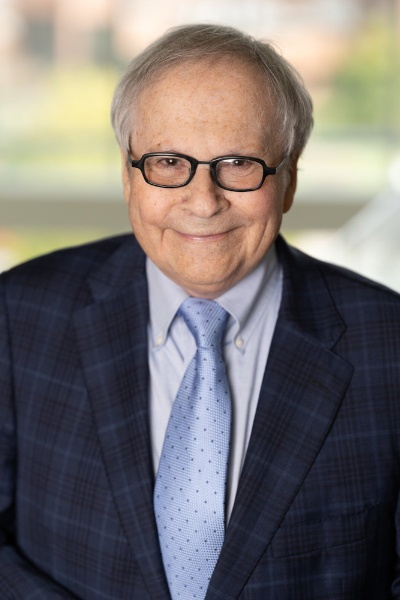
Gary R. Morrow, PhD, MS, a longstanding leader at the University of Rochester Medicine Wilmot Cancer Institute and a visionary credited with building the science around easing cancer symptoms and side effects such as nausea, died on July 7 of pneumonia complications after coping with prostate cancer for 16 years. He was 82.
Witty and accomplished, Morrow had a deep commitment to “helping good people through lousy times,” as he liked to say. He tackled issues that were enormously important to cancer patients going through treatment, and his work impacted millions nationally and internationally.
His groundbreaking research contributed to the need for anti-emetic drugs to control nausea and vomiting during chemotherapy—one of the top five most important advances in cancer care during the past 50 years, according to the American Society of Clinical Oncology.
Morrow moved supportive care and symptom-management research off the sidelines and on to center stage—highly significant in a research world consumed with understanding cancer biology and finding new treatments.
“Facing up to the fact that medicine doesn’t have all the answers and turning that into an opportunity was very important,” said Hucky Land, PhD, Wilmot deputy director. “Gary has done that against all odds. It is a very rare achievement.”
Morrow’s career spanned nearly 50 years at the University of Rochester. During his tenure, he brought in $100 million in funding, with results that made a lasting impact for cancer research and for the future of cancer care.
Longtime colleagues and friends say Morrow’s complex personality was the basis for his success. He could balance his own ambitions with being a tenacious mentor. He was an excellent communicator who put the patient experience first, long before the field of medicine coined the phrase “patient-centered care.” He could also be blunt and sarcastic.
“He spoke truth to power,” said David Linehan, MD, CEO of University of Rochester Medicine and dean of the School of Medicine and Dentistry. Prior to becoming CEO, Linehan was the Seymour I. Schwartz Professor and Chair of Surgery, which was Morrow’s faculty home. They worked together for years to improve research at Wilmot.
“Gary was very demanding in a good sense,” Linehan said. “He was always fighting for what he believed in.”
“Gary’s commitment to supporting the next generation of investigators, what he termed his “grasshoppers,” has resulted in an outstanding legacy,” said Jonathan W. Friedberg, MD, MMSc, director of Wilmot Cancer Institute. “Many of Dr. Morrow’s trainees are now recognized as leaders in supportive oncology care, including Karen Mustian (associate director for Population Sciences at Wilmot), Supriya Mohile (vice chair, Department of Medicine and Program leader, Cancer Prevention and Control), Charles Kamen (assistant director of Community Outreach and Engagement at Wilmot, and Michelle Janelsins, who holds the Joan and Gary Morrow Distinguished Professorship for Supportive Care in Cancer.”
Trained in clinical psychology, Morrow adopted the University of Rochester’s famed biopsychosocial model of medicine and applied it to the field of cancer. He did this in an era (the 1970s and ‘80s) when oncologists were focused on treatment and rarely stopped to ask patients how they felt; in some cases, back then, oncologists did not even tell their patients they had cancer.
“He persisted through times when people did not appreciate what patients were going through,” said George Abraham, MD, a longtime friend, University of Rochester professor emeritus of Hematology/Oncology, and former cancer center director. “He is very compassionate. He had the innate sense that if you can ameliorate side effects, you can improve therapy. He understood that very early, when other people didn’t.”
Notable achievements
A native of Geneva, NY, and the son of a locally prominent surgeon, J. Robert Morrow, MD, who worked at Geneva General Hospital, Morrow thrived following the passage of the National Cancer Act in 1971 and the nation’s first so-called “war on cancer.”
In a series of high-profile studies in the 1980s, Morrow defined the clinical characteristics of cancer-related nausea and vomiting and established anticipatory nausea as a major barrier to completing cancer treatment. His goal was to help patients finish their prescribed therapies to improve their chances of remission or cure.
He also pursued anxiety and expectations around nausea and how to measure it; the role of susceptibility to motion sickness and management of that condition; and the evaluation in clinical trials of non-drug treatments such as deep relaxation and behavioral therapy, ginger supplements, and wristbands to control nausea. High-profile scientific journals, such as The New England Journal of Medicine and the Journal of the American Medical Association, published his studies and those of others in the field. The findings on prevention and behavioral therapy led to changes in clinical practice.
Later, Morrow turned toward investigating medications to manage chemotherapy side effects. In 1999, Morrow was among the 15 expert panelists convened by ASCO to report the nation’s first-ever evidenced-based recommendations for the use of anti-nausea and anti-vomiting drugs, in a seminal article in the Journal of Clinical Oncology.
“Gary Morrow, trained in clinical psychology, understood the human side of cancer, and dedicated his career to ‘helping good people through lousy times.’ His insight into human behavior, passion for making rigorous science practical and relatable, and sense of humor all contributed to his knack for designing and conducting symptom management clinical trials in the community setting,” said Lori Minasian, MD, FACP, deputy director for the Division of Cancer Prevention at the National Cancer Institute.
“His passion for research extended into training and he led an NCI-sponsored cancer symptom management training program for over 30 years. Many of his ‘grasshoppers’ are successful leaders in cancer supportive care and symptom management. His legacy will live on through the many investigators that he trained,” Minasian said.
Morrow lived with cancer for 16 years and ended up benefiting from his own studies and those of his protégés.
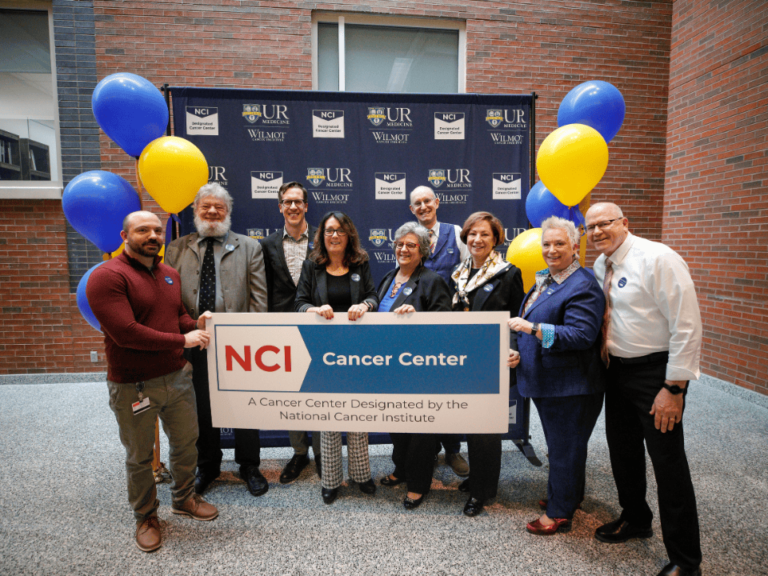
Morrow received a multitude of awards throughout his career. He was a Distinguished Professor at Wilmot, a Dean’s Professor of Surgery and of Radiation Oncology at the University of Rochester—and was an integral part of the Wilmot team that worked to achieve NCI designation, which was awarded in 2025 and recognized Wilmot as a top cancer center in the U.S. He spent time editing NCI presentations for Wilmot faculty and providing vital feedback on how best to tell the cancer center’s robust story of success.
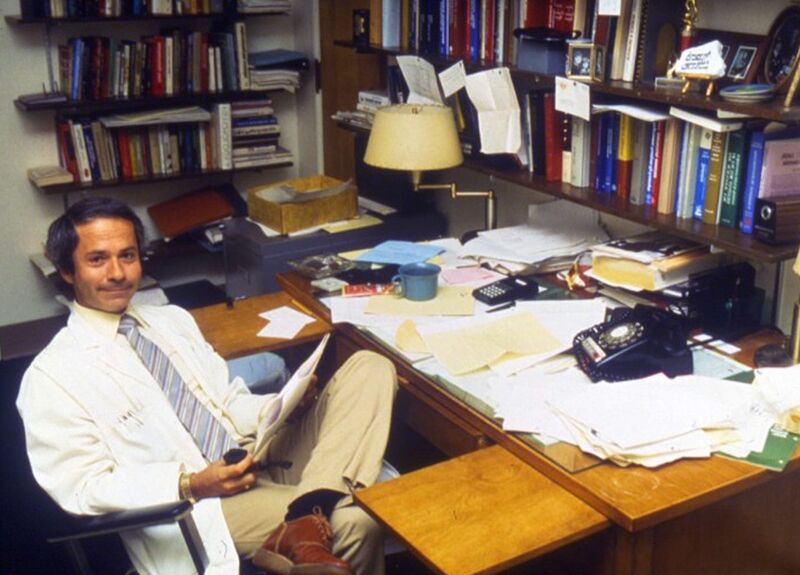
His undergraduate degrees were in English and Mechanical Engineering from the University of Notre Dame, and he was a loyal Fighting Irish fan, with posters and accessories decorating his former office in the Saunders Research Building on the URochester health systems campus. He went on to earn master’s and doctoral degrees in clinical psychology from the University of Rhode Island, and another master’s in medical statistics from the University of Rochester.
Morrow also proudly served in the U.S. Navy for four years as a submarine officer.
Team pride
Source: Wilmot Cancer Institute
Morrow lived with cancer for 16 years and ended up benefiting from his own studies and those of his protégés.
He exercised as long as possible, making regular appearances in Wilmot’s PEAK Human Performance Exercise Oncology Lab founded by Karen Mustian, PhD, MPH, a Morrow mentee and associate director of Population Science for Wilmot. He also followed the recommendations of another mentee, Supriya Mohile, MD, MS, who founded the Geriatric Oncology Program at Wilmot with his guidance.
“I never turn down a good idea,” Morrow said in an interview in 2019. “I believe in what my people are doing.”
His “people”—trainees and researchers who rose up through Cancer Control and Supportive Care research at Wilmot—benefited from a program that he single-handedly founded in the 1980s with his own pioneering work.
More recently, he helped Mustian and Mohile establish the successful Cancer Prevention and Control research program at Wilmot, which includes 40 multidisciplinary scientists. They study a host of areas that span the continuum of cancer prevention (screening and early detection, approaches to reduce risk), treatment (such as inflammation that influences treatment response and formal assessments for the oldest patients), and survivorship (integrative oncology, exercise, nutrition, and behavioral therapy, for example). Their work reaches patients throughout Wilmot’s 27-county catchment area in western and central New York and beyond.
Under Morrow’s guidance and leadership, Wilmot’s cancer control research has become a national model, continuously funded by the NCI for more than 45 years.
“Gary was one of the first to give me a chance to pursue my training as a physician-scientist in a field that was not understood (geriatric oncology),” Mohile said. “Through joining the Cancer Control R25, I learned how to do science all the way from developing aims and hypotheses to overhauling a clinical trial that is not meeting its accrual goals. I also met the colleagues that I depend on and can count on to this day. This training has impacts that will last generations as we continue to train future generations in Gary’s honor.”
Another of his achievements was founding the University of Rochester Cancer Center Community Clinical Oncology Program (CCOP) Research Base. This year was the 50th anniversary for receiving the CCOP planning grant. In 2014, he transitioned CCOP into the NCI Community Oncology Program (NCORP)—a clinical trials network that leverages community oncology practices in markets across the U.S. to conduct practice-changing studies that directly impact patients in the communities where they receive cancer care.
His groundbreaking research contributed to the need for anti-emetic drugs to control nausea and vomiting during chemotherapy—one of the top five most important advances in cancer care during the past 50 years, according to the American Society of Clinical Oncology.
With Mohile and Mustian, Morrow strengthened NCORP and positioned Rochester as the hub of this vast system. In 2019, the NCI awarded a six-year, $29 million grant to the University of Rochester, reaffirming its leadership role.
“One of Gary’s greatest gifts was his ability to build community. He created a culture of collaboration rather than competition, where investigators, clinicians, statisticians, research staff, and community partners worked together with a shared purpose: to improve the lives of patients with cancer,” Mustian said. “That spirit continues to define who we are as a Research Base and is one of his most enduring legacies.”
“I see the impact in every member of our Division of Supportive Care in Cancer and so many members of Wilmot’s Cancer Prevention and Control Research Program who worked with Gary over many years,” added Michelle Janelsins, PhD, MPH, Joan and Gary Morrow Endowed Distinguished Professor of Supportive Care in Cancer. “We are Gary’s colleagues, mentees, and friends. We have all benefited from his generosity, caring, ambition, and wisdom. We are his legacy, and we can all hope to leave a legacy as beautiful as his.”
Years ago, when Morrow was asked to reflect on how it feels to know that his work helped so many people, he said, “Anybody who gets into research looking for accolades probably belongs someplace else. We are terminally curious people and want to know how things work and how we can make things better. Treatment of cancer is not a walk in the park—and to know that you’re making things better is a great way to spend your day.”
He avoided retirement, saying he wanted to get “carried out on my shield.”
Morrow raised his children in the Rochester suburb, Pittsford, NY, and spent as much time as he could with family and friends at his home on Seneca Lake. He is survived by his wife of 59 years, Joan; three children, Andrew, James, and Jennifer; and seven grandchildren.
Funeral services are on Friday, July 24, 2026, at 4:00 p.m. at St. John’s Chapel, Hobart and William Smith Colleges, 630 S. Main St., Geneva, NY. A celebration of life will immediately follow the funeral at Geneva Country Club, 4147 West Lake Rd., Geneva, NY.
Leslie Orr is a senior science editor at Wilmot Cancer Institute and University of Rochester Medical Center.