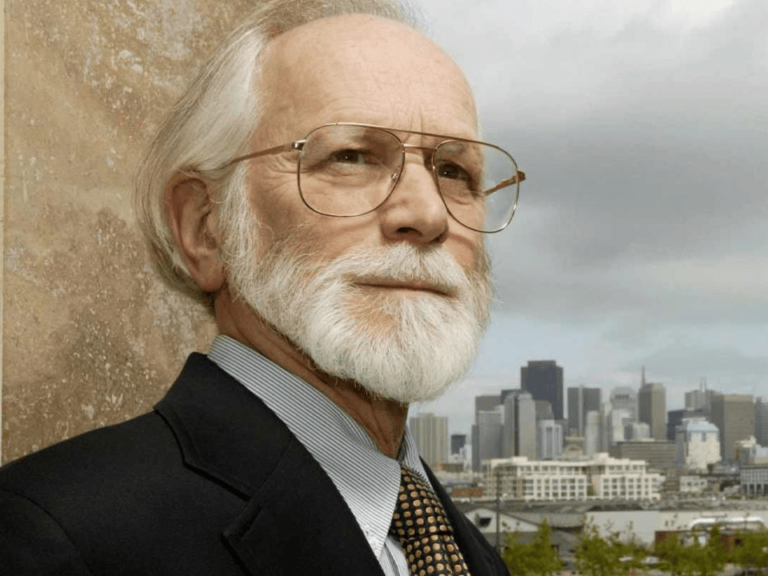
Bayard “Barney” Clarkson, a pioneering leukemia researcher, a career-long member of the faculty of Memorial Sloan Kettering Cancer Center, and past president of the American Society of Clinical Oncology and the American Association for Cancer Research, died on Dec. 30.
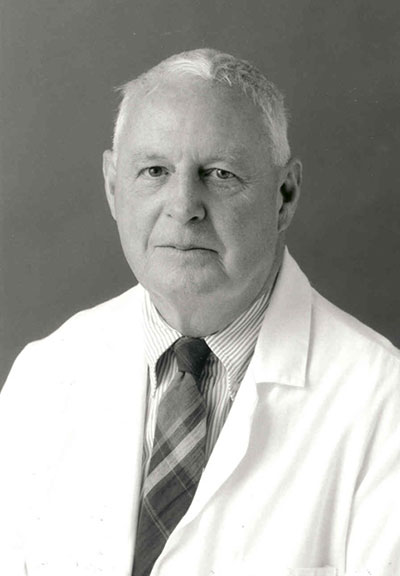
He was 99.
Clarkson joined the MSK faculty in 1959, and at the time of his death, he was an emeritus member of the MSK Leukemia Service and the Molecular Pharmacology program in the Sloan Kettering Institute.
Born into a New York banking family that endowed an eponymous university, during World War II, Clarkson joined the American Field Service as an ambulance driver. Attached to the British forces, he ultimately ended up at the just-liberated Bergen-Belsen concentration camp.
Decades later, in an oral history conducted by AFS, Clarkson spoke about the impact of the horrors he witnessed:
“When we got into the camp, the smell was something you don’t get in the pictures. That was really something,” Clarkson recalled. “Every once in a while we would be asked to show some visiting generals and colonels around the camp. And I remember some of them would begin to vomit. It was that bad. These were hardened soldiers. Doing it every day, you can get used to anything. So, we just did our job.”
At the institution that would become MSK, Clarkson worked with David Karnofsky, Cornelius Rhoads, and Joseph Burchenal to develop chemotherapy regimens for acute leukemia. Throughout his career, he studied the kinetics of cellular growth and the differentiation of normal, leukemic, and other cancer stem and progenitor cells with the goal of developing improved forms of treatment.
Clarkson served as ASCO president during the 1973-1974 term.
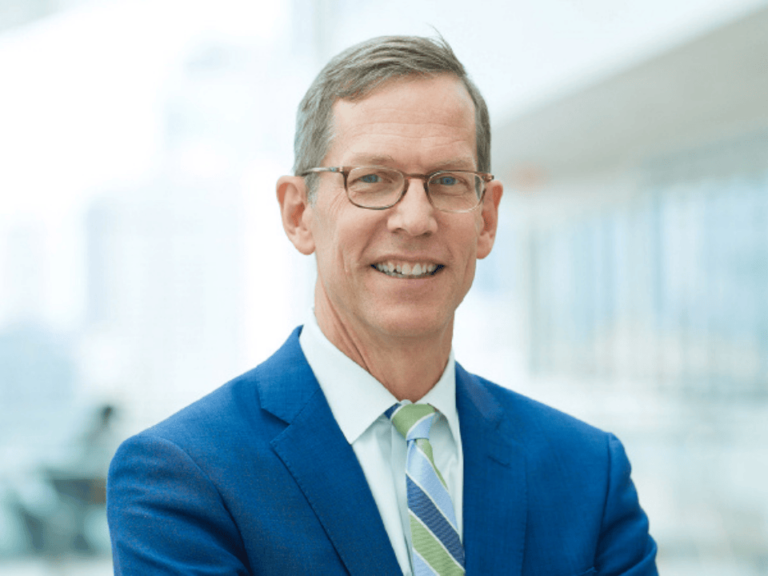
“As one of the first 20 members of ASCO, Barney played a critical role in the formative step of establishing medical oncology as a distinct subspecialty with its own board examination when he served as president 1973-74,” Clifford A. Hudis, CEO of ASCO, said to The Cancer Letter.
“His contributions to drug development, leukemia treatment, and training of physician-scientists and leaders, leaves a legacy that touches everyone in our field today and he will be greatly missed,” Hudis said.
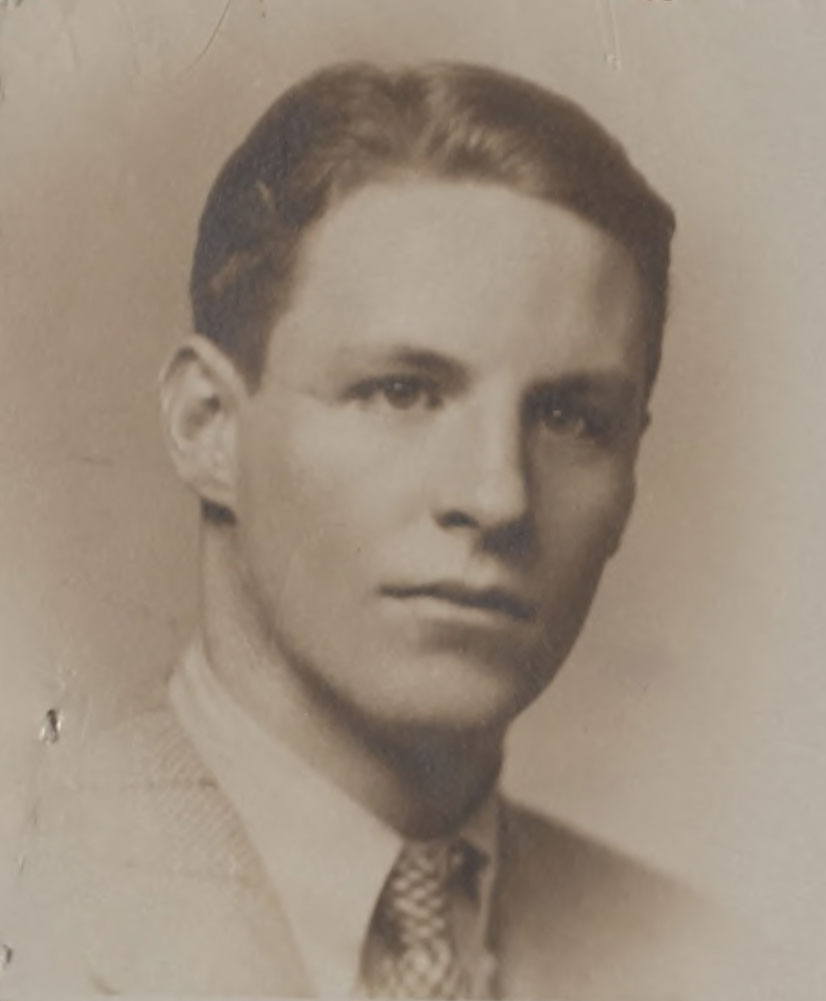
Photographer unknown, courtesy of the Archives of the American Field Service and AFS lntercultural Programs (AFS Archives), New York City.
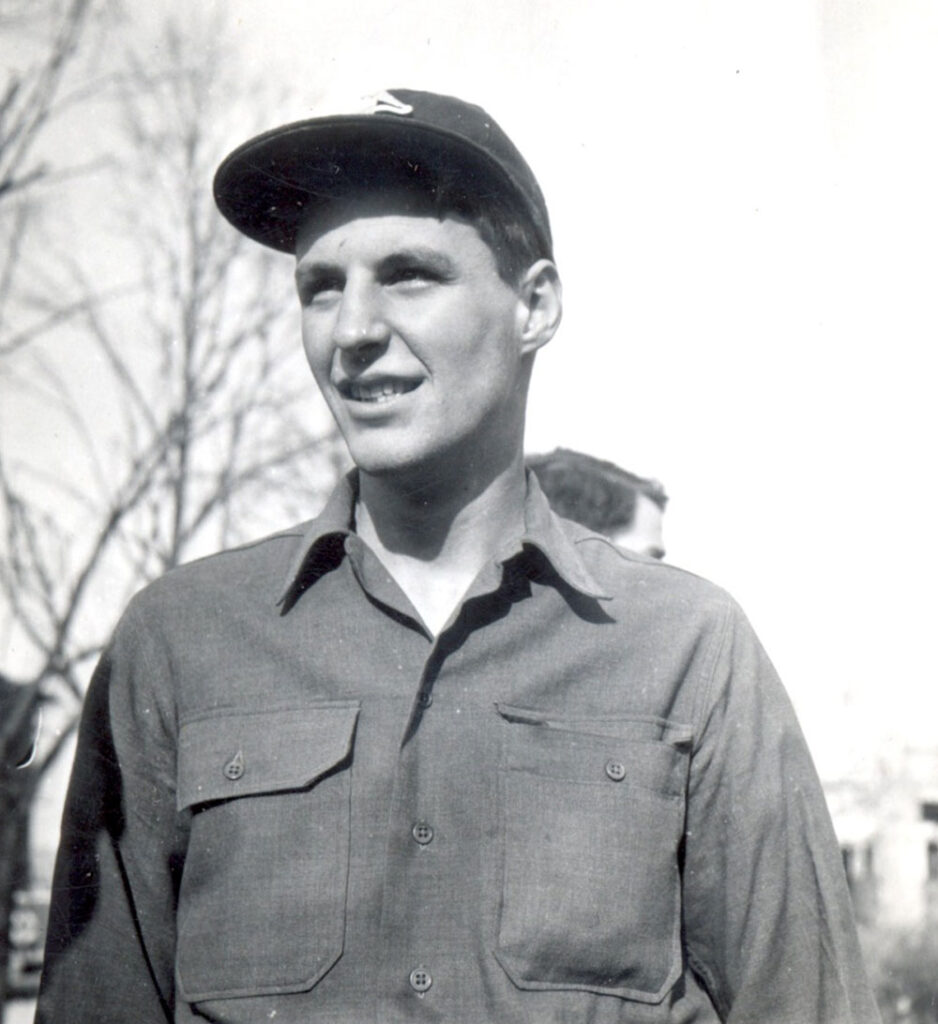
D Platoon, 485 Coy, undated.
Photograph by Irving Penn, courtesy of the Archives of the American Field Service and AFS lntercultural Programs (AFS Archives), New York City.
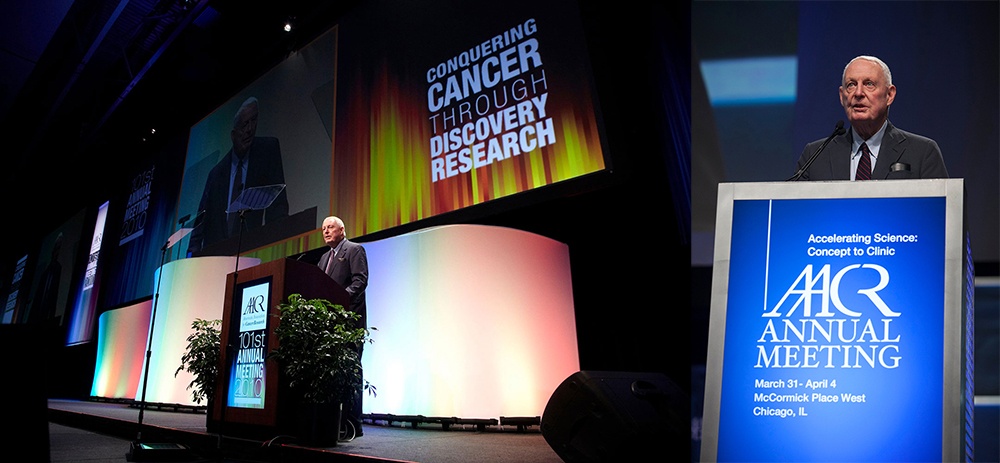
Clarkson joined AACR in 1962 and served as its president during the 1980-1981 term.
“His legacy is characterized by the profound and enduring impact that he had on cancer research and on AACR. Through his pioneering research on cancer stem and progenitor cells, Barney helped advance discoveries in translational and clinical research that have improved the lives of countless cancer patients,” said Margaret Foti, CEO of AACR. “Equally transformative was his visionary leadership of the AACR Foundation, which has strengthened and expanded the resources essential to accelerate our vital mission to prevent and cure all cancers. The world needs more people like him who are selfless and dedicated to the cause.”
According to AACR, Clarkson was the only individual to have ever held four major AACR leadership positions—president, treasurer, member of the board of directors, and president and founding chairman of the board of trustees of the AACR Foundation.
“He will be remembered and profoundly missed not only for his expertise and scientific contributions, but also for his extraordinary leadership, wisdom, generosity of spirit, and commitment to excellence in everything he did throughout his long and productive life,” Foti said. “Throughout his career in cancer research, he inspired the work of both senior and junior scientists.”
The Bayard D. Clarkson Symposium, established by the AACR in 2007, continues to highlight impactful research involving stem cells and related areas of cancer research.
During his 66 years at MSK, Clarkson served as associate chair for research in the Department of Medicine, as chief of the Hematology Service for 19 years, and as director of the Hematology Fellowship Program for 10 years. He also held the Enid A. Haupt Chair of Therapeutic Research.
As one of the first 20 members of ASCO, Barney played a critical role in the formative step of establishing medical oncology as a distinct subspecialty with its own board examination when he served as president 1973-74.
Clifford A. Hudis
“As a member of the Molecular Pharmacology Program at SKI for 40 years, Dr. Clarkson was at the forefront of developing curative therapies for various types of cancer, studying the cellular kinetics of growth and differentiation of normal cells and leukemic cancer stem and progenitor cells,” MSK officials said in an announcement of Clarkson’s death. “His significant contributions include the development of the L2 10-drug protocol, which led to cures for children and adults with acute lymphoblastic leukemia.
“He authored over 400 publications across his career and is renowned for his work on the intracellular signaling pathways altered by the BCR-ABL fusion genes, which are primary genetic abnormalities driving certain types of leukemia,” MSK said in a statement.
Clarkson’s contributions include characterization of the intracellular signaling pathways altered by the BCR/ABL fusion gene, a primary genetic abnormality that promotes the onset of certain types of leukemia.
From 1968 to 1992, Clarkson served as a member of the board of trustees of Cold Spring Harbor Laboratory, He was also a member of the board of trustees of Clarkson University in Potsdam, NY, an institution founded by his forebears. He served on that board from 1967 until his death.
“Dr. Clarkson changed my life by accepting me into the MSKCC oncology fellowship program after I had followed an atypical training path through pathology. I will always be grateful for that trust he showed in me,” Mitchell R. Smith, chief medical officer of the Follicular Lymphoma Foundation, wrote on the AACR tribute page for Clarkson. “Of course, his quiet style was, and remains, a wonderful model to try to emulate.”
“Among his many scientific and academic contributions, including helping me establish my lab at MSK, Barney was also among the first medics to help with the evacuation of the Bergen-Belsen concentration camp during World War II,” Alex Kentsis, director of the Tow Center for Developmental Oncology, wrote on the AACR tribute page for Clarkson, “Listen to his oral history.”
Clarkson was born in New York City. His father, Robert Livingston Clarkson, was the president of the Chase National Bank, and his mother was Cora G. Clarkson. After graduating from St. Paul’s School, he attempted to join the military, but because of inactive tuberculosis, was found unfit for service.
He joined AFS, and was shipped out to Italy, where he was attached to the British Eighth Army, ultimately ending up in Germany as the war was winding down. Ultimately, he was deployed to a just-discovered massive camp, where thousands of prisoners were dying of starvation and infectious disease.
Bergen-Belsen was a detention camp. There were no ovens, but the camp square prominently featured gallows where five people could be hanged.
The SS had run away, but the inmates were dying at a rate of 500 a day. Every day for a month, Clarkson put on a canvas suit, put on massive gloves, and after being sprayed with DDT, walked into the barracks, where his job was to separate the inmates who had a chance of surviving from those who didn’t.
The inmates were taken out of their striped pajamas and carried to the “human laundry,” where they were further cleaned up and transferred to a makeshift hospital.
“On the best day we got 800 people out of the camp—‘human laundry’ to be deloused,” Clarkson recalled in an oral history.
Intravenous fluids weren’t available yet, and with beds scarce, patients were kept on straw mattresses on the floors.
Later on, when I was doing residency at the New York Hospital, every once in a while I would see a patient who would come in with a tattoo, and I would say, ‘Where did you get that?’ and they would say ‘Belsen,’ and I would say, ‘I was there, and they would look at you and say, ‘Oh, doctor, so you know.’
Bayard “Barney” Clarkson in an oral history
Corpses were buried in pits that were dug on the camp grounds. The barracks were thus cleaned up methodically and burned.
These operations went on for about a month, a bit past the end of the war.
When he returned to the U.S., Clarkson had to decide what to do next.
“I had very little interest in going to Wall Street. I knew [my father] required me to do something, so I just said, ‘Maybe I will be a doctor,’” he said.
Clarkson went on to Yale University, then medical school at Columbia University College of Physicians and Surgeons. In 1958, he completed a Lasker Fellowship in clinical chemotherapy at Memorial Hospital.
“Being in the cancer field, you see a lot of awful things, too,” Clarkson recalled.
“Later on, when I was doing residency at the New York Hospital, every once in a while I would see a patient who would come in with a tattoo, and I would say, ‘Where did you get that?’ and they would say ‘Belsen,’ and I would say, ‘I was there, and they would look at you and say, ‘Oh, doctor, so you know.’”
In 1995, 50 years after the war, Clarkson went to an oncology meeting in Germany. There, he ran into his friend Robert Mayer, a Harvard oncologist. Mayer mentioned that he had just taken a side trip to Bergen-Belsen to show it to his daughter.
Clarkson decided to skip a session, rent a car, and drive 100 kilometers to the camp. The place wasn’t well marked, but he located it, walking in as the first museum visitor that day.
In the first room, he saw the mockup of the camp, just as it was, with the gallows for five in the central plaza, the barracks all around.
Then he walked into the next room.
“There was one of these great big pictures of the camp when we got there,” Clarkson recalled. “And that undid me. It all came floating back. I burst into tears, and I don’t do that very often.”