Conversation with The Cancer Letter: ASCO President Clifford HudisThe American Society of Clinical Oncology is in the final stages of developing a request for proposals for its CancerLinQ system. The RFP is expected to be issued early in 2014.
In this episode of The Cancer Letter Podcast, Fran Visco, president of the National Breast Cancer Coalition, and Jacquelyn Cobb, managing editor of The Cancer Letter, discuss the Metastatic Breast Cancer Act, bipartisan legislation that would eliminate the waiting periods for Social Security Disability Insurance and Medicare for eligible people with metastatic breast cancer.
As of the end of August, NCI has selected 1,891 competing awards for funding this fiscal year, all of which will be funded by the year’s end, NCI Director Anthony G. Letai said to the National Cancer Advisory Board.
The Centers for Medicare & Medicaid Services has published a guidance that spells out a process for states to use to exempt Medicaid recipients from the controversial work requirements established last year under President Trump’s “One Big Beautiful Bill Act.”
Scientific advances have produced therapies that allow some people with metastatic breast cancer to live longer and better. We want that progress to continue, and we will continue to fight for the right research necessary to achieve it.
Congress settled the FY26 question in February, with NCI receiving $7.352 billion, an increase of $128 million over the prior year. After a year in which cancer center directors spent an extraordinary share of their leadership attention defending the research enterprise, that outcome deserves to be called what it was: a win.
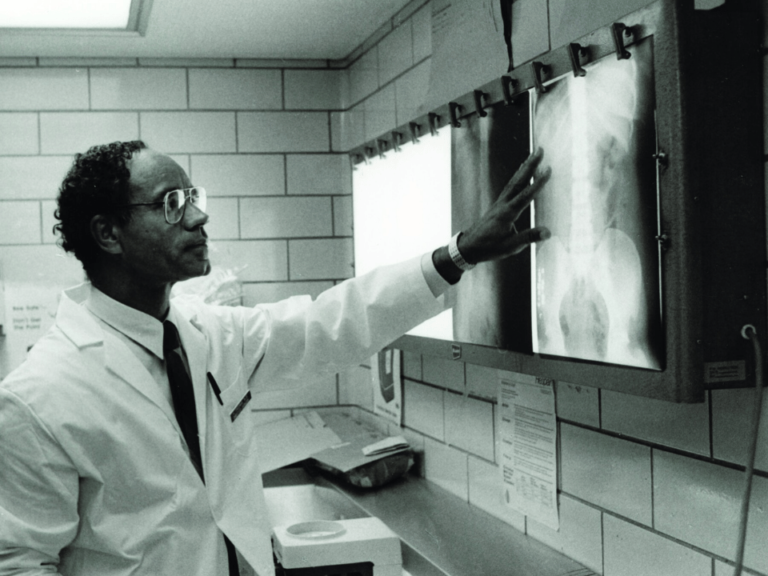
Harold P. Freeman, a surgeon who started his career in Harlem, where, in addition to performing surgeries, he pioneered the system of patient navigation, and who studied health disparities and served as president of the American Cancer Society and chair of the President’s Cancer Panel, died on Aug. 11. He was 93.