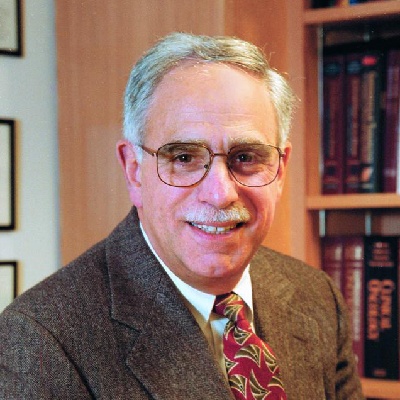
When Robert Mayer was only a few years out of residency, in the 1970s, he signed on as an investigator of the NCI-supported Gastrointestinal Tumor Study Group, which conducted research into colorectal, gastric, and pancreatic cancers.
“We had no tools, say like CT scans, to even identify or diagnose these tumors at an early time,” Mayer, the faculty vice president for Academic Affairs at Dana-Farber Cancer Institute and faculty associate dean for Admissions at Harvard Medical School, said on the Cancer History Project podcast. “Colonoscopy was a big deal. Making a diagnosis of a pancreatic cancer often was restricted to the presence of metastatic disease, because there was no scan, no blood test that showed that there was something awry in the pancreas. It was in the back of the abdomen and that didn’t change for quite some time.
“The aura developed that [pancreatic cancer] was something that just you couldn’t deal with.”
This aura is beginning to change as daraxonrasib, a pan-RAS(on) inhibitor, was shown to double overall survival in the recent RASolute-302 trial phase III clinical trial. The results were presented at the annual American Society of Clinical Oncology annual meeting on May 31.
“As with other conditions that we treat, when patients [with pancreatic cancer] come, we’ll be able to give them options, plans, steps,” Mayer said. “It may not necessarily be that we can cure, but we can prolong survival, enhance quality of life, reduce time that they have to come to receive toxic systemic parenteral intravenous therapy. All things that really matter so that they can go and be at high school, college graduations, family celebrations, and do all the things that they otherwise would like to do. That has never been something that happened with pancreas cancer.”
The road to developing this drug was laden with bumps, jumps, and potholes.
Mayer highlighted some of the most notable mileposts on that long journey:
- The discovery of desmoplastic scarring sheets that seem to protect tumors from radiation or surgery.
- The discovery of pancreatic cancer’s association with diabetes, suggesting irritation and inflammation in the pancreas.
- In 1982, the discovery and sequencing of the KRAS oncogene.
- In the 1990s, the development of gemcitabine, which later spurred drug combinations with nab-paclitaxel and abraxane.
- In the 2010s, the development of FOLFIRINOX, a chemotherapy regimen made of drugs that were being used to treat colon cancer at the time.
This oral history interview is available on Spotify, Apple Podcasts, and YouTube.
Related articles
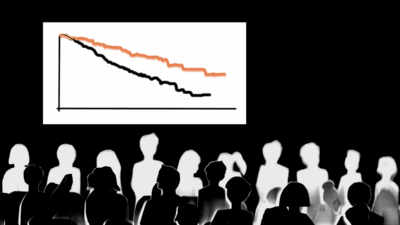
Associate Editor Jacquelyn Cobb covered the ASCO plenary session on May 31, during which Brian Wolpin, medical oncologist and clinical investigator in the Center for Gastrointestinal Oncology at Dana-Farber Cancer Institute, presented the findings from the RASolute-302 phase III trial.
The article contains a video of the standing ovation that ended up lasting 43 seconds.
- The story of daraxonrasib is the ultimate hero’s journey, June 5, 2026
Shortly after the ASCO meeting, Kimryn Rathmell, CEO of The James Cancer Hospital and Solove Research Institute, director of The Ohio State University Comprehensive Cancer Center, and former director of NCI, reflected on what the results of the RASolute-302 mean for oncology.
“Pancreatic cancer was our Shadow,” Rathmell wrote. “The elusive, consistent killer. The classic antagonist.
“For today, the Shadow has retreated.”
- Long-awaited results from first phase III trial of a RAS inhibitor in pancreatic cancer shows that daraxonrasib doubles median OS, April 17, 2026
In April, Revolution Medicines first announced the high-level results of the RASolute-302 phase III trial. The company said it intends to submit these results to FDA as part of a future New Drug Application under a Commissioner’s National Priority Voucher.
“It’s here. This is a tipping point, and we’ve tipped. And this is just the beginning,” Anna Berkenblit, chief scientific and medical officer at PanCAN, said.
But cancer researchers still have their work cut out for them. Daraxonrasib is not a silver bullet. All pancreatic cancers eventually develop resistance to single-agent RAS inhibitors.
“This is just the first,” Berkenblit said. “We know, unfortunately, that in this trial, patients are not being cured. And we know that with single-agent RAS inhibitors, resistance develops.”

- KRAS pioneer and Stephenson Prize winner Frank McCormick aims to prevent all KRAS cancers with a pill, October 10, 2025
Frank McCormick, the David A. Wood Chair of Tumor Biology and Cancer Research at the University of California, San Francisco and former director of UCSF Helen Diller Comprehensive Cancer Center, has spent four decades focused on KRAS.
“For me, the first turning point was when [Manuel] Perucho discovered that KRAS is mutated in pretty much every pancreatic cancer. That was a shock to the field at that time,” McCormick said. “It’s the only disease in which KRAS is completely—the only—driver. That was very unusual. That set the goal for me—pancreatic cancer is where KRAS drugs are the most effective.”
Now, he’s aiming to develop a preventative pill that would protect against all KRAS cancers—a project supercharged by the support of $1 million from The Stephenson Global Prize, as the winner of the inaugural Stephenson Global Prize for pancreatic cancer research.
The Cancer History Project is a free, collaborative archive of oncology history that aims to engage the scientific community and the general public in a dialogue on progress in cancer research and discovery.
This project is made possible with the support of our sponsors: City of Hope, the American Society of Clinical Oncology, the University of Texas MD Anderson Cancer Center, the Sidney Kimmel Comprehensive Cancer Center at Johns Hopkins, UK Markey Cancer Center, the National Comprehensive Cancer Network, and The Mark Foundation for Cancer Research.
The Cancer History Project is an initiative of The Cancer Letter, and is backed by 60 partners, spanning academic cancer centers, government agencies, advocacy groups, professional societies, and more.
Interested in learning more about the history of oncology? Subscribe to our monthly podcast on Spotify or Apple Podcasts.