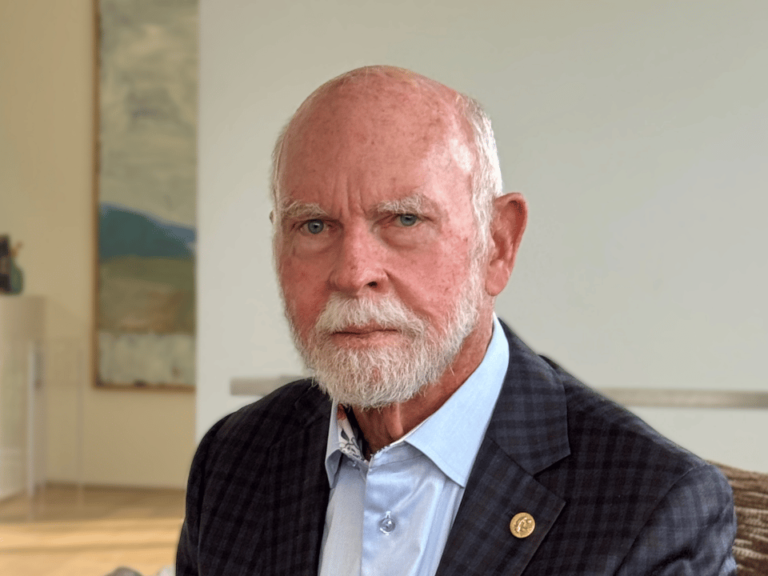
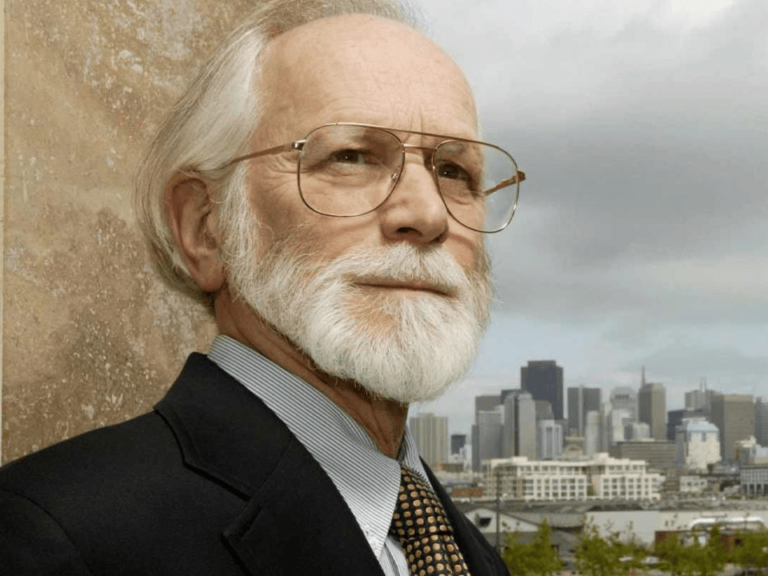
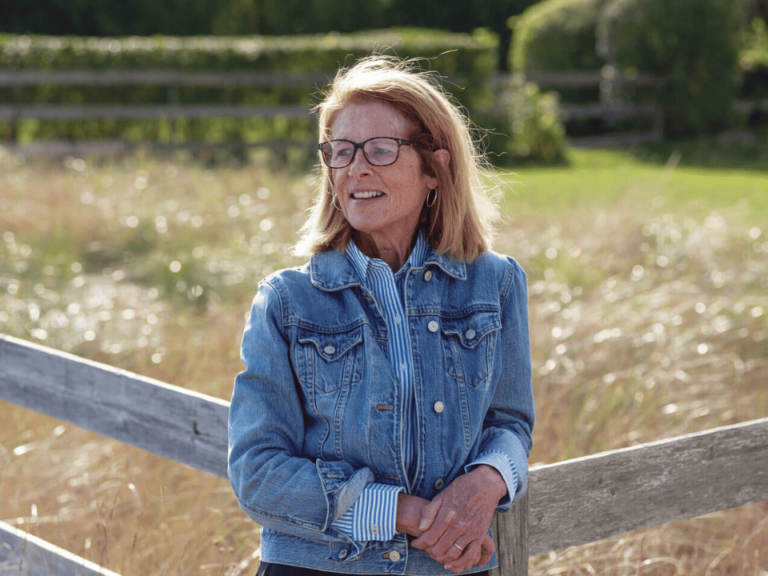
The world of cancer research has lost one of its brightest and gentlest stars, Joseph F. Fraumeni, Jr., MD, the founding director of NCI’s Division of Cancer Epidemiology and Genetics within the Intramural Research Program of the National Institutes of Health.
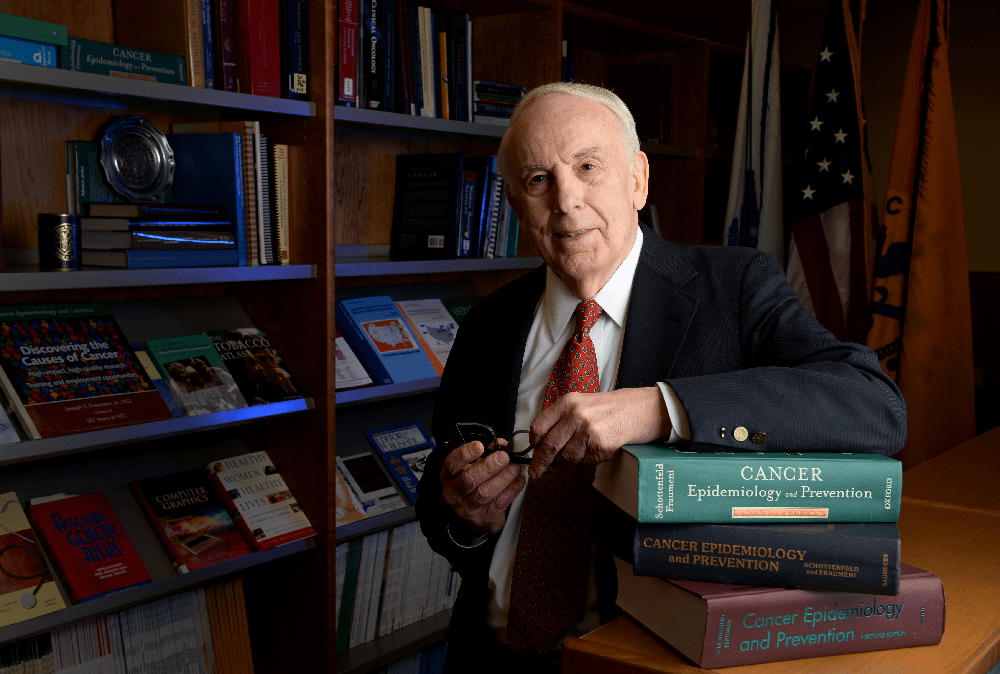
Dr. Fraumeni died on June 22 at the age of 93.
From the 1960s onward for fifty years, Dr. Fraumeni led the premier cancer epidemiology research program in the world, contributing much of what is known about the causes of cancer and training scores of highly successful scientists, many of whom now populate leading epidemiology programs across the globe.
Dr. Fraumeni, to all who worked with him, but “Skippy” to his family, was a generous and innately inquisitive investigator who had a sixth sense about patterns and connections in cancer epidemiology.
He was one of the world’s leading cancer epidemiologists whose accomplishments are legendary in number and scope. Always in pursuit of what he described as “the interesting questions of the time,” he thought big and saw research unfold in steps.
Sometimes questions were so big that he developed new directions, resources, and approaches within cancer epidemiology to address them.
He created national cancer maps that were imitated worldwide, instigating searches for the causes of high-risk areas. He saw the immense value of collecting and examining biospecimens from well-curated studies, counting on the development of new technologies to maximize their future use. He emphasized collaborative research up and down the hallways of NCI and around the globe. He incorporated new and emerging molecular technologies into population- and family-based studies.
As a pioneer of this approach—called molecular epidemiology—he set the stage for researchers to tease apart the contributions of different exposures in the context of the genetic and environmental components of cancer, along with their combined effects on the origins and progression of cancer.
Time after time, in investigating a challenging problem in cancer epidemiology, one can’t help but come across an essential reference that bears the mark of Dr. Fraumeni, either as an author or written by a “trainee.” Frankly, we were always “trainees,” no matter what rank we attained.

Former director,
National Cancer Institute;
Former acting commissioner,
Food and Drug Administration;
Professor of cancer policy and innovation,
University of North Carolina School of Medicine;
Managing director,
Jupiter BioVentures
He belongs on the Mt Rushmore of Epidemiology with the likes of John Snow, Richard Doll, etc. By adding molecular biology to classical genetics, he basically invented molecular epidemiology. He also trained a generation of cancer epidemiologists through his multi-decade leadership at NCI.
His knowledge of the literature was extraordinary, citing pertinent facts without fault. It was commonplace for him to raise an interesting connection, often drawn from an obscure or what seemed like ancient reference. Of course, no one knew the reference, and so he would briefly outline its main points and, sometimes, point to the design faults.
These brief scientific homilies were always delivered in a soft-spoken and kind manner. All who walked into his famed office had his attention, and he earnestly wanted to know what we thought, too.
His trainees also benefited from his exceptional writing and editing skills. We would seek out each other’s help to decipher his comments on our papers, written in tiny spiky script with a sharp No. 2 pencil.
Seeing his edits was always a master class in writing.
He encouraged collaboration and team science over siloed portfolios, exhorting his peers and generations of those he trained to find old and new colleagues with complementary skills. I can still hear his soft voice urge groups of curious investigators to “work doggedly together and be sure to listen to each other.”
Here, at DCEG, Dr. Fraumeni built a dynamic program that could address problems over decades. DCEG scientists developed and sustained several prospective cohort studies that have yielded critical insights into cancer and lifestyle, environmental, and genetic risk factors.
Other studies were designed to look at cancer in special circumstances, such as three generations of women exposed to DES (diethylstibestrol), calling attention to the importance of early life exposures for cancers developed later in life. He guided important long-term studies of survivors of the Chornobyl accident or the atomic blasts in Japan over 80 years ago, providing insights into how and when lower-dose ionizing radiation causes cancer.
Dr. Fraumeni, to all who worked with him, but ‘Skippy’ to his family, was a generous and innately inquisitive investigator who had a sixth sense about patterns and connections in cancer epidemiology.
Stephen J. Chanock
Dr. Fraumeni also took seriously the public health mission of an epidemiology program in a government agency.
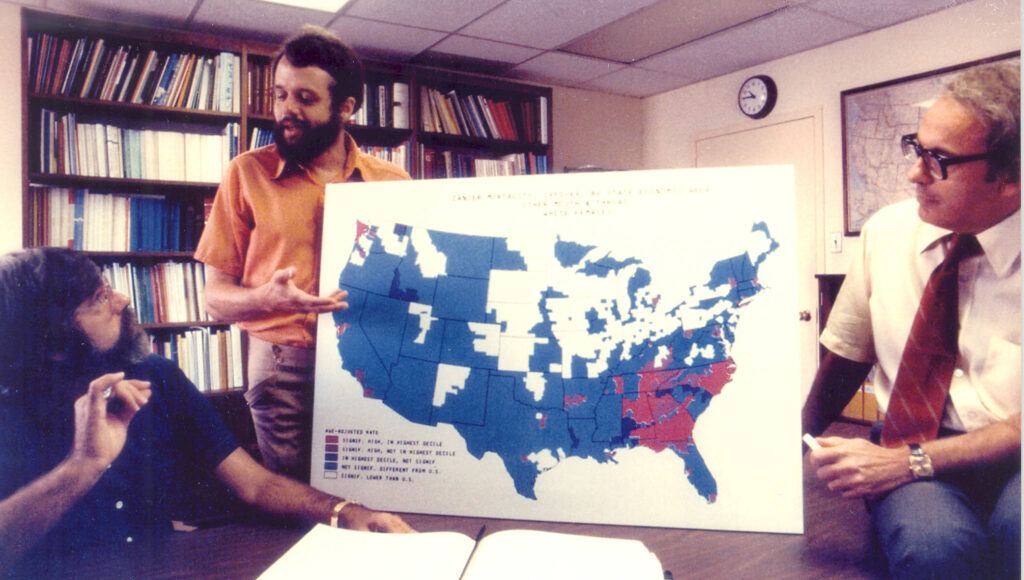
In the early part of his distinguished career, Dr. Fraumeni and his colleagues led a series of groundbreaking studies that identified environmental carcinogens.
He led the development of the first maps of cancer mortality, which became a series known as the U.S. Atlas of Cancer Mortality.
By plotting cancer deaths by county, he was able to reveal distinctive geographic patterns and link them to environmental pollutants, such as arsenic emitted by copper smelters, occupational exposures such as asbestos in the lining of shipping containers, and lifestyle factors such as tobacco snuff used by women in the South.
The maps and the targeted case-control studies in high-risk areas resulted in policy changes to protect workers and the broader population from possible and known carcinogens, preventing countless malignancies and premature deaths.
A major focus of Dr. Fraumeni’s research was the role of genetics in the development of cancer.
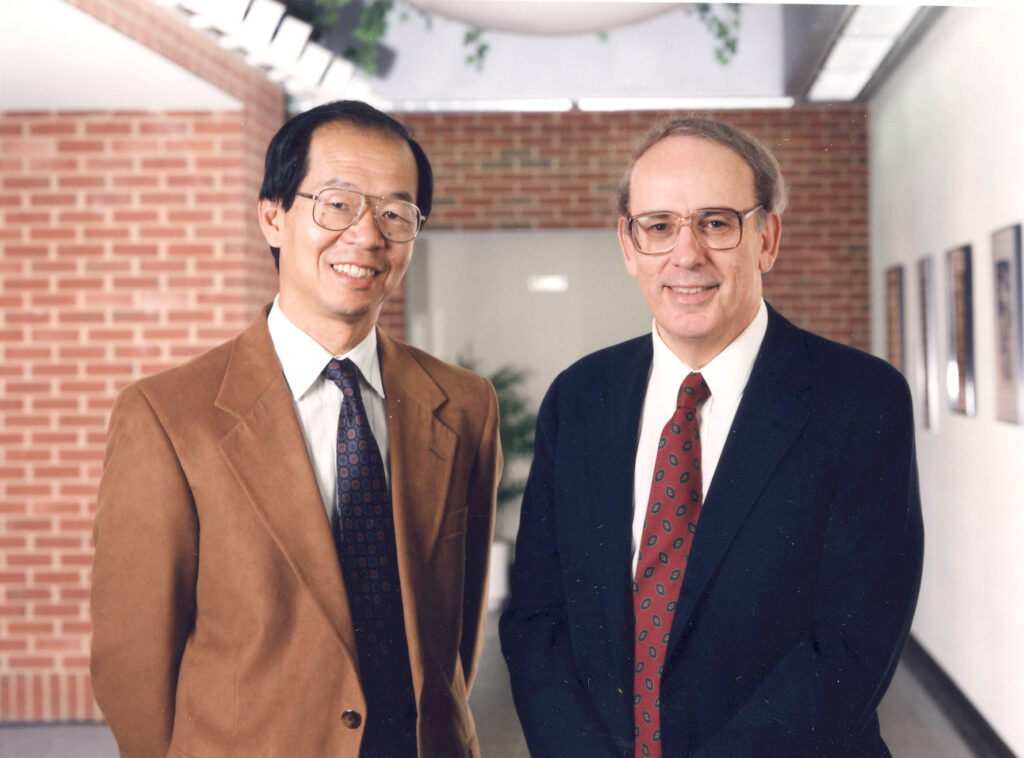
His approach as an astute clinician formed the basis for studies of cancer-prone families. Dr. Fraumeni and his colleague, the late Dr. Frederick Li, identified a familial cancer predisposition syndrome associated with rare inherited genetic variants in the p53 tumor suppressor gene.
They complemented each other and could almost finish each other’s sentences—though this would have been a rare phenomenon as both were gentle introverts.
Together, they observed unusual patterns of cancer diagnoses among two dozen families and described the condition now known as Li-Fraumeni syndrome (LFS).
Today, the NCI LFS Study has enrolled over 200 families in a natural history study, the results of which have revolutionized understanding of the syndrome and improved care of affected families.
His pioneering work directly led to the founding of a field dedicated to the search for cancer susceptibility genes, which now number over 120 distinct genes.
His groundbreaking work has been a springboard for the emergence of advocacy and patient support communities around the world.
Dr. Fraumeni did not stop there.
He saw the coming of the genomic age and positioned DCEG to be at the vanguard of mapping common genetic variants in large population studies.
In many ways, he was responsible for the birth of the genome-wide association studies in cancer, because he recognized that it would take the merger of cancer epidemiology, germline genetics, and rigorous biostatistical approaches.
It was into this setting that I joined DCEG, mainly because the gravitational pull of Dr. Fraumeni, together with resources he had amassed at DCEG, were irresistible.
I eventually moved over to lead a series of genome-wide association studies and their functional follow-up.
But this had its origins years before. I first met Dr. Fraumeni in the late 1990s as a young tenure-track investigator who was changing career goals to focus on the potential of the human genome in transforming study of cancer etiology and its translation to the clinic and public health.
In several seminal conversations, he was polite, but quite deliberate in questioning not only how I thought, but what I knew.
Several times, he advised me to “read more and think hard about the long game.”
Over time, as the investigation of genetic susceptibility unfolded, we talked often.
Of course, I read voraciously and showed up in his office brimming with new findings, but each time, I left with new questions to ponder, many based on findings he had already formulated.
One time, he called me into my office and confessed that he did not like the discussion about parsing attributable fractions. He offered an intriguing alternative: cancer is 100% genetic and 100% environmental.
It is now up to future generations to uncover how these two forces interact to cause specific cancers.
Dr. Fraumeni was a New Englander through-and-through. He was a Massachusetts native and the proud graduate of both Harvard College in Cambridge, MA, and Duke University Medical School in Durham, NC. He also possessed an amazing trove of anecdotes and facts about his home region, particularly when it came to the Boston Red Sox and Harvard.
After residencies at Johns Hopkins Hospital and the Memorial Sloan-Kettering Cancer Center, he began his research career at NCI in 1962.
Dr. Fraumeni was the founding chief of the Environmental Epidemiology Branch. In 1995, he founded the NCI Division of Cancer Epidemiology and Genetics (DCEG), which today is a thriving research enterprise at the cutting edge of cancer epidemiology.
Dr Fraumeni was patriotic and had a classical commitment to the American dream.
He proudly served as a commissioned officer in the U.S. Public Health Service (USPHS), attaining the rank of rear admiral and assistant surgeon general before his retirement from the USPHS in 1999.
Behind his enormous desk stood large, imposing American and Public Health Service flags, reminding each visitor of his commitment to public service.

Bloomberg Distinguished Professor of Oncology and Epidemiology,
Sidney Kimmel Comprehensive Cancer Center,
Johns Hopkins University
Many will remember Joe for his brilliance, his creativity, his many contributions to science. I will also remember his mentorship, his encouraging us to ask the harder question.
I have known Joe for nearly forty years. I will remember how this amazingly talented man was so approachable. I will remember the way he quietly supported, encouraged, and mentored many young and not so young people.
When Joe started his career, science was overwhelmingly a group of white men. Joe realized that diversity is a strength. When Joe was finished, he had mentored and provided opportunity to a number of women and people of all races in the field.
The diversity of Joe Fraumeni’s former students is only outshined by the impact of their contributions to science.
In recognition of his accomplishments, he received many honors, but he did not display them in his office. In his office, you simply knew you were in the presence of an accomplished scientist.
His award includes the Charles S. Mott Prize from the General Motors Cancer Research Foundation, the Abraham Lilienfeld Award from the American College of Epidemiology, the John Snow Award from the American Public Health Association, the James D. Bruce Memorial Award from the American College of Physicians (ACP), the Nathan Davis Award from the American Medical Association, the Lifetime Achievement Award from the American Association for Cancer Research (AACR), the AACR-American Cancer Society Award for Research Excellence in Cancer Epidemiology and Prevention, and the William G. Anlyan, M.D., Lifetime Achievement Award from Duke Medical Alumni Association. He was an elected member of the National Academy of Sciences, the National Academy of Medicine, the American College of Physicians, and a fellow of the Academy of the American Association of Cancer Research.
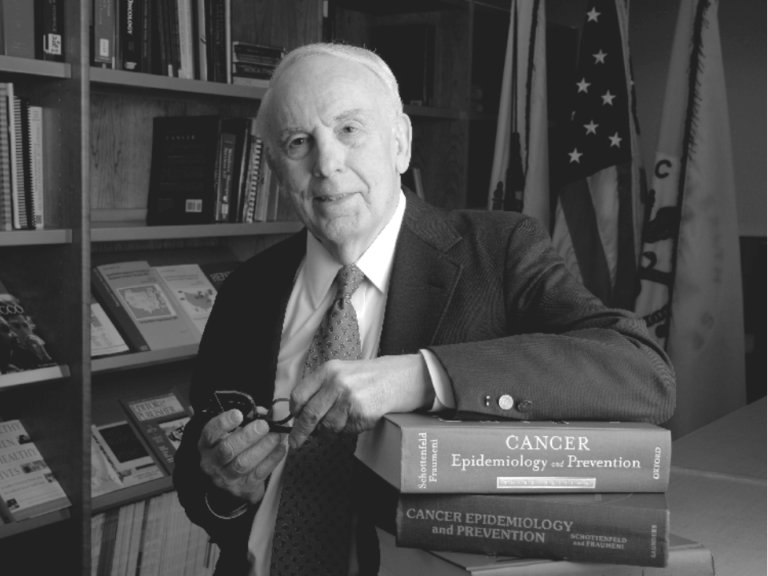
His wide-ranging research contributions are documented in over 900 scientific publications and many books, including the definitive textbook, titled Cancer Epidemiology and Prevention, known as “the Bible of cancer epidemiology,” whose fifth edition is underway.
He had a remarkable capacity to recognize talent, and helped people take those talents as far as they could, irrespective of country, degree, or gender. He commented that he could “see into the future and ‘bet’ on young talent.”
It was not unusual for younger investigators, not yet equipped with the proper academic credentials, to assume important roles and advance the research agenda, sometimes free of the conventions of the day.
His pioneering work directly led to the founding of a field dedicated to the search for cancer susceptibility genes, which now number over 120 distinct genes.
Stephen J. Chanock
He liked to send the next generation off to gather the academic training so their careers could advance. He promoted women into scientific leadership positions, when it was uncommon to do so, and supported them in very practical ways, such as approving part-time schedules for seasons, keeping talented scientists in the workforce.
One of the main reasons he commanded such deep and abiding respect is that he showed commitment to those he tasked with responsibilities.
As director of DCEG, his office walls were home to two meaningful items: a New Yorker magazine cover illustration showing a row of birds perched at a roof line, all but one looking forward. “The one looking back? That’s the epidemiologist,” he would say. “We must look back, to exposures from the past, to see how we got here.”
The other, a kanji in beautiful calligraphy read, “When you drink the water, don’t forget who dug the well.” A reminder to thank those who came before and paved the way for today’s research and the research mission of DCEG should continue to realize his long-term vision.
Dr. Fraumeni enjoyed speaking to colleagues, young and old, in his office.
One was summoned and summarily seated in a small chair facing his large desk from which he would peer over its elongated top and begin the gentle interrogation.
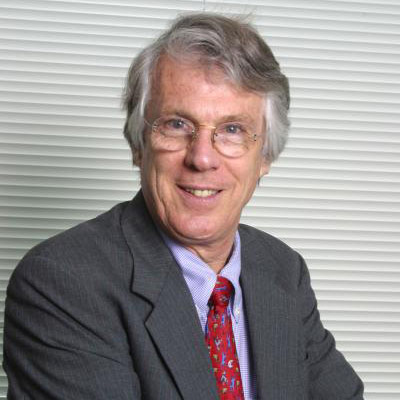
Former vice president,
Epidemiology & Surveillance Research at American Cancer Society
I remember Bob Hoover saying that whenever he figured something difficult out, Joe was already there. Joe saw that the joint disciplines of cancer epidemiology and genetics were integral to cancer prevention, and built a world class research program to study them.
Entering his office was always for a purpose, determined by Dr. Fraumeni, but once the topic was fully covered, he would sit back and assume a more relaxed tone.
Favorite topics generally mapped back to New England, such as the Boston Red Sox, Harvard gossip, or his love of a good lobster tail.
When visiting his office, one was often quizzed about the identification and origin of obscure college and university mascots. One time, after gently scolding me for not knowing the mascot of the Southern Illinois University, the salouki, an ancient canine breed from Egypt, he delivered what felt like a five-minute lecture on its origin and value in ancient times.
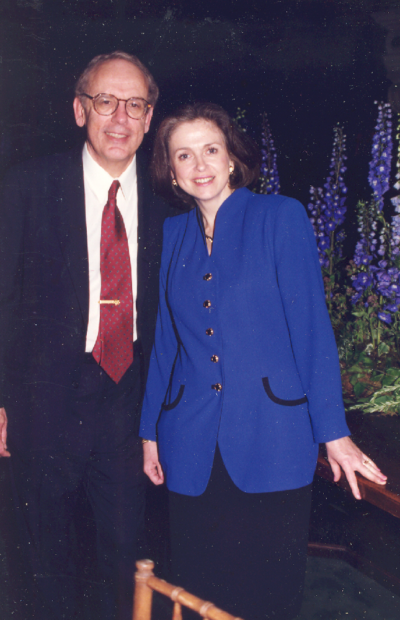
He is survived by his brother, Arthur Fraumeni, and many nieces and nephews. His devoted and devout wife of nearly 49 years, Patricia Fraumeni (née D’Arcy), predeceased him earlier this year. The two were quite a pair, blessed with prodigious memories pertaining to family and friends.
Family meant everything to him, including those he trusted within his scientific world.
When I visited him a few weeks before his death, he asked about my lovely wife, Lizette, our eight grandchildren, and four dogs, even remembering the names of the latter!
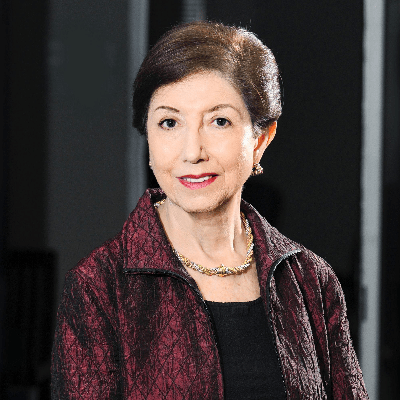
Professor emerita and founding chair,
Department of Epidemiology,
The University of Texas MD Anderson Cancer Center;
Professor emerita,
Department of Molecular and Cellular Biology,
Dan L. Duncan Comprehensive Cancer Center of Baylor College of Medicine
Joe was the gentle luminary of cancer epidemiology. His legacy of wisdom, integrity, and kindness resonates not only with me, but with current and future generations of cancer epidemiologists.
His questioning did not stop there. Miraculously, he asked if I had advanced any further on understanding what he is sure exists, a strong link in genetic susceptibility between kidney and thyroid cancer—something he has asked me about countless times in the past.
It’s hard to imagine a world without the presence of this gentle scientific giant.
As I look back on his remarkable life, it is clear that Joe certainly lived up to and exceeded the words of another great New Englander, Ralph Waldo Emerson:
“Do not go where the path may lead, go instead where there is no path and leave a trail.”
Indeed, Joe blazed quite a trail!
The author is the director of the Division of Cancer Epidemiology and Genetics at the National Cancer Institute.