


Cancer care is at an inflection point. The traditional boundaries between academic and community oncology are dissolving, requiring a reimagined approach to patient care and clinical research. At City of Hope, we are implementing a national model that integrates breakthrough research with accessible, advanced treatment across diverse geographic regions.

Technological innovations are often hailed as transformative tools capable of revolutionizing healthcare. From gene editing for conditions like sickle cell disease to AI predicting hospital readmissions, to telemedicine expanding healthcare access, these advancements have the potential to change the way we treat diseases.
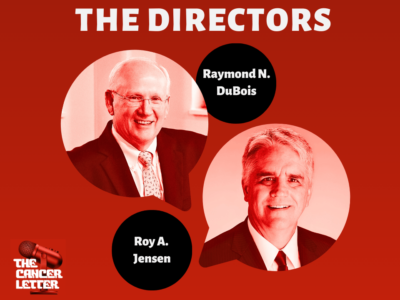
How are cancer centers in two rural states—Kansas and South Carolina—weathering the challenges of Trump-era belt-tightening and uncertainty? Their directors weigh in on The Cancer Letter Podcast.

Amid the flood zone of today’s Washington, the confirmation hearing for Jayanta (Jay) Bhattacharya’s nomination as director of NIH was remarkably calm.

Shearwood McClelland III’s grandfather was a ditchdigger who dreamed that his six Black daughters would become doctors. McClelland’s mother did not disappoint—she became the first Black woman board-certified in maternal fetal medicine in the history of the United States. Now, McClelland is the chief medical officer of Cancer Health Equity at the University of Oklahoma... […]

Nearly 30 years ago, while completing an assignment for his master’s degree in public health, Brian Rivers discovered he had a family history of prostate cancer.

The web page for the FDA Office of Minority Health and Health Equity is no more. The pages for the NCI Diversity Training and Biomedical Workforce Development Branch and Disparities Research Branch are kaput as well.

When Marsha B. Henderson, former FDA Associate Commissioner of Women’s Health (1998-2019), sat down for an oral history interview upon her retirement from the agency, she could not have foreseen becoming party to a government digital purge 7 years later. Over the past week, the Trump administration has been busy at work deleting government webpages […]
The Community Oncology Alliance released the COA Prescription for Health Care Reform, a blueprint that diagnoses the fundamental challenges facing the U.S. healthcare system, outlines the consequences for patients across America, and presents “actionable solutions .”
A recent report showed that UPMC Hillman Cancer Center generated $3.98 billion in total economic impact in Pennsylvania through its clinical, research, and educational missions in 2023.


