

A study published today by researchers at the Translational Genomics Research Institute, part of City of Hope, and clinician-scientists at Baylor Scott & White Research Institute revealed a potential new therapeutic strategy for fighting lung cancer that harnesses one of the body’s immune cells, natural killer cells.

In cancer care, imaging has become a marvel of modern medicine. Advances in scanner technology, reconstruction algorithms, contrast agents, and diagnostic protocols have radically improved our ability to detect, track, and understand disease. Clinically, imaging is fast, accurate, and central to decision-making.

The intersection of diabetes, obesity and cancer represents an important and underappreciated challenge in medicine. Apart from smoking, overweight is now the leading modifiable risk factor for cancer. With the global epidemic of overweight and diabetes driving cancer incidence across multiple organ sites, understanding the metabolic underpinnings of this relationship has never been more critical.
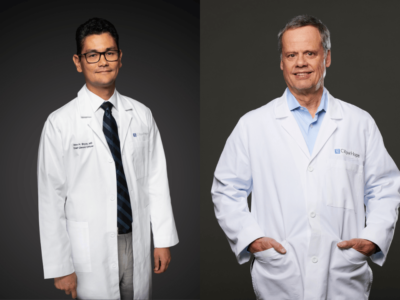
The landscape of cancer care in America faces critical challenges: geographic disparities in access, socioeconomic barriers to advanced treatments and the increasing complexity of precision medicine that outpaces individual providers’ ability to stay current. At City of Hope, we are addressing these systemic issues through a bold expansion that brings world-class cancer care and research closer to where patients live.
City of Hope is using generative artificial intelligence to create operational efficiency, enable AI-driven patient personalization, improve access to clinical trials, and empower breakthrough research.

When I first proposed targeting PCNA (proliferating cell nuclear antigen) as a therapeutic approach, the response I got was: “No one will ever make a drug against PCNA. It’s undruggable.” The protein lacks enzymatic activity, has a disordered region, and binds to over 200 other proteins within the cell. From a traditional drug development perspective, these characteristics made PCNA an impossible target.
City of Hope has been awarded an up to $23.7 million contract from the Advanced Research Projects Agency for Health within the U.S. Department of Health and Human Services. The grant will help City of Hope create a biomap of tumor changes that cause immunotherapy resistance in advanced or metastatic non-small cell lung cancer.

City of Hope researchers presented compelling real-world evidence and novel combination therapies at the 2025 ASCO Annual Meeting, with findings that could reshape treatment approaches for breast, colorectal, renal, and prostate cancers.

For more than a year before her stage 4 lung cancer was found, 35-year-old Alisa Secaida, a never-smoker and a physically active Southern Californian, had been experiencing a persistent cough and, increasingly, fatigue.

The landscape of cancer is shifting beneath our feet, and we must adapt our clinical practice accordingly.


