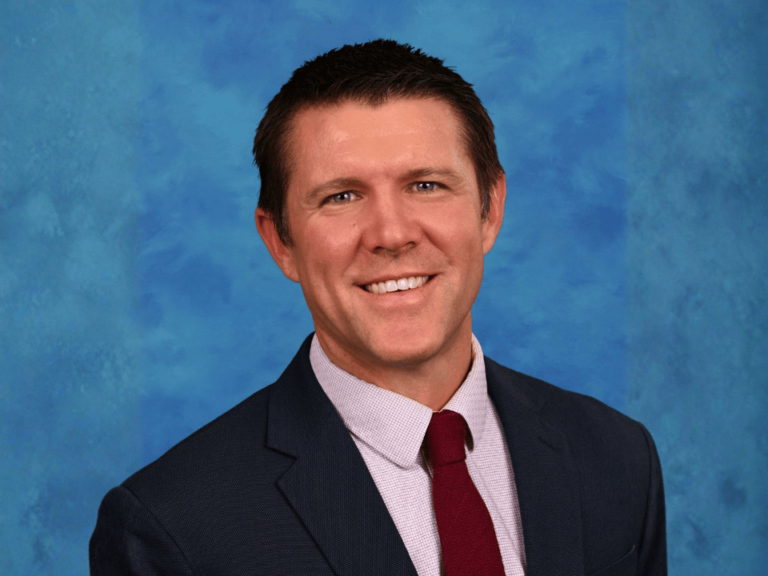
FDA’s Center for Biologics Evaluation and Research Director Vinay Prasad is set to leave the agency for a second time amid controversy.
This episode is available on Spotify, Apple Podcasts, and Youtube.
In a March 6 post on X, FDA Commissioner Marty Makary suggested that Prasad’s presence at FDA was a “sabbatical” from his academic career and that he would be returning to his job at the University of California, San Francisco.
“Under Richard Pazdur’s leadership, FDA was heading in the direction of behaving rationally in the same way as the mainstream of oncology,” Paul Goldberg, editor and publisher of The Cancer Letter, said. “So, then they take someone who is really an outlier in oncology. He really is like an N-of-1, Vinay Prasad, and basically try to integrate him or make him the chief scientific and chief medical officer over a regulatory agency, and that’s like sticking a finger in the eye.”
On this week’s episode, Paul and Claire Marie Porter, reporter with The Cancer Letter, talk about Vinay Prasad’s unusual year at FDA, and what led to his second departure from the agency. He’s officially out at the end of the month, following weeks of controversy, specifically criticisms around drug approvals.
“Right now drug companies are mad [at Prasad], rare disease patients and advocates are mad, and now Congress people are mad, which is a lot of mad people,” Claire said. “And I think when you’ve united pharma, Congress, and patients, that’s almost impressive.”
Drug companies and rare disease advocates are frustrated with Prasad because of seemingly arbitrary rejections of some of those drugs that were among the few options patients had. Representative Jake Aushinschloss (D-MA) has called for Makary’s resignation and accused the agency of crossing legal lines by revealing trade secrets after a very public fight over a gene therapy for Huntington’s disease.
At the same time, the agency’s actions seem to be contradictory—rejecting rare drug approvals while simultaneously publicizing a new push to smooth the approval process for sponsors focused on rare diseases.
Stories mentioned in this podcast include:
- Vinay Prasad, oncology’s gadfly-turned-CBER-director, will leave FDA (again)
- Prasad’s rule by fiat spilled into accelerated approvals in hematology and oncology
- As more people are surviving cancer, we must continue funding bold science
- The murder of Alexei Navalny is part of Russia’s macabre fascination with poisons
- HHS postpones third USPSTF meeting in a row
- FDA approves leucovorin for cerebral folate deficiency
This episode was transcribed using transcription services. It has been reviewed by our editorial staff, but the transcript may be imperfect.
The following is a transcript of this week’s In the Headlines, a weekly series on The Cancer Letter Podcast:
Jacquelyn Cobb: This week on the Cancer Letter Podcast.
Paul Goldberg: Then they take someone who is really an outlier in oncology. He really is like an N-of-1, Vinay Prasad, and basically try to integrate him or make him the chief scientific and chief medical officer over a regulatory agency. And that’s like sticking a finger in the eye.
Claire Marie Porter: Right.
Paul Goldberg: And the result now is that we have no idea why he… I never understood why he’s in. I never understood what he was trying to do. And now I don’t understand what it means that he’s out. And you know what? We understand everything there is because there’s nothing to understand.
You’re listening to the Cancer Letter Podcast. The Cancer Letter is a weekly independent magazine covering oncology since 1973. I’m your host, Paul Goldberg, editor and publisher of The Cancer Letter.
Jacquelyn Cobb: And I’m your host, Jacquelyn Cobb, associate editor of The Cancer Letter. We’ll be bringing you the latest stories, groundbreaking research and critical conversations shaping oncology.
Paul Goldberg: So let’s get going.
Hi, Claire. How are you?
Claire Marie Porter: I’m good. I’m good. We were just talking off camera about how I’m in the middle of a tornado watch, so anything could happen right now. I’ll be safe for 25 minutes while we get through this.
Paul Goldberg: So if Claire just blows away?
Claire Marie Porter: Yeah.
Paul Goldberg: If she’s at Oz, I’d have to do this by myself.
Claire Marie Porter: Yeah. Yeah. You’d have to find the equivalent of the yellow beer. Right. Right.
Paul Goldberg: And me sitting there droning on.
Claire Marie Porter: How long do you think it would take you to notice that I was gone without the video?
Paul Goldberg: Oh, I’d notice immediately. There would be just suddenly…
Claire Marie Porter: Yeah. It’d be like a white noise machine or like the crackly screen that you see on a VHS player.
Paul Goldberg: Yeah. I keep thinking of it as The Wizard of Oz and the scene where Dorothy is out there blown away.
Claire Marie Porter: Well, it’s me. My son is really, really into The Wizard of Oz right now, like the actual book by Baum, which is really different from the movie. I had no idea. It’s really, really dark and we have to paraphrase some of the parts because he’s little. It’s a weird book. Anyways.
Paul Goldberg: Cool. Oh, yeah.
Claire Marie Porter: Yeah.
Paul Goldberg: Yeah, it’s a really great book.
Claire Marie Porter: Yeah. Well, we have really weird weather here. Jacquelyn , I think is on the West Coast, so she’s hopefully having sunny, bright sunny weather, which is what I wish we had. But I’ll be playing her this week and taking us through the headlines and then bantering with you. I hope I can remember how to do this. It’s been a while.
Paul Goldberg: Oh, fantastic. I’ll do my part then.
Claire Marie Porter: Okay.
Paul Goldberg: I can’t control what happens, what you do.
Claire Marie Porter: Right. I’ll take us through the headlines from last week. The cover story was a Q&A between Paul Goldberg and Breakthrough Cancer’s President Tyler Jacks. And he spoke with the cancer letter about the foundation’s new operating model for collaborative cancer research called, which they call Radical Collaboration. And then we had two stories about FDA’s Vinay Prasad, which we will talk about in today’s podcast. We had a guest editorial by Karen Knudsen entitled As More People Are Surviving Cancer, We Must Continue Funding Bold Science. And I think that headline speaks for itself. And then we had an interesting story for our cancer history project written by Robert Peter Gale on the history of poisons and high profile poisonings and what they have to do with cancer and cancer science. And then we had two stories in cancer policy. Sarah wrote about the third postponement of the USPSTF task force meeting.
And I wrote about FDA’s official approval of leucovorin for cerebral folate deficiency, something that’s been in the works for a few months. But today, we’re going to talk about perhaps the most polarizing figure in US medicine right now, who we’ve talked about on the podcast before. Probably will again, but Vinay Prasad is set to officially leave FDA at the end of March following weeks of controversy and criticisms. This time is specifically around drug approvals. So I wrote a story about his departure. Jacquelyn wrote a story, kind of adjacent story about an ultra rare disease drug that was rejected. So I guess we can start with the context. Paul, unless you have anything you wanted to say off the bat about Vinay.
Paul Goldberg: Well, off the bat, sure.
Claire Marie Porter: Yeah.
Paul Goldberg: He is polarizing for sure. It’s interesting to me what he’s going to do next, where he’s going to go. I think he’s coming back to UCSF or so it seems, and weirdly, Commissioner Makary said that he was on a sabbatical, a one-year sabbatical at UCSF. Is that really true? I don’t know. I’ve never heard of sabbaticals like this.
Usually when people join the government, they quit their previous jobs. Maybe they’re brought back in, maybe not. I think we better ask and find out what his employment status is. I have no idea, by the way. It could well be, but if it is a sabbatical, it will be the first of its kind.
Claire Marie Porter: Yeah.
Paul Goldberg: Nobody ever told us that he’s going to stay there for a year. So in a way, I have no idea what’s going on.
Claire Marie Porter: It could mean anything.
Paul Goldberg: It would be nice to find out.
Claire Marie Porter: Yeah. Well, I was thinking, just reflecting on this podcast and what was interesting to me about Vinay Prasad, who we’ve been covering since the beginning for a year now. And for a while there, I felt like every week or every couple of weeks he’d be like, “Who’s mad at Vinay this week?” And it feels like this past month or two, the question’s been more who is maddest at Vinay this week because right now drug companies are mad, rare disease patients and advocates are mad and now Congress people are mad, which is a lot of mad people. And I think when you’ve united pharma, Congress and patients, that’s almost impressive.
Paul Goldberg: Right and the left and the business interest.
Claire Marie Porter: Bipartisan ire.
Paul Goldberg: Yeah. He’s bringing this country together.
Claire Marie Porter: He is. It’s funny.
Paul Goldberg: It’s very interesting.
Claire Marie Porter: Yeah.
Paul Goldberg: And I’ve been covering him forever. Yeah. What was really interesting in your story, well, there’s a lot of interesting stuff in your story was also interesting. Maybe we should actually start with Jacquelyn ‘s story.
Claire Marie Porter: Sure.
Paul Goldberg: What happened with that drug that was going towards full approval or full accelerated approval, excuse me, toward approval and then boom, no.
Claire Marie Porter: Yeah. Yeah. And this isn’t the first time that Vinay has stepped in at the last second and rejected a drug approval or just come in and said… Issued a refusal to file letter happened with Moderna’s flu vaccine a couple of weeks ago. And this was a drug or a therapy for an ultra rare form of lymphoma. On January 9, Pierre Fabre Pharmaceuticals received a complete response letter from FDA telling it that its application for T-cell therapy tabelecleucel or Ebvallo was being rejected. The agency was now calling for a randomized control trial, which in my understanding is an unfeasible ask for such a small sample. And I guess I can talk a little bit more about the implications and what Prasad is doing and why this is an example of this happening in oncology, hematology, but it’s emblematic of what he’s been doing at large, which is moving the goalposts, it seems, when he sees fit.
And it seems a lot of these sponsors, pharmaceutical companies are not only confused by what the expectations actually are, but believe that they are in full compliance and then they get this whiplash from Prasad. So-
Paul Goldberg: Well, we don’t know it’s Prasad again. We think it’s certainly consistent with what he thinks and how he thinks, because he’s always asking for randomized controlled trials, which are wonderful. Don’t get me wrong. That is the gold standard. But in some cases you can’t have them like an ultra rare disease and then suddenly boom, in this ultra rare disease, there’s this demand for… Yeah, that’s kicking the teeth.
Claire Marie Porter: Right. Right. And the reason you can’t have it is because there’s no incentives for industry investment, right?
Paul Goldberg: No, no, no.
Claire Marie Porter: No.
Paul Goldberg: Because there aren’t enough patients. Well, you can talk about incentives, but let’s just start about feasibility. It’s also just why are you going to ask for this? It’s not possible to do this. It will take you a hundred years to do that kind of a randomized trial. You’re not going to get any patients either. It’s really rare.
Claire Marie Porter: And isn’t it a bit contradictory? Prasad and Makary have… I mean, Prasad, one of his babies over this past year has been the priority review voucher program. How is that different from accelerated approval? Is it-
Paul Goldberg: Oh, it’s completely parallel.
Claire Marie Porter: Yeah.
Paul Goldberg: It’s a separate structure. Yeah.
Claire Marie Porter: So these decisions, are they arbitrary? Only Prasad knows what the criteria are from week to week? Or what’s your understanding based on this example?
Paul Goldberg: Well, based on what I can tell, nobody knows who knows. It’s not interpretable. So what the policies are that FDA now has, I can only speak for myself here, but I have no idea what the standards are. It’s a very interesting thing to see what…
Claire Marie Porter: Yeah.
Paul Goldberg: My bet, and again, this is the beauty of a podcast you can bet, is that I think we may have heard from the industry finally.
Claire Marie Porter: Yeah. Okay.
Paul Goldberg: And the patient’s groups speaking in exactly the right way that the patient groups in the industry should be speaking, which is for their own interests and each other’s interests as well. So you cannot do this. I don’t understand. I cannot interpret this. Nobody can interpret even this N-of-1 approvals versus on the one hand, and then on the other hand, there is Vinay Prasad calling for randomized controlled trials in an ultra rare indication.
Claire Marie Porter: Yeah, yeah.
Paul Goldberg: If that were the standard, there would be no childhood cancer drugs because the beauty of… The only good thing and fair thing in the world is that childhood cancer is rare.
Claire Marie Porter: Right, right.
Paul Goldberg: That’s a good thing. So you can’t have that. But in this case, it’s like, why? What?
Claire Marie Porter: Yeah.
Paul Goldberg: How does that square with everything else? And then of course, there’s still this mystery of all of these dead children or dead people from COVID vaccine that Vinay found, but no one else can find them in the database.
Claire Marie Porter: Right. Right.
Yeah. Which was another on the laundry list of things that upset people about Prasad that was just one of many. I guess I’d like to go back to what happened last week with Prasad, but just from an outsider… Yeah, just from an outsider perspective, I thought the story that Jacquelyn wrote was so interesting and intriguing and has so many implications, but really raises these, I guess, existential questions, at least for me, because I’m not in it.
From my understanding, if FDA approves a bad drug, people say you endangered patients. And if you rejected a drug that might work, people say that you killed hope, which it sounds like a very tough job to be. I mean, being a regulator just sounds like… And you’re never going to make everyone happy, I guess, is what I’m trying to say. So that was just something that I was reflecting on reading her story and then… But yeah, I mean, I think we should talk about what happened with Prasad because it was a very public… Once again, everything that happens in this agency plays out publicly on X or Twitter these days so you can watch it unfold and-
Paul Goldberg: Yeah, but you won’t understand what’s transpiring-
Claire Marie Porter: Sure, sure.
Paul Goldberg: …on Twitter very well. But the way I was able to understand it for the past 25 years, 26 years, has been by following what the FDA oncology division has been doing, the oncology unit, because the objective there was to make regulatory science follow science and cancer. And a lot of doors were open that were previously closed, and you can understand why the agency or why… You can see the agency trying to behave rationally, and when an agency, a regulatory agency behaves rationally, an industry can make money. You know what the standards are.
Now, the mainstream of oncologists, what I’m talking about, and under Pastor’s leadership, Richard Pastor’s leadership, FDA was heading in the direction of behaving rationally in the same way as the mainstream of oncology. So then they take someone who is really an outlier in oncology. He really is like an N-of-1, Vinay Prasad, and basically try to integrate him or make him the chief scientific and chief medical officer over a regulatory agency, and that’s like sticking a finger in the eye.
And the result now is that we have no idea why he… I never understood why he’s in. I never understood what he was trying to do, and now I don’t understand what it means that he’s out.
Claire Marie Porter: Right.
Paul Goldberg: And you know what? We understand everything there is because there’s nothing to understand. It’s a… Yeah.
Claire Marie Porter: Unprecedented. To bring back a COVID word.
Paul Goldberg: We keep hearing that word, but really let’s… I mean, we can whine about it. The good news is that now there is an opportunity to bring in someone who is going to bring in stability and write the ship. The ship’s not doing so well. I’m also finding… He was Makary’s protege in many ways. Makary really saw him as one of the great scientific minds of our generation. And right now I’m seeing in your story that a couple of people who are now political appointees reporting to Makary are actually also reporting to HHS Secretary Kennedy. So does that mean that Makary days are numbered or does it mean that he is more tightly handled?
Claire Marie Porter: Right.
Paul Goldberg: I mean, that’s hard to judge right now.
Claire Marie Porter: Right, right, right. Makary did say that there will be a successor named before Vinay is officially done at the end of this month. So I’m curious if that new successor will hold all three titles because Vinay amassed three jobs over his year at the agency, which has never happened before, right?
Paul Goldberg: Yeah. Yeah. Yeah.
Claire Marie Porter: Yeah. Yeah.
Paul Goldberg: None of these jobs have… There’s no reason to combine these jobs…
Claire Marie Porter: Other than centralization of-
Paul Goldberg: I don’t know other than… I mean, there’s no reason. I mean, as far as that, I don’t know what else there could be. There’s no reason.
So we have an interesting thing to be watching, but it’s also, it’s an opportunity to right the ship and this administration I hope is hearing that it’s essential to right the ship. And also look at… You don’t have to have a renegade. You don’t have to have an outlier to do things well like National Cancer Institute, if you were to think… If we were to think of NCI, the NCI director, Tony Letai, is a very mainstream and by mainstream, I mean, respected scientist.
Claire Marie Porter: Yeah. Yeah. I guess we’ll see what happens.
Paul Goldberg: So maybe it’s an opportunity to bring in a respected scientist and somebody who understands clinical research and somebody who understands basic research and somebody who understands regulatory science and somebody who is not trying to enact their own view of the world.
Claire Marie Porter: Right, right.
Paul Goldberg: Maybe somebody who doesn’t have a blog.
Claire Marie Porter: Right, right. Cybericonoclast.
Paul Goldberg: Yeah.
Claire Marie Porter: Substack.
Paul Goldberg: Yeah. Yeah. Maybe that should be… If I were choosing someone to replace Dr. Prasad, I would choose someone who is a luddite and doesn’t have any social media presence. That would be mine.
Claire Marie Porter: Yeah. Yeah.
Paul Goldberg: Yeah.
Claire Marie Porter: That would be a wise pivot.
Paul Goldberg: The Goldberg Global.
Claire Marie Porter: It’s funny.
Paul Goldberg: But nobody is asking me.
Claire Marie Porter: No.
Paul Goldberg: Nobody ever has. Not even my children.
Claire Marie Porter: Oh, Paul. I’ve asked you for advice. The advice is different, I guess.
Paul Goldberg: I don’t remember what it was. I don’t remember what it was.
Claire Marie Porter: Me neither. Me neither.
Paul Goldberg: I don’t know if it’s true, but yeah.
Claire Marie Porter: For the record, if I think of it, I’ll let you know. Yeah.
Paul Goldberg: Yeah, please text me. Yeah. All right.
Claire Marie Porter: Yeah. Well, thanks, Paul. I’ve been the Prasad reporter beat this past year, which has been fun and we’ll be watching this closely.
Paul Goldberg: I don’t think it’s over.
Claire Marie Porter: I don’t think it’s over either. Nothing really ever is with this administration.
Paul Goldberg: Yeah.
Claire Marie Porter: But super interesting. Thanks for talking. See you next week.
Paul Goldberg: Well, thank you. And this is a great time to be a journalist.
Claire Marie Porter: Always, always is.
Paul Goldberg: Yep.
Jacquelyn Cobb: Thank you for joining us on the Cancer Letter Podcast, where we explore the stories shaping the future of oncology. For more in depth reporting and analysis, visit us at cancerletter.com. With over 200 site license subscriptions, you may already have access through your workplace. If you found this episode valuable, don’t forget to subscribe, rate, and share. Together, we’ll keep the conversation going.
Paul Goldberg: Until next time, stay informed, stay engaged, and thank you for listening.