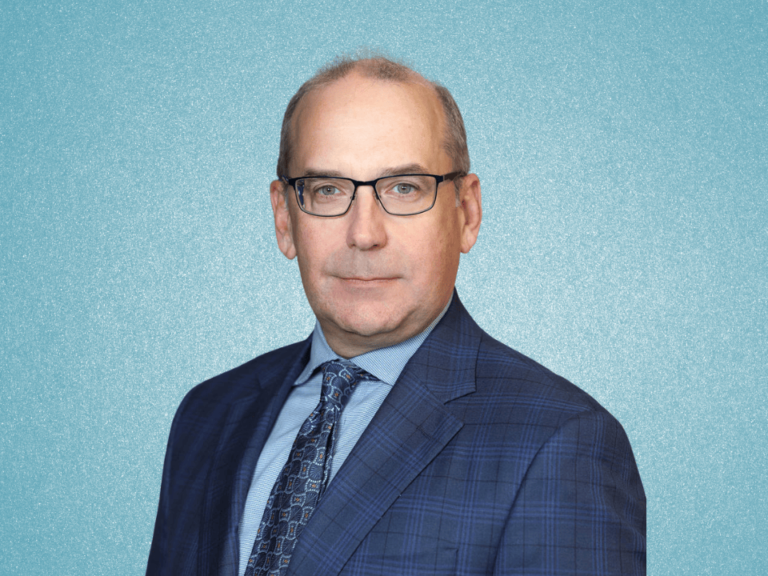
With NCI Director Anthony Letai in Milan supporting his daughter, Julie, at the 2026 Winter Olympics, Douglas R. Lowy, principal deputy director of NCI, took on the job of delivering detailed remarks and fielding questions at the inaugural meeting of the NCAB’s ad hoc working group on Extramural Research Concepts and Programs.
This episode is available on Spotify, Apple Podcasts, and Youtube.
The meeting was the first time the field was able to publicly communicate with NCI leadership since President Trump signed the FY26 funding bill.
On this week’s episode, Paul Goldberg, editor and publisher of The Cancer Letter, and Jacquelyn Cobb, associate editor, talk about last week’s deep dive into the inaugural meeting of the ad hoc working group, which replaced the Board of Scientific Advisors.
“This is the first public display from NCI, from Letai, from Lowy, after they actually have their appropriation, they know what they’re actually getting from Congress,” Jacquelyn said. “I think that I went into this thinking that we were going to have a lot of answers, and in some ways we did. We know about the funding numbers of course, and we know about the forward funding caps, etc., indirect cost caps. We know a lot of the stipulations that were included in the funding bill, but there are important caveats that Lowy talked about.”
One of the key concerns brought up at the meeting was the fact that although NCI will still rank award applications using percentiles, NCI is no longer “allowed to make awards exclusively on the basis of payline,” Lowy said.
Instead, NCI has been tasked with considering other factors when reviewing grant applications, which has sparked concern from some members of the working group about political interference in grant making.
“This presidential appointee [that will have final review over grant decisions] is Dr. Letai, and I think Lowy was smart to remind everybody of that,” Jacquelyn said. “Not that people legitimately forget, but I think to have that center of mind—that we are in good hands, we’re in expert hands, we’re in hands that the field agrees are very capable. So, that was very, I think reassuring.”
Stories mentioned in this podcast include:
- CBER Director Vinay Prasad sidelined staff to jettison Moderna’s mRNA flu shot
- Olopade: “The genetic basis of every cancer, or everything we do, starts in Africa.”
- NCAB ad hoc group approves seven new, reissue concepts
- Science is winning the war on cancer—CMS shouldn’t disarm
- Why infection and immunity matter for Florida’s cancer patients
This episode was transcribed using transcription services. It has been reviewed by our editorial staff, but the transcript may be imperfect.
The following is a transcript of this week’s In the Headlines, a weekly series on The Cancer Letter Podcast:
Jacquelyn Cobb: This week on The Cancer Letter Podcast…
Paul Goldberg: A lot of the money is, one of the considerations is geographic distribution, which makes a lot of people really cringe, but that also makes some people say, “Yeah, it’s not necessarily a bad idea.”
I mean, there are great things being done in one of some of the greatest institutions and research institutions in America, but also some of this needs to go out into other places, other centers as well. So, seeing some of the science move to the, I don’t know, the Louisianas, North Carolinas, South Carolinas, or to whatever, or Kansas, Missouri, is that a bad thing? I’m not going to say it’s a bad thing.
Jacquelyn Cobb: Not our job. No, but I hear you.
Paul Goldberg: I would probably, if I were the king of the world, I would keep my hands out of this whole thing. But I’m not the king of the world, and probably I’m not on that track.
Jacquelyn Cobb: Probably.
Paul Goldberg: You are listening to The Cancer Letter Podcast. The Cancer Letter is a weekly independent magazine covering oncology since 1973. I’m your host, Paul Goldberg, editor and publisher of The Cancer Letter.
Jacquelyn Cobb: And I’m your host, Jacqueline Cobb, associate editor of The Cancer Letter. We’ll be bringing you the latest stories, groundbreaking research, and critical conversations shaping oncology.
Paul Goldberg: So, let’s get going.
Jacquelyn Cobb: Hi, Paul. How are you?
Paul Goldberg: Hi, Jacquelyn. How are you? How was your weekend?
Jacquelyn Cobb: My weekend was good. It was a long weekend, which is really nice. Yesterday I just had a life admin day. I didn’t really do anything too crazy. I mean, not too crazy. I still did do a run in the woods, which was really lovely and magical always, but it was mostly just a life admin day. And then the rest of the week was really lovely. We actually, I skied—talk about skiing! Oh my gosh. Maine in the winter is going to be talking about skiing a lot, but we skied uphill and then back downhill a small mountain in Maine, so, that was really, really, really, really fun. That’s a new, I think addiction I just awoke in myself.
Paul Goldberg: Oh, wow. What did you use? Did you use cross country skis or back country?
Jacquelyn Cobb: We used cross country skis. Yeah, I know that there’s the back country. We used cross country because it was a very small mountain. It wasn’t anything crazy. I did fall a bunch of times, but it was, again, not a big deal. It was fun. But it was really cool. And we went up at sunset and we had hot chocolate at the top. It was just magnificent, it was incredible.
Paul Goldberg: That sounds great. It was a cross-country ski center somewhere?
Jacquelyn Cobb: It’s just a state park. Maine is truly unmatched, I think in terms of winter. I mean, I guess Vermont must be up there, right?
Paul Goldberg: They’re the same thing.
Jacquelyn Cobb: But for some reason, yeah, okay, there you go. So, yeah, state park, that’s what I-
Paul Goldberg: It’s not a state park where I cross country ski, but. And I do that all the time, which is fun.
Jacquelyn Cobb: I got a FaceTime from you during work hours last week on the trail being like, “Hey,” and we had a mini editorial meeting talking about.
Paul Goldberg: Yeah, we had an editorial meeting at the Trapp Family Lodge, which was not a sponsor of this podcast.
Jacquelyn Cobb: Once again. We’re going to get them to be, we swear.
Paul Goldberg: No, no.
Jacquelyn Cobb: I can take us through the last week’s headlines. The cover story is what we’re going to be focusing on this week, but basically we did a deeper dive into the first inaugural meeting of the ad hoc working group of the NCAB, which replaced the former Board of Scientific Advisors. So we’ll get into all that. Basically, Doug Lowy, the principal deputy director of NCI, gave a more detailed Director’s Report than Anthony Letai did, who’s the actual NCI Director last, or I guess two weeks ago now at the meeting because Anthony Letai’s daughter was casually competing in the Olympics, so Lowy had to step up. We waited until this week to really dive into the nitty-gritty, so we have a lot of details from NCI in that story.
We also wrote a story, Claire took on a story about Vinay Prasad sidelining staff reviews and staff recommendations to jettison Moderna’s mRNA flu shot. I think we’re going to have a bigger story on that this week as well is definitely a developing story. But just further, unfortunately, further instability and chaos at FDA.
For Black History Month, we had a conversation between Funmi Olopade and Robert Winn. Really incredible conversation, definitely worth listening to the whole conversation even beyond just reading our story about it, because she gets into so much more detail than we did. And she tells her story really wonderfully about being bored in Nigeria and coming to the US, and how that informed her research in oncology.
We also had a story about the NCAB concepts. Usually, that is a BSA adjacent story, but the new ad hoc working group did approve seven new and reissue concepts, so that’s pretty interesting as well. And then we had a guest editorial about CMS and Inflation Reduction Act. That’s outside of my typical comfort zone, so I won’t summarize it too succinctly here, but definitely worth a read and it’s more on the pharma biotech side of our coverage, so worth checking that out as well. So yeah. Paul, do you want to take a first stab at explaining our story or do you want me to do it since it was my story?
Paul Goldberg: Yeah, let’s actually talk through it because I guess the first thing we’ve got to say might be that this ad hoc working group does exactly the same thing that BSA did and has people on it who are of the same caliber as people who served on the BSA. It’s a pretty great group when you look at the names, who’s there, and listen to how they conduct themselves at that meeting. It’s pretty fantastic, so that part’s totally undiminished. The ad hoc working group is, yeah, so the BSA, the concepts that they get to review, that was interesting to see whether what we were looking for was whether this is business as usual, and we were hoping to find business as usual, and we were hoping to find questions that clarify everything for our community at the time when really the most important part of what NIH and NCI do, which is peer review, is being, it’s unclear.
Jacquelyn Cobb: It’s changing. It is changing.
Paul Goldberg: Yeah, it is changing.
Jacquelyn Cobb: Well, I guess maybe not peer review proper is changing, but the weight of peer review, peer review is changing a little bit.
Paul Goldberg: Yeah, let’s talk about that. To me, it was really heartening to see Doug step up, Doug Lowy, and to see that Dinah Singer is very much involved, and also to see that Tony Letai part of the same kind of cohort of people who understand what it is that NIH does, and that while it is, how would you, what’s the most diplomatic word? While it is disconcerting to see political factors fit into it, at least technically being a part of this, the fact that that it’s Letai is the presidential appointee makes me feel calm about this.
Jacquelyn Cobb: I’m trying to find, Lowy even said that. And I think that that, I agree with you. That is the thing that brings me the most peace, I think, as all of these changes come about is we are concerned about, or disconcerted, as you said about-
Paul Goldberg: I keep finding this very diplomatic way of saying it, and failing miserably, as I always do when I try to say things diplomatically.
Jacquelyn Cobb: Well, let’s just let Lowy say it. So Lowy said, “Peer review continues to be essential for assessing the scientific and technical merit of a proposal, and that is what we are doing as NCI reviews applications. The funding decisions will reflect a balance between cancer types, approaches, populations, and alignment with administration priorities. And the institute recommendations needs to be signed off by a presidential appointee.” And in this situation, that is Dr. Letai.
I mean, we covered this or the potential of these changes all throughout last year, all throughout 2025. And at one point there was talk of HHS bringing in another, an additional layer of presidential appointed review. It seems to be somewhat of a moving target, but it does seem that Dr. Letai, like you’re saying, he is the presidential appointee by definition. That word that brings a little shiver to our spines, I think, as we think about all the changes he’s brought to HHS.
Paul Goldberg: Very diplomatically said.
Jacquelyn Cobb: I know, I almost said something harsher and I didn’t.
Paul Goldberg: Beautiful job. I compliment your diplomacy.
Jacquelyn Cobb: But yeah, this presidential appointee is Dr. Letai, and I think Lowy was smart to remind everybody of that. Not that people legitimately forget, but I think to have that center of mind that we are in good hands, we’re in expert hands, we’re in hands that the field agrees are very capable. So that was very, I think reassuring. But still, it’s a little bit just, I think the fact that the peer review and the paylines, I mean, again, I’ve only been here before paylines for two or three years, but to be without paylines feels weird even for me. It feels destabilizing, I think maybe is both polite and diplomatic, but also very accurate. I think destabilizing is the word that I would choose even if I was not trying to be.
Paul Goldberg: Well, yeah, plus grading the science. There’s a lot of flexibility there, and a lot of variation.
Jacquelyn Cobb: That’s true.
Paul Goldberg: So, what’s the difference between the third percentile and the fourth percentile and the fifth percentile and the sixth percentile? I don’t know. I’ve never done this myself, and a good thing, but I hear people have been saying it all along for years and years and years and years that the difference is pretty marginal. And at one point, actually, Harold Varmus would take a bunch of the applications that were marginal home with him to New York to re-review, which was an interesting concept.
Jacquelyn Cobb: Isn’t that illegal?
Paul Goldberg: Yeah, he was very excited about doing it, and then I think he, I hope he stopped. I don’t know, it’s irrelevant now. But he was really just taken by this intellectual problem of finding the margins, and figuring out what’s in the margins or what’s on the margins. And that’s important, I guess, too. And in this case, when we don’t know where the payline is.
Jacquelyn Cobb: There is no payline.
Paul Goldberg: Yeah, well, there is a payline, but the decisions are not made based on payline alone. And the reason you were maybe theoretically in the past making decisions based on paylines was in order to avoid subjectivity, and the fact that we all like and trust Doug Lowy and we all like and trust Dinah Singer, and Tony Letai especially in this case is relevant.
The objective is just to say, “Hey, this is apolitical.”
And here they’re saying, “Well, it has to be connected and consistent with the political priorities of the administration.”
But then again, the same sort of thing where you don’t really know what’s the difference between 3% and fourth percent and third percentile or fifth, what is the difference between political and apolitical and where are they? There’s a lot of stuff going on here, which is kind of squishy, and it’s always been somewhat squishy.
Jacquelyn Cobb: Yeah, totally. And I mean, I think that it comes back to that trust idea. If we can trust those, the people in power, then of course the squishiness is okay. But that’s I think where we feel a little bit, but I realized, Paul, that we really buried the lede a little on this.
Paul Goldberg: Yes, we did. We’re experts at that, the lede burial. Go ahead, unbury the, dig it out.
Jacquelyn Cobb: I will dig it out, zombify the lede. The lede is that this is the first meeting of this group, of course, but it also happens to be the first public NCAB NCI meeting after President Trump signed the FY26 funding bill. This is the first public display from NCI, from Letai, from Lowy, after they actually have their appropriation, they know what they’re actually getting from Congress. I think that I went into this thinking that we were going to have a lot of answers, and in some ways we did. We know about the funding numbers of course, and we know about, what was it, the forward funding caps, et cetera, indirect cost caps. We know a lot of the stipulations that were included in the funding bill, but there are important caveats that Lowy talked about. So this, I buried the lede again, the lede is.
Paul Goldberg: Yes, double buried the lede.
Jacquelyn Cobb: Double buried. I brought it back to life and I killed it again. And now here it is. It’s that even with NCI getting an increase from the F26 funding bill, the purchasing power, the buying power of NCI is 18% lower than it was in 2003. So it’s like, yay, we have a little bit of a raise, but still money is still tight is the message. But also I think it’s just an important and somewhat interesting angle to think about. Yes, we have all of these answers from Congress, but there is still so much unknown.
For example, the forward funding, I’m going to get that up as well, but basically the Congressional language says the answer about forward funding, you cannot have more than last year, but there’s so many different ways that HHS and NIH and therefore NCI can interpret that, and so that is still unknown. They’re still waiting for NIH to hear that, they’re still waiting on NIH and a bunch of other things, including making sure that NCI’s priorities are heard at an NIH level when we’re talking about centralization and a little more politicization of grant funding as well. All this rambling basically to say is that we have a lot of answers, but we have a lot of questions, and our answers are not necessarily, they might be a little misleading. Yes, we got to raise, but we’re, money’s still tight like I said.
Paul Goldberg: Well, we should also go back for a moment to talk about the the post-payline world. Lot of the money is one of the considerations is geographic distribution, which makes a lot of people really cringe. But it also makes some people say, “Yeah, it’s not necessarily a bad idea.”
I mean, there are great things being done in some of the greatest institutions and research institutions in America, but also, some of this needs to go out into other places, other centers as well. Seeing some of the science move to the, I don’t know, the Louisianas, North Carolinas, South Carolinas to whatever, or Kansas, Missouri, is that a bad thing? I’m not going to say it’s a bad thing.
Jacquelyn Cobb: No, but I agree.
Paul Goldberg: I would probably, if I were the king of the world, I would keep my hands out of this whole thing. But I’m not the king of the world, and probably I’m not on that track, but.
Jacquelyn Cobb: Probably. Maybe.
Paul Goldberg: Yeah. So yeah, I think actually, all of this is not hopeless. All of this is actually possibly even okay.
Jacquelyn Cobb: Yeah. And I mean that was brought up at the meeting. Ali Shilatifard, I’m not sure if I’m pronouncing his name correctly, I apologize. But he is a member of the working group and chair of the department of Biochemistry and Molecular Genetics at the Simpson Querrey Institute for Epigenetics of the Robert H. Lurie Comprehensive Cancer Center. I figured if I don’t know how to pronounce his name perfectly, I should give his-
Paul Goldberg: Northwestern.
Jacquelyn Cobb: Western?
Paul Goldberg: Northwestern.
Jacquelyn Cobb: Oh, I thought I said something wrong. Oh my God.
Paul Goldberg: Northwestern.
Jacquelyn Cobb: All that to say is that he was, I think the primary member of the ad hoc working group that brought up this concern specifically about regional distribution of grant money versus meritocracy. And him and Lowy had a really interesting, and once again, like you said, everybody in this group is of incredible caliber in how they discuss these things. They had a very respectful and I think informative back and forth about that, and that’s in the story. I’m not going to read the whole thing a little long, but basically those two points were made. And it seems clear that NCI is at least hearing that leadership is aware of that perspective. I think that that’s, like you said, that will be decided.
There are two other things I just wanted to mention. They’re both a little bit up in the air as is a lot of other stuff in this story, but I wanted to give our listeners a heads-up of what might be coming from NCI based on what we know. So last year, in 2025, NCI along with other institutes and centers were instructed to reduce the number of NOFOs, which are Notice of Funding Opportunities by about 50%. NCI and other institutes scrambled to meet that requirement. But basically as that continues, one of the ways that they’ve gotten around that is they can combine NOFOs because these are just the Notices of Funding Opportunity.
So just in the future, or I don’t think they said exactly when it’s going to start, but there’s a new funding mechanism that is replacing the RL1 and the R21 announcement. See, this is what, it’s tricky. This is a quote from Dinah Singer, she says, “There’s a new funding mechanism.” I’m assuming she means NOFOs, who knows? But you’re going to see, which is going to advertise what was formally covered by RL1 and R21, and that is called the RP1. I believe that she is speaking of NOFOs only. I don’t think that this is a new funding mechanism entirely, but we’ll have to watch that closely.
And then the other thing that I wanted to bring to readers’ attention is the idea of a highlighted topic. And this is what you can mention what you spoke about at our meeting earlier, Paul, is the idea that there are these new, basically areas of scientific inquiry that are replacing and centralizing what was formally called the Notice of Special Interest. They represent a selective research priority within one or more NIH institutes, so it’s not with dedicated funding or anything, it’s just like this is a research priority. And hypothetically, maybe NCI, maybe a couple other institutes are interested in it. There’s a link, the link will be in the description.
And while this is new, Lowy did ask the members of the working group to do their best to communicate these new highlighted topics, as well as the rest of what was discussed at the meeting with their communities. There was a real charge by Lowy to ask the working group members to be part of the communication movement or effort, I guess. I don’t know if you want to say anything about that, Paul.
Paul Goldberg: Yeah, no, this is, to me, that was really interesting because here is NCI that used to have a really excellent communications function that had to get rid of it or was commanded to get rid of it. It was all DOGE’d. And they need to be communicating with people rather than relying on one word of mouth or samizdat. There has to be a real systematic approach, which it no longer has. And by the way, that is in the National Cancer Act of 1971, that very issue. So right now, and I did hear Tony Letai say that that’s something that he really needs to address somehow. But yeah, it’s a very interesting time to be a journalist, isn’t it?
Jacquelyn Cobb: It is, it very much is. That’s the thing is things change all the time. I spend most of my time in being in question, can I form a new phrase? Being in question rather than being in certainty. I feel like most of the time I’m really not sure and figuring things out. And as a journalist, I do think that most or I would say that most journalists enjoy that feeling and that’s why they go into journalism so thankfully I’m enjoying it. But it is definitely a change. It’s a lot to learn.
Paul Goldberg: Well, looking at your story, which about the ad hoc committee meeting, I really enjoyed the polemic, the whole discussion of what is happening by people that I respect.
Jacquelyn Cobb: Yeah.
Paul Goldberg: And you caught that, so it’s a kind of thing that if I were a reader, I would probably want to sharpen the number two pencil, get a printout and go through it, because there’s a lot between the lines. There’s a lot that is stated for the first time. There’s a lot of a political and historical perspective that can be brought onto it. And I think that’s probably what we just did in this long rambling episode in which you buried the lede, not once, but twice.
Jacquelyn Cobb: That’s my job. That’s why you’re my editor.
Paul Goldberg: The Cancer Letter: we bury the lede. We got to get T-shirts.
Jacquelyn Cobb: I would buy that T-shirt. That one, I’m in.
Paul Goldberg: You can have it for free if we make it.
Jacquelyn Cobb: Wow, incredible.
Paul Goldberg: Yeah, it’s a perk of the job.
Jacquelyn Cobb: Awesome.
Paul Goldberg: And maybe on the back it should say, “This is a great time to be a journalist.”
Jacquelyn Cobb: A journalist, yes.
Paul Goldberg: We buried the lede.
Jacquelyn Cobb: I love it. Awesome. Well, thank you Paul. This was a lovely episode, and I will see you next week.
Paul Goldberg: Yeah. All right. See you next week.
Jacquelyn Cobb: Thank you for joining us on The Cancer Letter Podcast, where we explore the stories shaping the future of oncology. For more in-depth reporting and analysis, visit us at cancerletter.com. With over 200 site license subscriptions, you may already have access through your workplace. If you found this episode valuable, don’t forget to subscribe, rate and share. Together, we’ll keep the conversation going.
Paul Goldberg: Until next time, stay informed, stay engaged, and thank you for listening.