Building cancer care resilience through international observerships: Lessons from Ukraine

Share on facebook
Share on twitter
Share on linkedin
Share on email
Share on print

The full-scale Russian invasion of Ukraine has devastated the Ukrainian healthcare infrastructure, disrupting cancer care, halting clinical trials, and compounding long-standing systemic challenges. 

Even before the war, Ukraine’s oncology system faced major constraints: Limited access to radiotherapy equipment, outdated chemotherapy supply chains, and workforce shortages. The invasion intensified these issues—cancer hospitals were damaged, warehouses destroyed, and critical staff displaced. Yet, amid this devastation, a coalition of Ukrainian diaspora and international stakeholders launched an extraordinary response: Investing in people. 

At the center of this response is a coalition of healthcare professionals from academic institutions, international academic partners affiliated with various non-profits—the Ukrainian Alliance for Medical Exchange and Development, or UA-MED1. Their mission: To strengthen Ukraine’s healthcare system by equipping its medical professionals with advanced skills, global exposure, and mentorship networks.

From knowledge exchange to system change

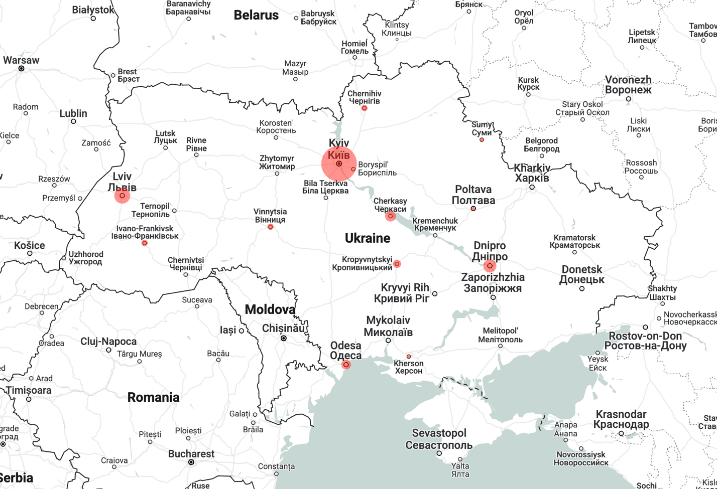
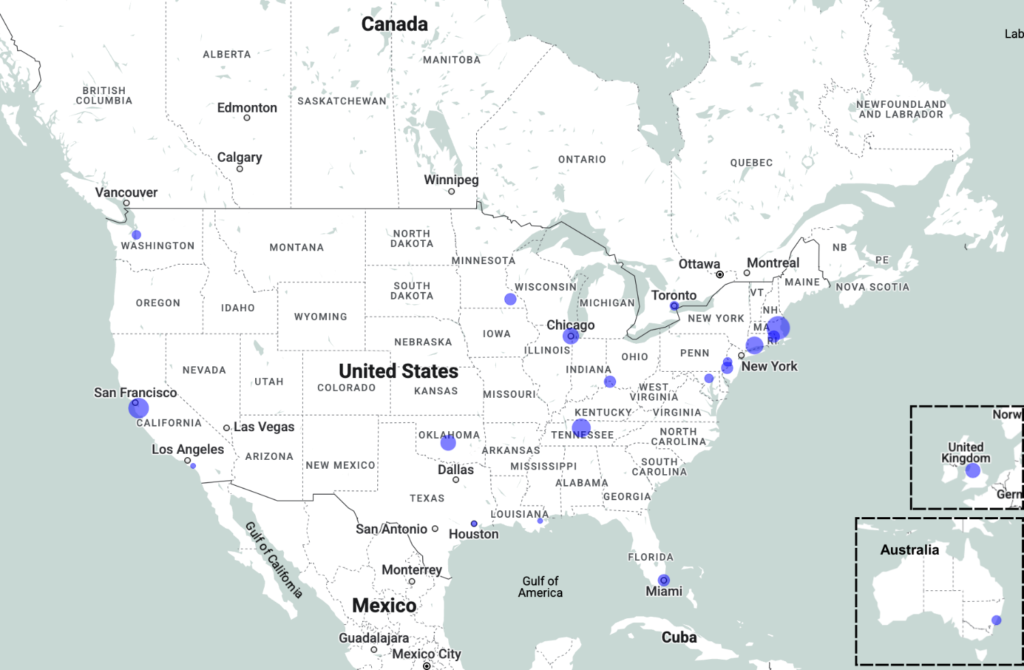
Between 2022 and 2024, UA-MED coalition facilitated 126 observerships across 17 leading academic institutions in the United States, Canada, Europe, and Australia (Figures 1-3)

Map of Ukraine.
Map of the U.S.
Figure 1: Geographic distribution of observers’ home (top) and training (bottom) institutions. Radius of circles correlate to the number of observers.
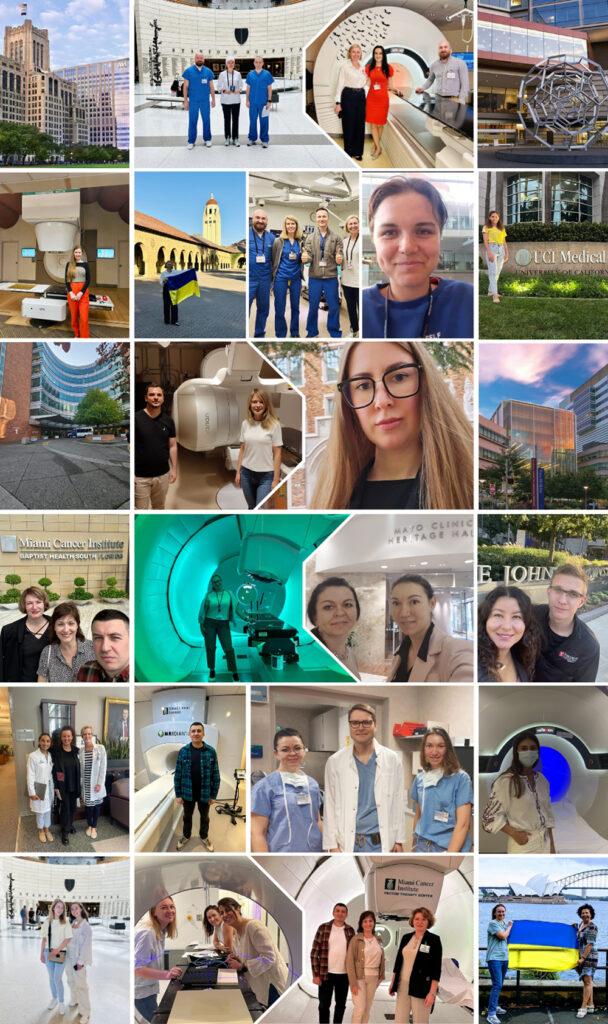
Collages of Ukrainian observers doing various activities at their host institutions.
Figure 2: Observerships for radiation oncologists and medical physicists organized by Help Ukraine Group3. Many of the observers became the trainers in the HUG virtual and practical on-site courses spreading the knowledge acquired abroad among their Ukrainian colleagues.
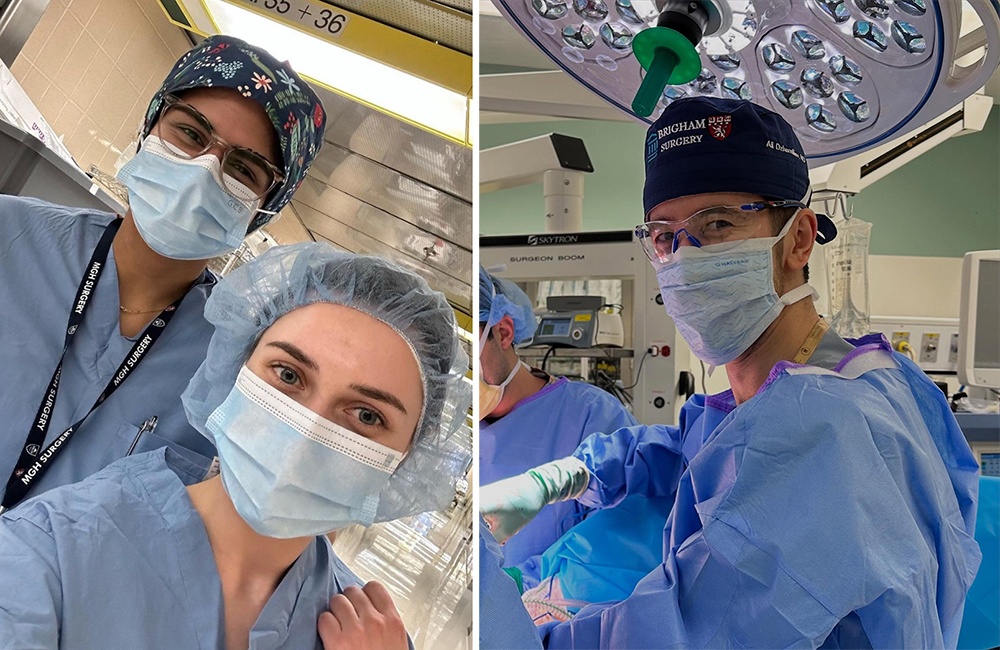
Huivaniuk and Dzemiliev with scrubs and masks on.
Figure 3: Ukrainian surgeons Drs. Inesa Huivaniuk (left) and Ali Dzemiliev (right) observing at Massachusetts General Hospital and Brigham and Women’s Hospital organized by Heal Ukraine Group4 and Global Medical Knowledge Alliance5. The observers launched multiple nation-wide initiatives such as promoting women in medicine, quality and safety, and telemedicine app HealUA to offer provider-to-provider consultations.

A cross-sectional survey presented at American Society of Clinical Oncology 2025 meeting2 captured the impact of these experiences on oncology practice in Ukraine:

  • 93.2% of participants reported a shift in their understanding of modern oncology care,
  • 86.4% learned new procedures and techniques, and
  • 71.1% implemented new procedures upon returning home.

Importantly, the impact of the observerships has extended beyond individual skill-building. Participants became local educators and leaders: 78.0% conducted peer trainings, 69.5% delivered hospital-wide presentations, and 49.2% incorporated new content into teaching. Moreover, 84.5% maintained active mentorship relationships with their host institutions—turning short-term observerships into long-term academic partnerships.

Barriers and lessons learned

Despite these gains, participants cited substantial challenges in applying their new knowledge. The most common barriers included lack of equipment or materials (70.7%), human resource shortages (43.1%), and limited institutional support (43.1%). These challenges highlight the urgent need to pair professional training with structural reforms—particularly in procurement, staffing, and administrative leadership.
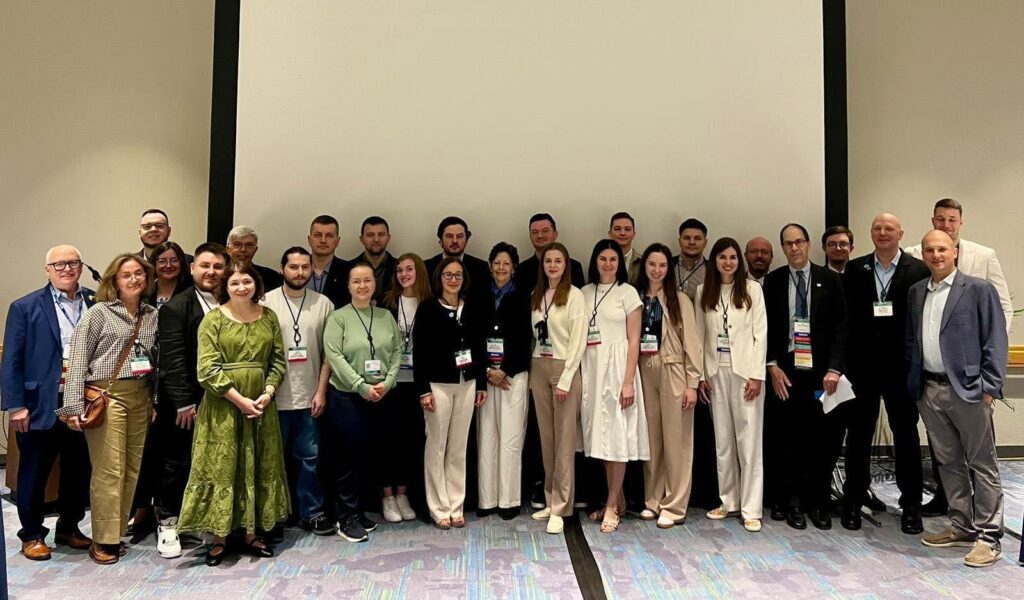
Large group of people posing in conference room.
Ukrainian delegation at ASCO 2025 meeting organized by Rostyslav Semikov, Peace and Development Foundation6, and the Ministry of Health of Ukraine.

Nonetheless, the momentum is undeniable. Observerships have contributed to critical advances in Ukraine’s wartime oncology practice. Following international observerships, Ukrainian oncology professionals have implemented a range of impactful innovations in cancer care, despite the ongoing war. In radiation oncology, they launched stereotactic body radiation therapy for prostate and metastatic cancers, adopted hypofractionation regimens, enhanced planning through the use of CT and MRI simulation, and advanced motion management techniques. 

In medical oncology, observers have modified drug protocols to address shortages and improved management of treatment-related adverse events. Multidisciplinary teamwork and guideline-based care were strengthened through international mentorship and the adoption of global protocols. These innovations underscore how targeted training can accelerate the modernization of oncology practices even in resource-constrained, conflict-affected settings.

Stanford to National Cancer Institute, Kyiv: The Story of Dr. Iryna Kriachok

One of the most striking examples of the observership’s impact is Dr. Iryna Kriachok, head of the Chemotherapy of Hemoblastoses Department at the National Cancer Institute in Kyiv.

Dr. Kriachok’s story is a testament to the power of international solidarity. Her success, and that of over 100 Ukrainian oncology professionals, underscores that in times of war, professional development is not a luxury; it is a lifeline. 

In 2023, Dr. Kriachok completed a one-month observership at Stanford University’s Bone Marrow Transplantation and Cellular Therapy Program, followed by participation in the American Society of Hematology 2023 annual meeting in San Diego. Her training, coordinated by Help Ukraine Group3 and Global Medical Knowledge Alliance5 and supported by the Union for International Cancer Control, focused on advanced techniques in hematologic malignancies, allogeneic transplantation, and CAR T-cell therapy.

“It was a great honor to be invited to Stanford,” Dr. Kriachok shared. “I was deeply moved by how open, generous, and eager to share their knowledge the doctors were. The experience was not only transformative for me but will benefit my entire team.”
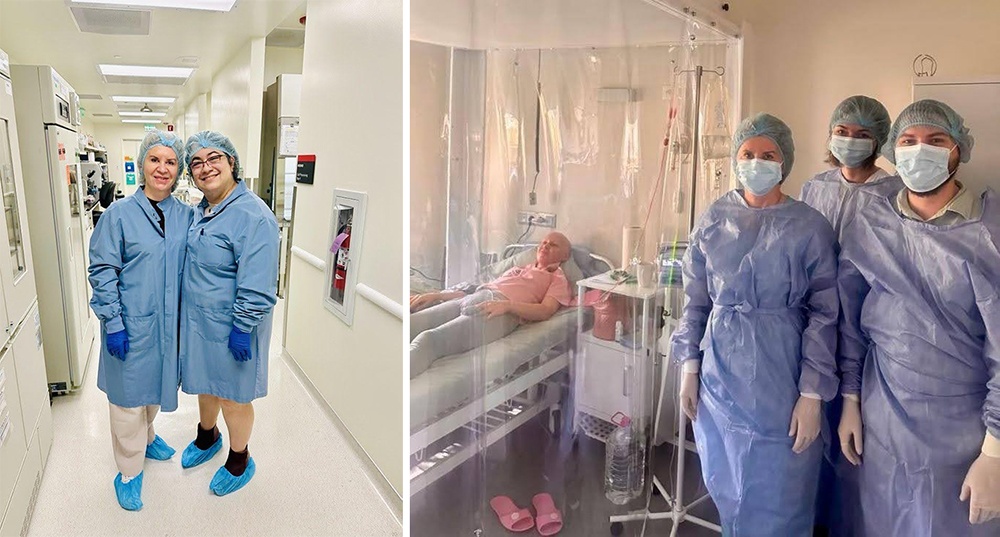
(Left) Kriachok and colleague posing in laboratory hallway in scrubs. (Right) Kriachok and two others pose in scrubs and masks beside a patient in hospital bed surrounded by clear plastic barrier.
Dr. Iryna Kriachok training at Stanford University (left) and Dr. Kriachok and her team after the first allogeneic bone transplant at National Cancer Institute, Kyiv (right).

Upon her return to Ukraine, she achieved what many considered very challenging during wartime: With her team, she launched the first allogeneic stem cell transplantation program at the National Cancer Institute in Kyiv. With continued mentorship from Stanford, her observership directly catalyzed the implementation of a high-complexity therapy that was previously unavailable in National Cancer Institute, Kyiv.

A strategy for resilience and equity

As Ukraine works toward aligning its national cancer control strategy with EU standards and targets full implementation by 2030, international observerships offer a proven model for scalable, sustainable impact. These programs:

  • Accelerate clinical innovation via exposure to high-volume centers,
  • Promote knowledge transfer to underserved regions,
  • Foster cross-border mentorship and academic collaboration, and
  • Build a foundation for health system resilience beyond crisis response.

Dr. Kriachok’s story is a testament to the power of international solidarity. Her success, and that of over 100 Ukrainian oncology professionals, underscores that in times of war, professional development is not a luxury; it is a lifeline. 

By continuing to invest in people, Ukraine is not only surviving the war, but also rebuilding a smarter, more equitable oncology system from within. Let’s stand with Ukraine by opening more doors for Ukrainian professionals to learn, lead, and transform cancer care back home.


References
  1. https://ua-med.org/
  2. https://ascopubs.org/doi/10.1200/JCO.2025.43.16_suppl.9036
  3. https://helpukrainegroup.org/
  4. https://www.healukrainegroup.org/
  5. https://gmka.org/en/
  6. https://peacedevelopment.fund/
Nataliya Kovalchuk, PhD
Clinical professor, Radiation Oncology Department, Stanford University; Founder and president, Help Ukraine Group
Andriy Beznosenko, MD, PhD, MBA
Chief, Division of thoraco-abdominal oncology, National Cancer Institute, Kyiv, Ukraine; CEO, OncoHUB
Vitaliy Y. Poylin, MD, MBA
Associate professor of colon and rectal surgery, Northwestern University
Rostyslav Semikov, MD, MS
CEO, Audubon Bioscience; Co-founder and CEO, Peace and Development Foundation
Arman Kacharian
Head, Innovations Unit, Ministry of Health of Ukraine
Douglas Davis, MD, PhD
Assistant professor, Department of radiology, Medical College of Wisconsin; Member, Board of advisors, Global Medical Knowledge Alliance
Nataliya Uboha, MD, PhD
Associate professor, Division of hematology, medical oncology, and palliative care, University of Wisconsin Carbone Cancer Center; Member, Board of advisors, Global Medical Knowledge Alliance
Natalka Suchowerska, PhD
Associate professor, Department of radiation oncology, University of Sydney, Australia; Vice president, Director of Australia outreach, Help Ukraine Group
Viktor Iakovenko, PhD, MCPPM
Assistant professor, Division of Medical Physics and Engineering, Department of Radiation Oncology, UT Southwestern Medical Center; Co-founder, Director of Canada outreach, Help Ukraine Group
Jacqueline Hart, MD
Consultant, Vaccine and Immunotherapy Center, Massachusetts General Hospital; Member, Heal Ukraine Group; Director, The Bassuk Center on Homeless and Vulnerable Children & Youth
Mark Poznansky, MD, PhD
Director, Vaccine and Immunotherapy Center, Attending physician, Infectious Diseases Medicine, Massachusetts General Hospital; Professor of medicine, Harvard Medical School; Member, Heal Ukraine Group
Darya Kizub, MD
Assistant professor, Department of Breast Medical Oncology, Division of Cancer Medicine, The University of Texas MD Anderson Cancer Center; Director of Oncology, Global Medical Knowledge Alliance
Nelya Melnitchouk, MD, MSc
Assistant professor of surgery, Harvard Medical School, Associate surgeon, Department of Gastrointestinal and General Surgery, Brigham and Women’s Hospital; Founder and CEO, President, board of directors, Global Medical Knowledge Alliance
Table of Contents

YOU MAY BE INTERESTED IN

Nataliya Kovalchuk, PhD
Clinical professor, Radiation Oncology Department, Stanford University; Founder and president, Help Ukraine Group
Andriy Beznosenko, MD, PhD, MBA
Chief, Division of thoraco-abdominal oncology, National Cancer Institute, Kyiv, Ukraine; CEO, OncoHUB
Vitaliy Y. Poylin, MD, MBA
Associate professor of colon and rectal surgery, Northwestern University
Rostyslav Semikov, MD, MS
CEO, Audubon Bioscience; Co-founder and CEO, Peace and Development Foundation
Arman Kacharian
Head, Innovations Unit, Ministry of Health of Ukraine
Douglas Davis, MD, PhD
Assistant professor, Department of radiology, Medical College of Wisconsin; Member, Board of advisors, Global Medical Knowledge Alliance
Nataliya Uboha, MD, PhD
Associate professor, Division of hematology, medical oncology, and palliative care, University of Wisconsin Carbone Cancer Center; Member, Board of advisors, Global Medical Knowledge Alliance
Natalka Suchowerska, PhD
Associate professor, Department of radiation oncology, University of Sydney, Australia; Vice president, Director of Australia outreach, Help Ukraine Group
Viktor Iakovenko, PhD, MCPPM
Assistant professor, Division of Medical Physics and Engineering, Department of Radiation Oncology, UT Southwestern Medical Center; Co-founder, Director of Canada outreach, Help Ukraine Group
Jacqueline Hart, MD
Consultant, Vaccine and Immunotherapy Center, Massachusetts General Hospital; Member, Heal Ukraine Group; Director, The Bassuk Center on Homeless and Vulnerable Children & Youth
Mark Poznansky, MD, PhD
Director, Vaccine and Immunotherapy Center, Attending physician, Infectious Diseases Medicine, Massachusetts General Hospital; Professor of medicine, Harvard Medical School; Member, Heal Ukraine Group
Darya Kizub, MD
Assistant professor, Department of Breast Medical Oncology, Division of Cancer Medicine, The University of Texas MD Anderson Cancer Center; Director of Oncology, Global Medical Knowledge Alliance
Nelya Melnitchouk, MD, MSc
Assistant professor of surgery, Harvard Medical School, Associate surgeon, Department of Gastrointestinal and General Surgery, Brigham and Women’s Hospital; Founder and CEO, President, board of directors, Global Medical Knowledge Alliance

Never miss an issue!

Get alerts for our award-winning coverage in your inbox.

Login