Five years ago, Tyler Jacks took on a new challenge, becoming president of Break Through Cancer, a foundation that has pledged to spend at least $500 million to support research projects across top tier cancer centers.
From the start, the foundation’s objective included fostering a change in culture in America’s top labs, ushering in what Jacks calls “radical collaboration” (The Cancer Letter, Feb. 25, 2021).
“We set out to promote and support collaborative cancer science across institutions and other organizations, and we’ve done that,” Jacks reflected in a conversation with The Cancer Letter. “We’ve created a new operating model for collaborative cancer research. We call it radical collaboration, and I think we’ve delivered on that.”
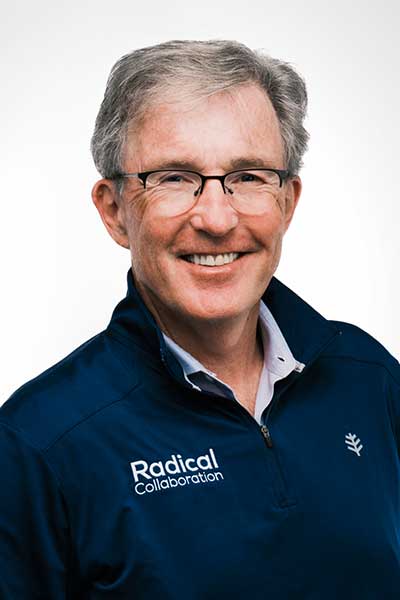
In addition to his position as CEO of Break Through Cancer, Jacks is the David H. Koch Professor of Biology, a Daniel K. Ludwig Scholar, and co-director of the Ludwig Center at MIT.
At a time when cancer research is plagued by decreasing funding and a sense of uncertainty, Break Through Cancer has logged these markers of success:
- The foundation has committed $120.2 million since 2021,
- Altogether, ten team labs have been formed,
- More than ten institutions are working as integrated teams,
- Eight clinical trials have been launched or are ongoing,
- Research has resulted in 40+ peer-reviewed publications,
- Altogether, 2,500+ biospecimens and 75TB+ of data have been shared through DASH.
Five years ago, the new organization had a vision for fostering a new way to pursue science, but without staging an experiment, there was no way to know whether that would work.
“We had a sense of what we wanted to do, and now, five years later, we are much more convinced that we were on the right track,” Jacks said.
Break Through Cancer eliminates one potential point of friction by not taking any intellectual property rights to discoveries made by investigators it funds.
“We had buy-in from the start, and you might remember we have five founding cancer center partners, MIT, Dana-Farber, Memorial Sloan Kettering, Johns Hopkins, and MD Anderson, and they bought into this notion straight away,” Jacks said. “They’ve made massive contributions in terms of time and effort…
“I just decided—we decided—that it would be easier and cleaner if we didn’t put ourselves into the middle of that. Honestly, I was anxious to get the best ideas and the best people working on these projects.
“And I didn’t want to do anything that would compromise the ability to pull that off.”
Jacks said Break Through Cancer is addressing the urgent need for clinical studies that focus on the biological explanations of how drugs work in patients.
Said Jacks:
The gap that we are filling here at Break Through Cancer, which has become clearer and clearer to me in time, is the importance of doing the best science in patients, in human beings, to deploy cutting-edge research tools, molecular profiling in the setting of early stage clinical trials, so that we can learn as much as possible, as soon as possible, to figure out why things work when they work, why do they fail when they fail, what combinations might be appropriate to use as soon as possible.
So, many of the projects that we are funding utilize that principle: develop a clinical trial in order to deploy the best cutting-edge cancer science in patients quickly.
That was a gap, which I’ve realized more and more over time.
I think the scientists in the institutions were keen to do that, but they didn’t have the money.
The drug companies were mostly interested in asking, “Does the drug work or not? Is there an efficacy signal or not?”
And I think we are filling the gap.
We are bringing the scientists from the academic institutions with those tools together with companies in order to redesign the clinical trial at the early stage to allow them to learn in the patient.
One Break Through Cancer effort devoted over $10 million to finding out how a glioblastoma treatment actually works.
In standard clinical studies, researchers measure whether a treatment produces a response. Break Through Cancer funded longitudinal sampling of the tissue of the brain and the brain tumor. The 12 patients in the study received an oncolytic virus.
The patients have collectively donated more than 400 biopsies that were taken at different points in their treatment, allowing scientists to trace the changes in the immunological tumor microenvironment as a function of treatment.
“And the team is learning a tremendous amount, as you would imagine, by analyzing that tissue,” Jacks said. “They’ve published a couple of papers already, and there’s a whole slew of papers ready to be put together and submitted. And I think this is going to define a new paradigm for how glioblastoma clinical trials are designed and executed.”
So, many of the projects that we are funding utilize that principle: develop a clinical trial in order to deploy the best cutting-edge cancer science in patients quickly. That was a gap, which I’ve realized more and more over time.
The group’s first major paper was published in Science Translational Medicine last fall.
“If you observe a change in an adaptive mechanism in response to the therapy in real time, and you have an agent that might be able to counteract that response, that’s obviously a candidate combination therapy,” Jacks said. “That’s why this type of work is so important in my view. You don’t wait around for the patient’s tumor to relapse months later. I think the horse is out of the barn by then. You have to understand what’s happening in an ongoing fashion during response to therapy.”
Jacks said another Break Through Cancer-funded team, the Conquering KRAS Team, has joined forces with a pharmaceutical company, Revolution Medicines, to conduct biopsy-driven molecular profiling of a cohort of patients undergoing treatment for pancreatic cancer.
The patients in that study “consented to pretreatment biopsies, on-treatment biopsies, and, if necessary, at-relapse biopsies, and these biopsies were once again subjected to in-depth molecular profiling using all the best tools,” Jacks said.
Said Jacks:
I give Revolution Medicines great credit here, because the trial was happening synonymously, or contemporaneously, with their phase III trial. And, honestly, many companies would have said, “Don’t bother us, we are in phase III. That’s our priority.”
But the company actually said, “No, this will teach us, and it’ll teach the field how these drugs are really working.”
I’m not at liberty to say what’s being learned, because it’s not yet been discussed publicly, but I can tell you that a great deal is being learned, and it’s going to teach us how these drugs interact with pancreas cancer cells, how the tissue tumor microenvironment changes as a function of that, and what we might be able to do about it next.
KRAS inhibitors work, they do show efficacy, but none of us think they’re going to be curative on their own.
There will need to be combinations, and the best way to learn about what combinations will be needed is to look in the human being, and that’s what this trial intends to do.
Jacks spoke with Paul Goldberg, editor and publisher of The Cancer Letter. This conversation is available as a video.
Paul Goldberg: So, Tyler, thank you very much for finding the time to meet with me and talk about your five years at Break Through Cancer—and it must have been quite a ride.
Tyler Jacks: Yes, it’s been amazing, Paul, and I appreciate the time and the interest. It is shocking that it was five years ago that we had our introductory meeting as the organization kicked off.
We’ve accomplished a lot in the last five years, and so I’m anxious to bring you up to date.
Well, I guess the most interesting piece is looking back to that first story we did about this. Do you read it and think, “God, was I naive or what?” Or are you reading it and saying, “Yes, I saw right through it. This is how it all worked out?”
TJ: I think it’s a combination of both, Paul.
I think we had a good idea of what we were trying to do. We had built elements of the organization already when we spoke, but we hadn’t accomplished anything.
We hadn’t funded any science, we hadn’t put the model to a test, we hadn’t learned all the things that we’ve now learned having been at it for five years.
But I think we knew the direction of travel when we set out five years ago.
And now, we’ve implemented, I think in a quite impressive way, that’s led to new ways of thinking about how you pursue science in a collective fashion, and then a lot of really interesting discoveries that we’ve made along the way.
So, we had a sense of what we wanted to do, and now, five years later, we are much more convinced that we were on the right track.
What are the accomplishments?
TJ: Well, you can measure them different ways, Paul. I think if you want to go by the numbers, we have funded 10 teams of investigators across, I believe, 18 cancer centers.
These teams are tackling six cancer types today. We’ve deployed $120 million in support of that science. There have been literally dozens of publications produced from that work, and at last count eight clinical trials that have been launched as a function of that activity.
So, all of that is impressive in and of itself. But honestly, I think the most impressive thing to me is the way in which we’ve changed the nature of how these teams are pursuing their work.
We set out to promote and support collaborative cancer science across institutions and other organizations, and we’ve done that. We’ve created a new operating model for collaborative cancer research.
We call it radical collaboration, and I think we’ve delivered on that.
And that’s allowed things to happen that either wouldn’t have happened as quickly or maybe wouldn’t have happened at all.
Radical collaboration… Cancer centers don’t always play well with each other, especially when intellectual property is involved. How did you make that happen?
TJ: Well, we had buy-in from the start, and you might remember we have five founding cancer center partners, MIT, Dana-Farber, Memorial Sloan Kettering, Johns Hopkins, and MD Anderson, and they bought into this notion straight away.
They’ve made massive contributions in terms of time and effort. We have members of our board of directors from all of those cancer centers, high-level individuals from those cancer centers. Those cancer centers have supported the work at every level, from clinical trials management down to their legal offices.
So, there’s tremendous buy-in, and that’s been critically important. I think they realized that indeed we collectively can make more progress together than individual cancer centers can do. And so, this is putting that idea to a test. And I think—I know—that they are extremely happy with how it’s playing out. You asked about the IP specifically, we adopted a very simple model.
Break Through Cancer takes no IP, so we didn’t want that to get in the way. And then we left IP to ownership.
In other words, the inventors have IP relationships with their institutions, and their institutions own that IP, and the institutions will then work together to the extent that there are joint discoveries and joint ownership to prosecute that IP as they see fit.
We support it as necessary, but it’s really then up to them to execute that together.
If I remember correctly, it was a single donor [who funded Break Through Cancer], right? Who committed the money…
TJ: Yes, donor family, Bill and Alice Goodwin and their children, including Hunter Goodwin, who, sadly, passed away just as we were getting ready to launch.
They collectively pledged $250 million in support of this effort, and also inspired us to raise additional money, which we have been doing. Part of the radical collaboration is to bring in other funders, which we’ve done successfully.
I think we are approaching $50 million from other foundations, individuals, family offices in support of this work. So, yes, the Goodwin family got us started and they are our main source of funding, but many others have contributed as well.
So, there’s probably half of [the money] is still left, right?
TJ: Exactly.
We’ve spent just about half of what was committed, and so we still have dry powder, and we are continuing to support quite a lot of cancer science, and we are actively fundraising.
The second half, if you will, of the Goodwin’s pledge is subject to a match contingency, and so, we are unlocking that match as we go along.
So, basically you will soon be where you were when you started, in terms of $250 million.
TJ: Yes, exactly, $250 million. That’s right. So, minimally, we would be envisioning a $500 million commitment to this new style of cancer research.
I expect it will grow well beyond that, because I think this is a very successful model that appeals to a lot of people who want to see their dollars put to work in a structured way, in a managed way, in an accountable way, in a collaborative way, which I think we are delivering on.
Because some organizations, I can think of two right away, the Mark Foundation [which takes a revenue share percentage on returns from intellectual property] and the Parker Institute—they take percentages of, or they take money from the intellectual property, they take some ownership.
You don’t do that.
TJ: We don’t. And each organization is different. It’s not uncommon for foundations like ours to put in stipulations related to intellectual property, and I’m not being critical of anybody else.
I just decided—we decided—that it would be easier and cleaner if we didn’t put ourselves into the middle of that.
Honestly, Paul, I was anxious to get the best ideas and the best people working on these projects. And I didn’t want to do anything that would compromise the ability to pull that off.
So, that must have been the right call for you…
TJ: I think so.
Well, you knew whom you were dealing with, all of these people are your friends.
TJ: Many of them. Many of them. Yes.
So, I guess the question is, was there anything you didn’t know—that you know now that you didn’t know then?
TJ: I think we’ve learned a lot, Paul.
We are introducing a new model. I think there are elements of this model that exist already, but we are pushing it to the limits, and it’s not for everybody. So, that’s one thing we’ve learned.
Asking academic investigators to engage with each other in this collaborative fashion, to share information, to share ideas, to share data, to share materials as best as possible in real time, that’s asking a lot to do it in a fashion where there are milestones, and deliverables, and direct engagement with the foundation.
If you observe a change in an adaptive mechanism in response to the therapy in real time, and you have an agent that might be able to counteract that response, that’s obviously a candidate combination therapy.
We engage with these investigators regularly. That’s asking a lot, and it’s asking a lot of the institutions as well.
So, we’ve had to figure out how to overcome some of those hurdles. We try to eliminate as many of those hurdles as we can, but I think one thing we’ve learned is it’s not for everybody. It takes a very special type of researcher for whom this works well.
I think the other thing that I’ve learned, and I’m a basic cancer scientist, I work on mouse models of cancer, I believe in that style of research, but, really, the gap that we are filling here at Break Through Cancer, which has become clearer and clearer to me in time, is the importance of doing the best science in patients, in human beings, to deploy cutting-edge research tools, molecular profiling in the setting of early stage clinical trials, so that we can learn as much as possible, as soon as possible, to figure out why things work when they work, why do they fail when they fail, what combinations might be appropriate to use as soon as possible.
So, many of the projects that we are funding utilize that principle: develop a clinical trial in order to deploy the best cutting-edge cancer science in patients quickly, and we are willing to fund that.
That was a gap, which I’ve realized more and more over time.
I think the scientists in the institutions were keen to do that, but they didn’t have the money.
The drug companies were mostly interested in asking, “Does the drug work or not? Is there an efficacy signal or not?”
And I think we are filling the gap.
We are bringing the scientists from the academic institutions with those tools together with companies in order to redesign the clinical trial at the early stage to allow them to learn in the patient.
And I think that’s really powerful. I can talk to you about a couple of examples of that-
Please do!
TJ: I would pick out two, Paul.
Again, we have 10 teams, so this is just a couple of examples, but one relates to glioblastoma, as you know, a horrible disease for which there have been no approvals in decades.
Decades.
And when we spoke with our investigators whom we eventually funded at the very beginning of this journey, they made clear to us that one of the reasons why was they don’t look. They simply don’t look. They treat and they measure response/no response, and then they either give up or move to the next thing.
And so, what they proposed to us was to do longitudinal sampling in the context of a clinical investigation to sample the tissue of the brain and the brain tumor over the course of what turned out to be months, and then to subject the tissue that was extracted to this range of molecular profiling tools to be able to learn what was happening in response to the therapy.
This is a small scale trial, it’s very data intensive and therefore it’s expensive. It was 12 patients. This has now completed its enrollment. Those 12 patients have collectively donated more than 400 biopsies—400 biopsies taken at different points in their treatment.
And the team is learning a tremendous amount, as you would imagine, by analyzing that tissue.
They’ve published a couple of papers already, and there’s a whole slew of papers ready to be put together and submitted. And I think this is going to define a new paradigm for how glioblastoma clinical trials are designed and executed.
And actually, in response to the first major paper that they published last fall, in Science Translational Medicine, [was] a commentary by Pedro Lowenstein.
And in that commentary he said, “This is going to be groundbreaking. This is going to change the way things are done in the diagnosis of this disease, how it’s monitored and how it’s treated.”
So, that’s a pretty impressive impact for a team that was really just three-years-old by then. So, science and patients …
Can we just back up a little bit?
Because this is not a question that would have been asked by cancer centers, it’s not a question that would have been asked by drug companies. You were able to frame that scientific question. What about NIH?
Would NIH have been able to frame that question?
TJ: I think, possibly, yes.
Certainly, NIH has supported a lot of glioblastoma research over time. I think, honestly, at the start of this, there were questions whether IRBs would approve such a strategy.
Would patients consent to have multiple biopsies done over the course of therapy?
There were big questions that had to be answered. This team has answered them. Certainly, NIH could have been supportive of something like this, but it’s a big ticket. This is a $10-plus million commitment to this effort.
Twelve patients—that’s roughly 40 biopsies per patient?
TJ: It’s about 40. It’s maybe in some cases more than 40, but let’s use that as an average.
And what about the treatment modality? Is that part of it?
TJ: In this particular case, it was an oncolytic virus, and that was chosen in part because the virus was being delivered over multiple cycles into the tumor over the course of 12 weeks.
And therefore, since the surgeons were going in anyway, the patient was consenting to having tissue removed at that time. So, that seemed like, in a sense, a lower bar to get the consent of the patient. They readily did consent.
But the plan for that team going forward is to expand beyond those types of treatments where you’re directly injecting into the tumor, and still employing forms of longitudinal sampling now that they’ve demonstrated that it can be done and that patients will agree to have those procedures done.
But that’s therapeutic intent, too. You did have that?
TJ: Oh, most definitely. Absolutely.
This is an agent that had shown activity in earlier-stage studies. This was a trial that was testing the importance of multi-dose therapy—so, absolutely therapeutic intent—patients were being monitored for response.
But in addition to that, and most importantly for our discussion, a lot of science was being done at the same time to really learn what was happening. Not just response/no response, but at a molecular cellular level, what was really changing inside the brains of those individuals? Data that just hadn’t existed before.
How did you get the biopsies? Do you have to go back nine times after that?
TJ: You get the biopsies at the same time that you do the treatment. So, while the surgeons are in introducing the oncolytic virus, they’re also going in and sampling, and taking core needle biopsies out at that time.
So, it’s not a one-time [treatment]…
TJ: No, it’s multiple doses. And yet, for each dose in this case, multiple samples were taken, sometimes up to five or six at a given administration.
We should cite the paper, of course. I’ll ask you about that, but if you were to summarize what you found…
TJ: The first paper described the results from the first two patients, so we can’t generalize, but they described very interesting changes in the… let’s call it immunological tumor microenvironment as a function of treatment.
And that’s what one would have hoped to occur, because the agent does induce an immune response.
They discovered antigens being presented by the immune system in the setting of that trial, and some evidence of what might turn out to be mechanisms of immune evasion, and that’s just very early days.
But [this] opened up a window as to what happens when this particular treatment is being deployed. Now, we are at 12 patients, and the dataset is just being analyzed in full.
More interpretation, more discoveries are being made.
And I referenced last time I heard a report from this team, I think there are six papers that are on the docket to be written up as a function of the full dataset.
And they’re finding essentially step-by-step-by-step how the therapy is affecting the disease; right?
TJ: Yes. And how the body responds to it.
And, of course, this is not the end of the road, Paul. One of the reasons you do a study like this is that it will recommend further therapies, it will recommend combination therapies.
If you observe a change in an adaptive mechanism in response to the therapy in real time, and you have an agent that might be able to counteract that response, that’s obviously a candidate combination therapy.
That’s why this type of work is so important in my view. You don’t wait around for the patient’s tumor to relapse months later. I think the horse is out of the barn by then. You have to understand what’s happening in an ongoing fashion during response to therapy.
And maybe that’s a segue into the second example I wanted to give you.
Here, we are talking about pancreas cancer, another horrible cancer diagnosis. There is some progress on the horizon here, I would say. I’m excited about what’s coming for pancreas cancer therapy, and within that class of new things coming are KRAS inhibitors, and you’re aware of the progress that’s been made.
This team, which is called the Conquering KRAS Team, focused on pancreas cancer, teamed up with Revolution Medicines, which is one of the companies that has one of the advanced therapies, and they had already been testing it in pancreas cancer.
In fact, they were marching towards phase III clinical trials, which they’re now in.
But the team was able to convince them to set aside a cohort of patients in the phase I trial to undergo this intensive biopsy-driven molecular profiling in the setting of treatment.
So, a group of patients were recruited, they consented to pre-treatment biopsies, on-treatment biopsies, and, if necessary, at-relapse biopsies, and these biopsies were once again subjected to in-depth molecular profiling using all the best tools.
I give Revolution Medicines great credit here, because the trial was happening synonymously, or contemporaneously, with their phase III trial. And, honestly, many companies would have said, “Don’t bother us, we are in phase III. That’s our priority.”
But the company actually said, “No, this will teach us, and it’ll teach the field how these drugs are really working.”
And this trial, this component of that trial has enrolled remarkably quickly, just in months, and the data is pouring in.
And I’m not at liberty to say what’s being learned, because it’s not yet been discussed publicly, but I can tell you that a great deal is being learned, and it’s going to teach us how these drugs interact with pancreas cancer cells, how the tissue tumor microenvironment changes as a function of that, and what we might be able to do about it next.
KRAS inhibitors work, they do show efficacy, but none of us think they’re going to be curative on their own.
There will need to be combinations, and the best way to learn about what combinations will be needed is to look in the human being, and that’s what this trial intends to do.
So, if I were to really make sure that I understand this, essentially instead of looking at things in the binary kind of way, where it’s either therapy is working or failing, you look at the entire continuum of what’s happening to the patient while the therapy is either working or failing, and trying to ask the question why, right?
TJ: Yes. I think that’s very well said.
And I’ll just say, I referenced my own work on mouse models of cancer. One of the reasons we do work in mouse models of cancer is that we can actually access the tissue on treatment and do that kind of longitudinal analysis, and deploy all of those sophisticated scientific tools. We do this routinely in the preclinical space, but it’s just rarely done in the clinical space for reasons of cost and complexity, coordination, and so forth.
So, when you ask me what did we learn here? It’s the fact that you can do this.
You have to be coordinated, you have to resource it properly, you have to have the right investigators, the right institutions, you have to have the right company collaborators who want to work with you, who are like-minded in this way.
And then, when all of that comes together, you can do this type of work.
And I think it’s going to result in tremendous new breakthroughs.
Fascinating. And nobody has thought of that before?
TJ: I wouldn’t say that, I think people have thought about it a lot.
And there have been smaller-scale versions of what I just described to you across oncology, but it hasn’t been done in a concentrated, properly resourced fashion where you have the numbers and the depth to really draw meaningful conclusions.
And I think that’s what we’ve managed to do.
I think we’ve set a standard for how it can be done, and I think, I hope, that many will follow.
If you were to take those two examples and generalize them as an approach, how would you describe it?
TJ: Well, I think the simple term that comes to mind for me is pursuing science in patients.
And we use that term around Break Through Cancer all the time, doing real science in patients, and it’s really science in patients on study.
And that’s typically done in the context of early-stage clinical trials, where you’re testing novel agents, again, usually just to see do they provide a response or not, but now you can test not just that, but also all the molecular correlates that are accompanying that response or that failed response.
So, thinking back about Revolution Medicines’ role, usually, I’ve been covering FDA for many years, usually people don’t really want to look too deep at things.
It’s like, “Oh, we had this response rate.”
And then, maybe every patient is potentially a toxicity that you have to report to FDA—it’s not just a response. It could be a real catastrophe for them, because they would have to report it.
How did they get the courage? Did you help them with the courage?
TJ: As I said earlier, I give them great credit, and I’m hopeful there are more like them. I think there are.
We’ve worked with other companies along these lines, too. This is a very science-driven company, Revolution Medicines. And the individuals with whom we work at the company feel very much like our investigators from the academic institutions, they’re interested in the same questions we are interested in.
And I think they compelled their management to realize the benefit of this. Yes, there was risk. For sure, there was risk for exactly the reason that you said, but there’s also benefit. There’s benefit to potentially the individuals who are being treated, but also to the field, to the next group of patients who will be treated, and to the company.
That company will learn quickly, others will learn later. And so, there was benefit to them from a corporate development perspective as well. But yes, they took a risk, if you will, and therefore I’m grateful to them.
And the payoff you can’t talk about yet, but there’s something in the works?
TJ: I can’t talk about yet, but I expect, Paul, over the next months, weeks, you will be hearing from this team, and maybe from Revolution Medicines themselves as they begin to talk about the results that they’re seeing from this work. Yeah.
At ASCO, you think, or AACR?
TJ: I don’t want to put specific dates on it, Paul, partly because I don’t know. But I do know that the data is coming in fast and furiously, and there’s very interesting things there.
I would love to cover that, so please let me know as soon as appropriate.
TJ: Sure.
So, I guess another thought was thinking of the institutions involved. I mean, these are the top, top, top, top-tier institutions in the world.
TJ: Yes.
Do you think science of this caliber can be done in a next-tier-down institutions, or is it just the super elites? And I certainly don’t have any problem with super elites, don’t get me wrong.
TJ: Yes, yes.
I’m thinking more in terms of the current kind of emphasis on moving the science out to the hustings.
TJ: Right. You’re asking an important question. This is very cutting edge, even in the clinic.
The interventional radiologists have to be up to the job of retrieving those biopsies, and the surgeons have to be likewise. Therefore, I’m glad that we are working with top-tier places, and it’s not just the five.
If you observe a change in an adaptive mechanism in response to the therapy in real time, and you have an agent that might be able to counteract that response, that’s obviously a candidate combination therapy.
I mentioned that there are 18 cancer centers involved in total now. Whether every hospital could do the sorts of things that I’m talking about, I’m not sure. I will say that it is our expectation that as we apply these very deep molecular profiling tools, we will discover that there are surrogates to the things that we are finding in the tissue that might similarly guide our understanding of what’s happening on treatment.
We were talking earlier about liquid biopsies and what they can teach us. Well, monitoring cancer progression and response to therapy is one place where circulating tumor DNA is clearly valuable, and there’s other things that likewise circulate, and other tissues besides the blood that you can look in.
Cerebral spinal fluid, as an example, in the brain might give you the same indicators of response or molecular changes that you might be able to track. And so, perhaps in the next wave, the types of tools that will be necessary will be available to a broader spectrum of hospitals and centers.
And that might democratize, if you will, some of the approaches that we are talking about.
Interesting. Has there been an impact on these institutions, and maybe on your investigators over the past year? Are you losing anybody?
TJ: Oh, you’re asking about funding and things like that-
I’m asking about Trump.
TJ: Yes, okay.
I think the funding environment has created its own strain, yes.
All the institutions across the country are feeling that strain, including our own. And therefore, we are asking them to dig a bit deeper in support of this effort, which they’ve been willing to do.
I think that we can’t deny the fact that when there’s strain on the system all studies are challenged, and I think that’s been true here. We are fortunate in that we are providing the money.
We are providing the funding to do the science, and so, that has not been compromised. But we are looking to the institutions to support this work. The infrastructure of those institutions needs to support this work. And to the extent that it’s under strain, the ability of institutions to be supportive is that much harder.
So, we haven’t gotten off scot-free, if that’s your question, Paul.
Yes, that’s the question.
So, you are able to still function, but if anything, you’re becoming more important to the system, because if you’re asking a question that is so complex and your chances of getting a grant fund that is 3%, who is driving the research? You’re driving the research.
TJ: But we are certainly providing additional forms of research funding, that’s true and I know that it’s welcome, but we don’t think of ourselves as just another source of funding.
We are not just trying to fill the bucket.
The type of research that we are funding is different. It looks different, it feels different, it is different. And so, we are absolutely looking for great academic scientists to work with us, and we found a bunch of them, but we are not going to simply distribute the funding that we have to fill the gap.
I’m very sensitive to the fact that that gap exists, but I don’t think it’s the mission of Break Through Cancer to be a substitute for that.
I think we have a bigger mission, which relates to redefining how cancer science can be pursued.
But you’re actually driving the research. And I mean you personally, right? I mean, that is part of your function is to drive the thing.
TJ: Yes. Let’s say it’s not me, I think Break Through Cancer is driving and working with the investigators and the companies to drive.
We are much more active, if that’s your question. We are not a passive funder. We don’t just ask for applications to come in over the transom and evaluate them.
We work collectively with the investigators to shape those proposals and execute that research plan. So, in that way we are very engaged.
Our chief scientific officer, Jesse Boehm, is very engaged with all of the teams. We have a staff of PhD-level scientists working collectively with the teams to not just follow their progress but to facilitate their progress and solve problems with them.
So, yes, we take an active role and I think it’s important actually. I don’t think we could do it without it. I think that sort of managed science requires project management.
We provide some of that from Break Through Cancer, and we also rely on the institutions to provide project management within the institution, which they do, and it’s also critically important.
Which is kind of interesting, because that’s what NCI should or has sometimes been able to do, which is drive the research, project-manage, and it’s obviously much more difficult with [the current] level of funding.
TJ: Yes. Since you brought that up, Paul, I’ll just say I think NCI does a lot of things, and other funders do a lot of things, some overlapping with what we are talking about today, but they also support a lot of discovery science, which is really, really important.
And that’s actually a bit different from what we are talking about here.
Science and patients, managed clinical trials, and so forth, that’s important. I stand by that statement, but it’s not the only thing that’s important. Discovery science, understanding the next new thing, the next breakthrough in the laboratory, those things are really important, too.
And the money for that, the reduction in the availability of the money for that, is of great concern to me.
Yes. It seems to be a bit of a problem right now. Well, I wonder if there’s anything I forgot to ask. Is there anything, any direction in which you want to go?
TJ: Well, I guess I’d say a couple of things. One thing we didn’t talk about, Paul, but I wanted to make sure we mentioned-
Please.
TJ: I talked about radical collaboration, which is a term we’ve coined, and it really encompasses many different elements of what we do.
We’ve talked about the investigators collaborating, the institutions collaborating, the patients as partners in the research. We’ve talked about companies collaborating. And I mentioned in passing other funders joining us. And I don’t want to de-emphasize that, it’s really important.
We’ve had many other funders join us in this effort. One example is the Lustgarten Foundation, which helps support the KRAS Pancreas Project in a very important way. And they’re talking with us now about the next phase of funding for that team.
Our partners on the funding side are really important as well. We have ongoing discussions and an agreement with the American Cancer Society to nationalize an effort that we began on ovarian cancer prevention.
They’re going to become a major partner for us as time goes on. So, the funding partners as members of this radically collaborative team are important.
I think the last thing I would say, Paul, is this has been a check-in for you and me after five years. Time flies when you’re having fun, and we might think about what does the next five years look like.
And I’m very excited about that.
I think that the first five years was formative, and we’ve begun, we’ve initiated the funding of excellent teams who are doing really exciting work as we’ve talked about today, and the future will be more and better. We’ve learned as we’ve gone, we are better at it.
We’ve created a style of science and a substance and a structure that will allow new teams to function even better. We’ll expand beyond the cancers that we are currently studying to others, and we’ll push our teams to go even further in this collaborative fashion.
So, I think the last five years proves the principle, and the next five years and beyond will allow us to really benefit from that investment. So, I think the future is bright here.
It’s also really interesting to see you mention ACS.
TJ: And to be clear, the collaboration that I mentioned with ACS includes supportive science and that’s important, but it actually more focuses on a national campaign, a national public awareness campaign related to the value of opportunistic salpingectomy, fallopian tube removal at the time of another medical procedure for ovarian cancer risk reduction, not in individuals who have a genetic predisposition but in individuals of average risk.
You may not know about this and you might want to write about it one day, because there are data, including a big study that was just published out of Canada, that suggests that opportunistic salpingectomy can reduce a woman’s risk of developing ovarian cancer of a particular type, which is serious high grade ovarian cancer, by 80%.
Eighty percent—that’s pretty remarkable.
TJ: And it’s a surprisingly poorly known fact in oncology circles, in surgical circles, in internal medicine circles, where this information should be readily known but isn’t.
What role can Break Through Cancer play in this? Can you do something similar to what you’re doing with glioblastoma and pancreatic cancer?
TJ: Yes, we funded a team involving investigators from our different institutions. We have great champions who’ve dedicated much of their careers to this very topic, and they approached us and said, “As it relates to ovarian cancer, yes, we need to think about treatment, but let’s think about prevention.”
We funded a team called “Intercepting Ovarian Cancer,” which has champions that have studied this problem for quite some time.
And we worked with them to carry out early-stage studies examining what would be necessary to increase awareness, increase material that would promote public awareness.
All of this went very, very well, including in the medical community, and that encouraged us that there was something very important here to do. The problem was that as a small Cambridge-based cancer foundation, we can’t bring that to the country as a whole.
We would need a partner who could do that at a national scale, we weren’t really prepared for that, and that’s when we approached the American Cancer Society, which is so much better positioned for an effort like that, and they’ve agreed to do it.
So, we are in the early stages, but you can look forward to that over the years ahead as well.
Oh, it’s interesting. So, Bill Dahut was your counterpart?
TJ: Bill Dahut is the prime mover, but he’s not alone. He’s got collaborators within his organization, many of whom are well versed in ovarian cancer research. So, lots of champions actually at the ACS.
Well, this sounds fantastic. Thank you very much for this check-in.
TJ: Well, it’s a pleasure.
We’ll do this again in five years.
TJ: And if you want to talk in the interim, you know where to find us.