

The Association of Community Cancer Centers has established a new e-course, Implementing Shared Decision-Making in Bladder Cancer Care, as part of its resources for cancer care centers to access evidence-based health literacy principles and shared decision-making strategies to reduce disparities in bladder cancer care.
The Helen F. Graham Cancer Center & Research Institute at ChristianaCare, in partnership with the Wistar Cancer Institute, established a Caspar Wistar Bacchieri Disparities Fellowship in Cancer Population Health Science.
A paper authored by members of an American Society of Clinical Oncology Task Force illuminates the importance of enabling patients to receive trial-related testing and care near their homes, rather than requiring patients to travel long distances to reach major research institutions.
According to preclinical research published in Cell, researchers with City of Hope discovered that a type of human immune cells known to be important for allergy and other immune responses—human type 2 innate lymphoid cells, or ILC2s—can also attack cancer.
Soy compounds called isoflavones are among the plant-derived compounds that may significantly reduce the risk of breast cancer recurrence or death, according to a meta-analysis co-directed by investigators from the Johns Hopkins Kimmel Cancer Center.
Caris Life Sciences and Flatiron Health have partnered to create a multimodal data offering to support and accelerate biopharmaceutical drug development and patient care.
Veracyte, a global cancer diagnostics company, has acquired C2i Genomics, a company combining genomics and AI to create a whole-genome cancer intelligence platform.
The Pancreatic Cancer Action Network, or PanCAN, and the Global Coalition for Adaptive Research formed a strategic alliance to further advance research efforts for pancreatic cancer.
The New York Proton Center and the WiTT Group Inc. formed a strategic partnership to help patients navigate the non-clinical challenges of cancer treatment.
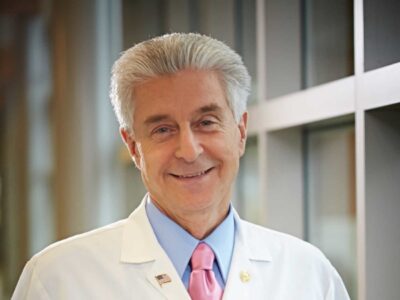
As I step down as medical director of the Helen F. Graham Cancer Center and Research Institute (HFGCCRI) at Christiana Care later this year and assume the position of director of the Cawley Center for Translational Cancer Research at the HFGCCRI, I can reflect back on the success of cancer care in Delaware.


