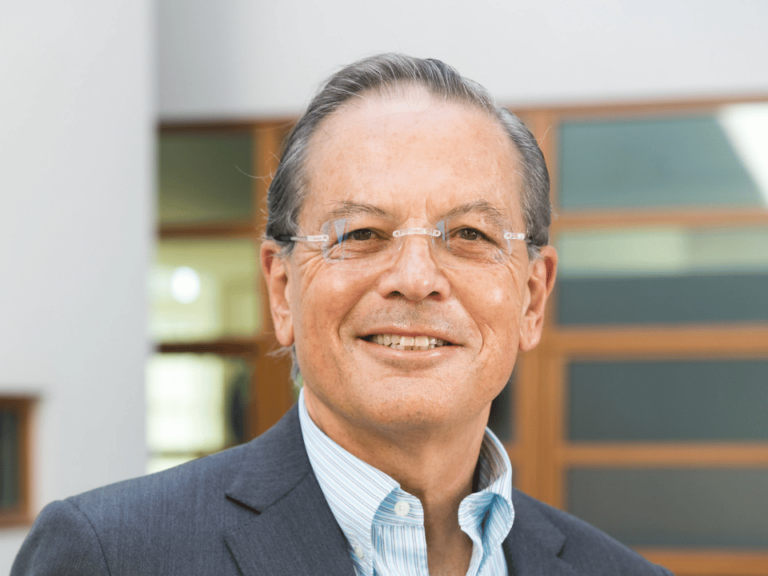
Italo Tempera was appointed associate professor in the Gene Expression & Regulation Program of The Wistar Institute Cancer Center.
Tempera is a molecular virologist with special expertise in the study of the Epstein Barr virus and how it regulates expression of its genes in the host cell during infection. Although EBV infection is very frequent and asymptomatic in most cases, in some individuals, especially those with a compromised immune system, it has a causative role in development of some types of cancer, including Burkitt’s lymphoma, nasopharyngeal carcinoma, and Hodgkin’s and non-Hodgkin’s lymphomas.
Research in the Tempera laboratory aims to disrupt the natural capacity of EBV to modulate its gene expression pattern as a new approach for treating EBV-associated cancers.
Tempera identified the main cellular factor that regulates the three-dimensional structure of the EBV genome and his laboratory focuses on the role of this factor, named CTCF, in the formation of loops in the virus DNA.
These loops allow distant segments of the genome to be in close proximity and regulate expression of EBV genes that are necessary for its life cycle within the cell. The team is also exploring how EBV chromatin loops are regulated by another cellular factor called PARP1. Given the role played by PARP1 in regulating cell metabolism after DNA damage, these studies could provide an exciting link between host cell metabolism and regulation of EBV chromatin structure.
The Tempera lab specializes in genomics techniques that allow them to study long-range interactions within chromatin, or the genetic material in which DNA and proteins are packed together to form chromosomes.
Tempera comes to Wistar from the Fels Institute for Cancer Research and Molecular Biology at the Lewis Katz School of Medicine of Temple University, where he established his lab in 2012 and was promoted to associate professor in 2017.