

Cedars-Sinai investigators who previously developed an imaging tool that used artificial intelligence to predict pancreatic cancer are now working to adapt that tool specifically for Black patients, who have disproportionately high rates of the disease.
A multidisciplinary team of experts in lung cancer screening and implementation science from the UCLA Health Jonsson Comprehensive Cancer Center, the David Geffen School of Medicine at UCLA, and the UCLA Fielding School of Public Health, was awarded a $2.5 million grant from the Bristol Myers Squibb Foundation, an independent charitable organization, to spearhead a new initiative aimed at reducing disparities in lung cancer screening across Los Angeles County.

After reading “Breast Cancer Mortality Continues Three-Decade Decline, but Steeper Increases for Women Under 50 & AAPI Women of All Ages,” it is evident that while overall progress is being made in the fight against cancer, concerning disparities remain—particularly within the Native Hawaiian and Pacific Islander (NHPI) communities.
UF Health officials and supporters gathered Wednesday to unveil the UF Health Cancer Center’s Mobile Cancer Screening Connector, which will take cancer screening care to a 23-county area in North Florida. UF Health photo by Nate GuidryThe University of Florida Health Cancer Center launched a 40-foot-long mobile cancer screening bus that will expand access to cancer screenings and essential health care services, including 3D mammograms and cervical, colon, and prostate cancer screenings.
Residents of U.S. neighborhoods with high concentrations of Latino residents often face significant socioeconomic challenges, including less access to health care, a study led by a UT Southwestern Medical Center researcher shows.
UCLA’s urology department was awarded $6 million from the California Department of Health Care Services to continue providing care and critical services to underinsured and uninsured Californians diagnosed with prostate cancer.
CEO Roundtable on Cancer and Paradigm Health Inc. announced a strategic partnership to launch the Partnership for Access, Collaboration, and Trust Collective. This pioneering initiative aims to break down barriers and create equitable access to oncology clinical trials, particularly for African American, Hispanic, and other underrepresented patient groups.
Together for Supportive Cancer Care, a national coalition that will work to expand early, equitable access to whole-person, supportive care for all people with cancer, regardless of where they receive care, has launched.

As we come within a stone’s throw of Nov. 5, we can’t help but wonder if and how the election outcome will impact health care policy, and cancer policy in particular.
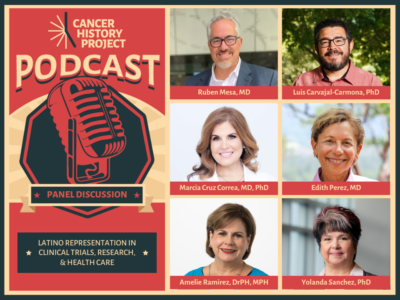
Hispanic and Latino people comprise nearly 20% of the U.S. population, but less than 6% of physicians nationwide identify as Hispanic.


