Clinical Roundup Perjeta biosimilar safe and effective for breast cancer in phase III trial October 04, 2024Vol.50 No.37
Regulatory News New FDA mandate to tell patients whether their breasts are “dense” or “not dense” baffles doctorsProblem: “Breast density is in the eye of the mammographer” September 27, 2024Vol.50 No.36By Claire Marie Porter
Cancer History ProjectGuest Editorial How First Lady Betty Ford and surgeon Bernie Fisher revolutionized America’s attitude toward breast cancer September 27, 2024Vol.50 No.36By Stacy Wentworth
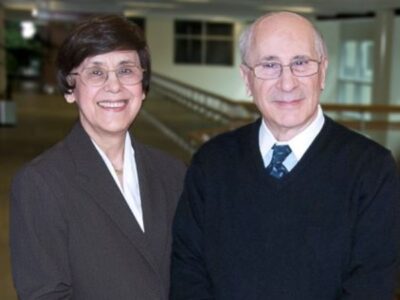
FreeIn the Archives Jose and Irma Russo— husband and wife trailblazers in breast cancer research September 27, 2024Vol.50 No.36
In Brief UMich Rogel Cancer Center receives $25M from Weiser Charitable Foundation September 27, 2024Vol.50 No.36
Clinical Roundup Accelerated partial-breast irradiation is not statistically equivalent to whole-breast irradiation in local tumor control, NRG oncology trial shows September 20, 2024Vol.50 No.35
Drugs & Targets FDA approves Kisqali + aromatase inhibitor for early high-risk breast cancer September 20, 2024Vol.50 No.35
FreeObituary Richard A. Rettig, author of an acclaimed history of the National Cancer Act, dies at 87 September 13, 2024Vol.50 No.34By Paul Goldberg
Clinical Roundup DNA methylation contributes to 9/11-related breast cancers September 13, 2024Vol.50 No.34
Clinical Roundup Mechanisms that clear mutations drive field cancerization in mammary tissue September 13, 2024Vol.50 No.34