Last month, FDA approved the RAS inhibitor, daraxonrasib, sponsored by Revolution Medicines Inc. and also known as Rasonque, for patients with metastatic pancreatic adenocarcinoma who have received at least one prior systemic therapy or are not candidates for multiagent systemic therapy.
This episode is available on Spotify, Apple Podcasts, and Youtube.
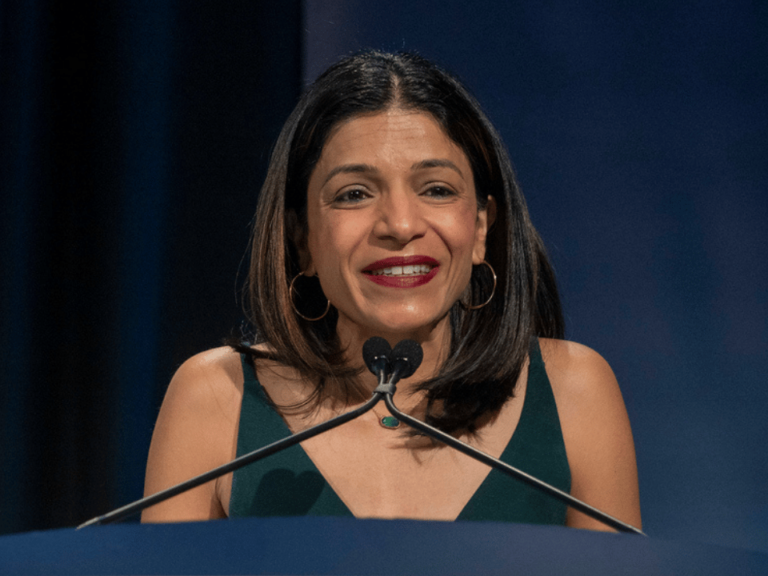
In this week’s episode of In the Headlines, Jacquelyn Cobb, associate editor with The Cancer Letter, speaks with Frank McCormick, a leader in the KRAS space, about the history of RAS and where the field might be going next.
McCormick is also the David A. Wood Chair of Tumor Biology and Cancer Research and a professor in the Helen Diller Family Comprehensive Cancer Center and the Department of Cellular and Molecular Pharmacology at the University of California, San Francisco.
In the pancreatic cancer world, McCormick expects the field to improve upon what has worked.
“We hope that the drugs that hit KRAS directly, or allele specifically, will hit the protein harder and have less side effects, and therefore will give better clinical outcomes than daraxonrasib. That’s a hope or an aspiration. And potentially be more easy to combine with other drugs to help make it even more potent. So that’s I think what we’re all hoping from the wave of drugs coming down the pipe. So those results will emerge over the next year or two probably from multiple places, including Rev Med themselves have their own second generation drugs which are more specific and so on.
“So, it’ll be a lot more and hopefully a lot better drugs even than daraxonrasib. So that’s again, aspirational. As we see in most fields, the first drug is great, the next one’s even better, and so on.”
But there are other paths ahead that have opened up after the success of daraxonrasib.
“Another frontier is in colorectal cancer, which is still pretty much white space in terms of target therapy for KRAS mutant, which is about 50% of all colorectal cancers. So, there’s nuances around that also, but colorectal cancer, a lot of the tumors are driven by KRAS and a lot of people are now moving towards colorectal cancer, probably in combination with cetuximab and other drugs. But if we can make an impact on there as well, that’ll hopefully crack that open as well. That would be another standing ovation at ASCO if someone could really increase survival in a big way in colorectal cancer.”
Stories mentioned in this podcast include:
- KRAS pioneer and Stephenson Prize winner Frank McCormick aims to prevent all KRAS cancers with a pill
- Pancreatic cancer finally starts to budge as daraxonrasib doubles overall survival
- The story of daraxonrasib is the ultimate hero’s journey A narrative curve with twists, turns, intrigue, drama—and a blow to a mighty foe
- FDA permits expanded access for investigational pancreatic cancer drug daraxonrasib
- Long-awaited results from first phase III trial of a RAS inhibitor in pancreatic cancer shows that daraxonrasib doubles median OS PanCAN’s Berkenblit
- Zoldonrasib + daraxonrasib show 81% ORR in patients with RAS G12D metastatic pancreatic cancer, phase I/II study finds
This episode was transcribed using transcription services. It has been reviewed by our editorial staff, but the transcript may be imperfect.
The following is a transcript of this week’s In the Headlines, a weekly series on The Cancer Letter Podcast:
Jacquelyn Cobb: This week on The Cancer Letter Podcast…
Frank McCormick: Well, I think like many people who saw the survival curves, we were absolutely blown away by the quality of the data. I think it was even better than we’d expected based on rumors from people who’d seen some of the early stages of the drug development. It was fantastic, shocking, wonderful news. Obviously, I have my own personal reactions because it’s a dream to see that kind of data set for many years. It’s a really big deal for patients suffering from pancreatic cancer. Now they have an option which is very likely to improve their outcomes, and also breaks the idea that pancreatic cancer is impossible to treat. It changes the game really in many ways, but it has tremendous impact for, again, patients suffering from pancreatic cancer immediately. And those who succumb to the disease in the future will have hope or the promise of targeting KRAS that we’ve been talking about for so many years, actually really has proper value and means something. Huge deal for all of us.
Paul Goldberg: You’re listening to the Cancer Letter podcast. The Cancer Letter is a weekly independent magazine covering oncology since 1973. I’m your host, Paul Goldberg, Editor and Publisher of The Cancer Letter.
Jacquelyn Cobb: And I’m your host, Jacquelyn Cobb, Associate Editor of The Cancer Letter. We’ll be bringing you the latest stories, groundbreaking research and critical conversations shaping oncology.
Paul Goldberg: So, let’s get going.
Jacquelyn Cobb: Hi, Dr. McCormick. Welcome to the Cancer Letter Podcast. Thank you so much for taking the time to sit down with me and talk. I’m really excited to have sort of a casual conversation about the recent pancreatic cancer news, which I won’t get into too many details yet. I wanted to just give listeners … I always say readers because I’m a journalist normally. I just wanted to give a little bit of context about who you are and why we’re talking to you. Last time we talked, you and I, Dr. McCormick, you had just received the Stephenson Global Prize for pancreatic cancer research. Yes. And it was basically named you, I mean everybody knew, but one of the pioneers of the pancreatic research world specifically. But also, obviously, I think your interest is more focused on the idea of RAS and KRAS.
So I would love to just have you introduce yourself broadly. I gave you a little heads up, but if you wanted to let any listeners know other facets about who you are and your work before we get started, I’d love to hear it.
Frank McCormick: Okay. Well, it’s great to see you. Thank you. I’m Frank McCormick. I’m a professor at UCSF where I have a lab working on different aspects of RAS signaling, but I also oversee the RAS national initiative at Frederick, Maryland where I’ve been overseeing this big project to target KRAS since 2013 when we launched the project. So I’ve been trying to target RAS proteins, or KRAS proteins in particular, for a very long time. Even at a company I founded called Onyx back in 1992, our first target was RAS. And that led to the development of a drug called sorafenib, which was a big clinical success but it didn’t work as we’d hoped to target RAS cancers.
So back to the drawing board, and then on and off we’ve been trying different approaches over the years. And then I got invited to run the RAS Initiative in 2013 by Harold Varmus. So I saw this as a great opportunity to really dig in and have another shot at targeting KRAS in a serious way.
Jacquelyn Cobb: Yeah, yeah, absolutely. Definitely, I will probably want to hear more about that a little bit later, but if we can start with the no longer breaking news, but the somewhat breaking news of the RASolute 302 clinical trial results that showed a doubling of survival time in previously treated metastatic pancreatic cancer patients with the treatment of daraxonrasib, which is a RAS-on inhibitor. Which, there is nuance here. That’s not a KRAS. There’s RAS, KRAS, RAS-on, RAS-off. There’s all of that. I’m not sure that’s necessarily within the scope of this conversation. But before we dive into nitty-gritty details, I really wanted, and this is the question I was most excited to talk to you about, was just to get your human reaction to the news.
Like you said, you’ve been doing this your entire career since the’ 90s … And it’s weird to say the ’90s like that, but whatever. But you know what I mean. It’s been the focus of your work, and so I guess I just wanted to hear how you felt about it.
Frank McCormick: Well, I think like many people who saw the survival curves, we were absolutely blown away by the quality of the data. I think it was even better than we’d expected based on rumors from people who’d seen some of the early stages of the drug development. It was fantastic, shocking, wonderful news. Yeah, obviously I have my own personal reactions because it’s a dream to see that kind of data set for many years. But also the main thing really is, this is a really big deal for patients suffering from pancreatic cancer. Now they have an option which is very likely to improve their outcomes, and also breaks the idea that pancreatic cancer is impossible to treat. And now it opens up the floodgates for other KRAS approaches and combinations and so on, which will follow on behind daraxonrasib. So it changes the game really in many ways, but it has tremendous impact for, again, patients suffering from pancreatic cancer immediately.
And those who succumb to the disease in the future will have hope or the promise of targeting KRAS that we’ve been talking about for so many years, actually really has proper value and means something. So it’s a huge deal for all of us. Wonderful.
Jacquelyn Cobb: Yeah, absolutely. I feel like I got that sense reporting on it. I mean, I think the first person I talked to when I was reporting on the story was a patient advocate. It really felt like the excitement was just throughout the entire community. It was electric. The standing ovation has become a thing I refer to over and over again. I actually had the chance to talk to Dr. Wolpin about it, and the podcast, I don’t know if … It’s also a podcast that will be coming out. I don’t know if it’s going to be before this one or after this one, but he actually said that he was a little thrown off by the applause because he still had the rest of his presentation to get through, which is a very funny-
Frank McCormick: [inaudible 00:06:56] time.
Jacquelyn Cobb: Yeah, exactly, exactly. Which is hysterical. But yeah, so I think that that was definitely seen throughout the community. And just to drill in a little bit more, I mean, for you personally, you had such a faith and such a belief that this was a fruitful endeavor to try to develop an efficacious target for KRAS or RAS for pancreatic cancer specifically because, and again, this is from the last time we talked, you had heard or found out that 90% of pancreatic cancers have a mutation in KRAS. And so at least the narrative that I’ve constructed in my head about your life story, correct me if I’m wrong, but you heard that and you’re like, “Well, there’s a good target,” and that makes a lot of sense. But you weren’t always met with support. I feel like you were met with a lot of skepticism. Last time we talked, you really opened my eyes to the idea of the undruggable target being a misnomer anyway.
So if you could talk a little bit more about your personal perspective about it, about how you actually feel to be like, “Hey, here’s …” What you just said. “We weren’t expecting it to be this good, but you had hope and you had faith. So if you could speak a little more about that, that would be awesome.
Frank McCormick: Yeah. Well, a lot of nuances in your question right there.
Jacquelyn Cobb: Yes. Yes, sorry. I’m excited. Can you tell?
Frank McCormick: Yeah, from my point of view, KRAS is a protein, and like any other protein, there must be ways of finding drugs that interact with it. It’s just particularly difficult by nature of the shape of the protein and its properties have made it a tougher nut to crack than some of the other ones we worked on previously. But I never really had any doubt that there would be ways to find drugs that target it. And it’s a question of developing the technology to make that happen and getting the right people in the right environment for people to actually have another go at it.
The pharma industry has tried to target RAS and KRAS on and off over the years since it was discovered as a major player in cancer back in the ’80s. So it’s just the technology hasn’t quite been there to crack that very difficult technical challenge. But when I started the RAS Initiative in 2013, at that point there weren’t any structures available of the mutant protein. So people who were declaring the protein undruggable had never even seen what the mutant protein looks like in detail to actually conclude it was impossible to target. So that’s one of the first things we did at the RAS Initiative was to solve structures of all the common mutants. And then that reveals potential differences that could be exploited and gets people thinking about how to target the protein. So it’s always been, in my mind, a question of, “When is this going to crack and which is the right approach to do it?” rather than, “It’s undruggable.” I never used that word myself, I don’t think.
Also, I should point out that don’t really understand why pancreatic cancer is pretty much exclusively a KRAS disease, because KRAS mutant mutations occur in lung cancer and in colorectal cancer as well. And in those two indications, they’re also really hard to treat. In fact, those two indications are actually excluded from other types of targeted therapy. So if you have a KRAS mutant lung adenocarcinoma, you won’t be put on other drugs, at least not until recently. And the same with colorectal cancer, you’re excluded from being treated with approved therapies because the KRAS subset didn’t work. So pancreatic cancer was in a set of other diseases which were known to be really hard to treat. And so I don’t think it’s particularly special to pancreatic cancer. It’s just the frequency is much higher than in the other diseases. But more or less, the same number of patients succumb to colorectal cancer caused by KRAS as pancreatic cancer, about 60,000 a year. So it’s a big deal outside of pancreatic cancer as well.
But nevertheless, because it’s such a major driver of that disease, it’s definitely become the focus. And that was actually Harold Varmus’ vision when we started the RAS Initiative, “We’ve got to do something to make drugs for patients suffering from pancreatic cancer.” And because it’s a KRAS disease, it fit with my interests and background.
Jacquelyn Cobb: Yeah, absolutely. I didn’t plan on asking you this question, but since you mentioned it … And if you have to go look some stuff up to be able to dive into the details, we can just skip it. But you mentioned the fact that it was this challenging technical question of how to actually target it, and you said that basically they figured it out. And I know the concepts loosely, but I’m sure I’m going to mess up the specifics. But the idea of what you said about actually understanding what the mutant proteins look like and the idea of actually targeting specific allele changes, I know that’s the KRAS or RAS inhibitor, satorasib, in lung cancer, right? That’s of that type of class, I guess, drug class, you would call it, versus what daraxonrasib is, which is the RAS-on.
I guess I’m wondering if you could talk about that. Are these two parallel ways that we have successfully gotten at the RAS problem, or is it more that the daraxonrasib advance is a next step beyond the allele-specific targeting? Does that make sense?
Frank McCormick: Yes, it does. But actually there are more than two parallel paths.
Jacquelyn Cobb: Okay. Please tell me.
Frank McCormick: There’s really two sets of drugs which are now being tested, and obviously daraxonrasib is at the front of one of those classes. But the approach that Revolution Medicine took was to use a third party protein to join in with KRAS to create a pocket where a drug would bind, and get around the problem of trying to find pockets on the RAS protein itself on its own, which is a very small protein. So their pipeline really consists of this technology where they use a chaperone protein to help the drugs bind to the target protein KRAS.
Jacquelyn Cobb: Got it.
Frank McCormick: So they have their own set of pros and cons, but it’s a separate approach really. Everybody else, literally I think has followed the approach of trying to find drugs that bind directly to the RAS protein. And the breakthrough there was targeting G12C allele in lung adenocarcinoma, which is very frequent because it’s the target of cigarette smoke. But that cysteine which replaces glycine is a chemically reactive group. So Kevan Shokat here at UCSF had the brilliant idea of targeting chemicals to react covalently with that cysteine. And that got around the problem of trying to find small molecules that stick to this, what we call the squishy tennis ball of the RAS protein. There was no pocket for a drug to stick to.
So this chemical bond gave those compounds a handle to bind to the RAS protein. And then after that, once those structures were solved, we and many others solved more structures and eventually were able to find compounds that bind in the absence of a chemical handle just by squeezing into the pocket in the KRAS protein.
Jacquelyn Cobb: Wow.
Frank McCormick: But it’s a very tight fit and it’s been very difficult, but now there’s probably 20 or 30 drugs in the clinic, many of them heading for clinical trials in pancreatic cancer, which bind directly to KRAS. And they either bind to a particular allele with some preference to one of the alleles, or more generically. There’s a whole spectrum of different compounds which have different specificities. We don’t yet know which is the best approach pan-KRAS or G12D or V. All those are being tested in the clinic. And the other nuance, a third one I think you pitched on, there’s an on versus the off-state.
Jacquelyn Cobb: Yeah.
Frank McCormick: So that was actually when it’s in the on-state, as you might expect. The protein in the on-state is even smaller and more difficult than the protein in the off-state, so it’s been harder to get drugs that bind to the active form directly.
Jacquelyn Cobb: Oh, wow. I didn’t know that.
Frank McCormick: We have done that in the Frederick National Lab collaboration with BridgeBio Oncology and others, have got on-state small molecules that hit the GTP band form directly. And again, we think that’s an advantage, but we won’t know that until the clinical data play out. And that’s what’s happening now. I think as well as the G12, as I mentioned, there’s probably 50 or more drugs out there we know of coming down the pipeline to target different angles on KRAS, different alleles, different states and so on.
And they’re all different to daraxonrasib because daraxonrasib is unique. It’s pan-RAS, not pan-KRAS. So it hits other RAS proteins, which we think almost certainly contributes to some of the side effects, but it may also contribute to the efficacy. And a lot of nuances there have to be figured out. So, very interesting. Yeah.
Jacquelyn Cobb: Yeah, absolutely. I wonder if it’s possible to do this without getting caught up in the weeds. You mentioned it might have advantages, it might have disadvantages for each class, or the approach. But I was wondering if you could just very briefly go through the pros and cons of each, just because I’m not actually sure that I know each. I understand what you just said about efficacy versus adverse events and the side effects. But for example, the on versus off, you hinted at it. I’m not actually sure if I know the rationale for why one would be better than the other or what the pros and cons for each would be. And same with the specific alleles versus … I guess within the alleles, I have an understanding, it’s the-
Frank McCormick: Wow.
Jacquelyn Cobb: Go ahead.
Frank McCormick: It’s going to be a long afternoon.
Jacquelyn Cobb: Okay, then yes, maybe we won’t then.
Frank McCormick: No, it’s fine with me. I can’t think of anything else I’d rather talk about. First of all, on-state versus off-state. The basis of the activation of KRAS to make it an oncoprotein is to lock it more or less in the on-state. So it’s always on, right?
Jacquelyn Cobb: Yes. That makes sense.
Frank McCormick: So just by chance, when Kevan Shokat first found drugs that bind to the G12C protein, he found that drugs only bind in the off-state.
Jacquelyn Cobb: Wow. Okay.
Frank McCormick: So we all thought, “Well, that’s going to be difficult. How’s it going to have any effect when it only binds in the off-state?” We knew this, but the implications weren’t as obvious back then, but all these proteins do cycle between the two states at some rate. So even the off-state mutant protein does get pushed into the on-state occasionally and then cycles back again. So the off-state drugs trap the protein in the off-state and prevent its cycling to the on-state. So it never gets to the state where it can actually turn on its downstream pathways. It traps it in the off-state, okay?
Jacquelyn Cobb: Yeah.
Frank McCormick: That sounds good.
Jacquelyn Cobb: Yeah.
Frank McCormick: Except that-
Jacquelyn Cobb: Always.
Frank McCormick: … humans can figure out ways of pushing the protein to the on-state by making more of the protein or increasing upstream signaling, to make it more difficult for the drug to catch it when it’s in the off-state. So that’s one of the sources of resistance, just making them less attractable in the off-state drugs. But it turns out some of the other mutants, particularly the ones that cause pancreatic cancer, which are G12D and V, and V in particular, doesn’t cycle very quickly at all. So it’s almost always in the on-state. And so trapping the off-state is not a very effective strategy for that particular protein. And D is intermediate. It does cycle, but not as quickly as C.
So the state does matter. And so our feeling at Frederick was, “Well, let’s just go after the on-state.” Since we knew we were treating pancreatic cancer and need to deal with G12V and D, let’s just suck it up and find compounds that hit the on-state even though it’s much more difficult because the pocket, as I said, is smaller.
Jacquelyn Cobb: Gotcha.
Frank McCormick: So we think there’s biological advantages in hitting the on-state. Should avoid resistance from upstream signaling and should engage more quickly, but it has to be proven in the clinic.
Jacquelyn Cobb: Yeah, yeah.
Frank McCormick: So, that’s the on-state that’s- [inaudible 00:19:53]
Jacquelyn Cobb: That’s the one.
Frank McCormick: That one. And the other big question is … Well, two big questions. The daraxonrasib approach targets all RAS proteins, not just KRAS, which I must admit I thought would be just too toxic. It sounds like a pathway inhibitor, which shouldn’t have any selectivity. But it turns out that the compound itself promotes the hydrolysis of GTP on mutant RAS to make it in the off-state. It has an additional biochemical property-
Jacquelyn Cobb: Oh, wow. I didn’t …
Frank McCormick: … which is unexpected.
Jacquelyn Cobb: Yeah.
Frank McCormick: It may contribute to its therapeutic window. So that was unexpected, but very cool. And now Rev Med actually have compounds that do that even more efficiently. So that’s another thing for the future.
Jacquelyn Cobb: That’s so neat.
Frank McCormick: So that was unexpected, but yes, it’s very, very interesting. Also, hitting the other RAS proteins, HRAS and NRAS, is most likely why patients suffer from rash when on the drug, because inhibiting this pathway with generic growth factor inhibitors, like EGF, etc, and so on, they cause rash. So that’s probably a result of hitting the other RAS proteins, HRAS and NRAS.
Jacquelyn Cobb: Yeah. That’s so interesting.
Frank McCormick: But there’s another argument that says, “Well, okay, they have more side effects, but hitting the wild-type HRAS and NRAS may help kill the tumor.” So-
Jacquelyn Cobb: Why would that be? Sorry, can you … Why would that be? Sorry that one, you lost me just there. Why would killing the wild-type HRAS-
Frank McCormick: Okay, well, if you have a drug that basically makes the mutant protein disappear, the tumor cell can still use the other protein to survive wild-type proteins. As long as there’s growth factors around, it can help it survive. So taking that away as well makes it likely the tumor’s more likely to die.
Jacquelyn Cobb: Gotcha. Gotcha.
Frank McCormick: So it probably helps the impact of the drug to hit all the RAS proteins, but the penalty is the rash. And also when you’re limited by side effects, you can’t hit the target as hard as you’d like because you hit the wall on tox. So it’s a very complicated issue.
And the other issue, using the tri-complex approach versus the direct approach also has pros and cons. For one thing, it’s been easier to get drugs that work on the tri-complex, as Rev Med has shown, but also there’s a liability that tumors can escape by making mutations in the chaperone protein, or losing its expression so the drug doesn’t work anymore. So that’s a potential liability that the direct approach doesn’t have. But whether that means anything in the clinic really in terms of drug resistance is, again, to be determined. So it’s a theoretical concern, but I don’t think we have a handle on really whether it’s a big concern or not at this point.
Jacquelyn Cobb: Yeah. Yeah. I mean, especially with what you said about the secondary mechanism happening with daraxonrasib. Could anybody have possibly guessed that?
Frank McCormick: No.
Jacquelyn Cobb: To me, it sounds like the answer is no, but I also could be missing something.
Frank McCormick: No, no, no. No, you’re right. And to be totally candid, I don’t think we know how much it contributes actually to the therapeutic window because there’s so many other nuances. But that was one of our goals, years ago before even the RAS initiative, stimulating hydrolysis of GTP on mutant RAS was a dream we had. And we tried many, many years ago with Fred Wittinghofer, who’s the father of the field, to try and find compounds that would stimulate mutant RAS hydrolysis because that’s the problem with the protein. But that’s turned out to be, as we say, smoking dope. We couldn’t do it.
So when the CEO of Revolution Medicine just dropped at the RAS Initiative conference a few years ago that, “This compound, by the way, it stimulates hydrolysis of mutant RAS,” we all say, “What? How is that possible?” And at that point, they didn’t know. They just got the result, but now, of course, they’ve developed that concept much more. But yeah, it’s because the chaperone protein can contribute residues to help the hydrolysis. So without the chaperone protein, it wouldn’t work. That’s a solution which I don’t think anybody had thought of, but that’s one of those surprises we’ll take. It doesn’t often happen that way, but we’ll take it.
Jacquelyn Cobb: Yeah. Yeah. It doesn’t always happen that some other study gives you a secret way in. That’s so awesome.
Frank McCormick: No, see, most surprises are bad.
Jacquelyn Cobb: Yeah. Literally, statistically, right? Well, that sounds great. Thank you for indulging my curiosity. I know the fundamental things that we don’t really know and we have to test in the clinic, but I think it’s just interesting to have an understanding of what the field is thinking on a molecular level.
So we’ve touched on this and I think that there’s not a whole lot necessarily to say here, but I just wanted to offer it to you, talking about the development of daraxonrasib, however loosely, but just how it fits into the NCI RASH Initiative. RASH. Oh my gosh. The NCI RAS Initiative. And again, however loosely, we discussed.
Frank McCormick: Yeah. When we started the RAS Initiative, we had a dream of developing our own drugs, which we eventually did. We have three drugs actually in the clinic that came out from the RAS Initiative. But initially, the plan was just to bring the community together and to de-risk RAS as a target by providing reagents and tools and know-how, and bringing people together and starting conversations about the way to go. And Rev Med scientists were part of that discussion right from the get-go. So I think we can take credit for helping motivate the field and focus the field on KRAS and quality controlling many of the reagents that are out there and helping in a general way.
But it would not be fair to say that we had a direct hand on developing daraxonrasib. I think we had a supporting role and we always welcomed the Rev Med people at our meetings and shared information with them. So I think we had a supportive role, but not a direct role, I think is fair to say.
Jacquelyn Cobb: Absolutely. Absolutely. I would love to backtrack a little bit to hear if you have any … Predictions is too strong of a word, but impressions about what we could expect immediately next. I know down the line … Last time, we talked about the preventative pill that you are pursuing. I’m actually now second-guessing whether that was far down the line, so apologies if it’s closer than I realize. But it sounds like it should be far away, but maybe it’s not. But just basically the fact that you have so much knowledge about the state of RAS development or RAS drug development in the clinic, like you mentioned, there’s 50 drugs in clinic … Or I might be misremembering, but there is this next wave coming. And so I guess, I’m just wondering if you could characterize that a little bit more.
Just to give you context for my question, I’ve been covering this space loosely, and so it’s like, I knew that the first big clinical trial … I knew that RASolute 302 was big even before I saw the survival curves. We wanted to know what the results were. So I guess I’m wondering maybe a little bit selfishly from a journalistic perspective, but what’s the next thing to look out for? What’s the next goalpost for the field?
Frank McCormick: Well, I think in the pancreatic cancer world, there are two things really. We hope that the drugs that hit KRAS directly, or allele specifically, will hit the protein harder and have less side effects, and therefore will give better clinical outcomes than daraxonrasib. That’s a hope or an aspiration. And potentially be more easy to combine with other drugs to help make it even more potent. So that’s I think what we’re all hoping from the wave of drugs coming down the pipe. So those results will emerge over the next year or two probably from multiple places, including Rev Med themselves have their own second generation drugs which are more specific and so on.
So it’ll be a lot more and hopefully a lot better drugs even than daraxonrasib. So that’s again, aspirational. As we see in most fields, the first drug is great, the next one’s even better, and so on. So you start to, over years, like with EGF receptor, get better and better drugs and better survival and the whole field evolves in that way. So I think that’s going to happen. May not be a punchline story for you so much maybe, it’s just an evolution of the whole field.
Jacquelyn Cobb: I’ll take it, as long as patients have better outcomes.
Frank McCormick: Yeah. Another frontier is in colorectal cancer, which is still pretty much white space in terms of target therapy for KRAS mutant, which is about 50% of all colorectal cancers. So there’s nuances around that also, but colorectal cancer, a lot of the tumors are driven by KRAS and a lot of people are now moving towards colorectal cancer, probably in combination with cetuximab and other drugs. But if we can make an impact on there as well, that’ll hopefully crack that open as well. That would be another standing ovation at ASCO if someone could really increase survival in a big way in colorectal cancer.
Jacquelyn Cobb: Yeah, yeah, absolutely.
Frank McCormick: I think that’s probably the next big headline after the-
Jacquelyn Cobb: Yeah.
Frank McCormick: We hope.
Jacquelyn Cobb: Absolutely.
Frank McCormick: And then, again, this may not be as headline worthy, but as you mentioned, people are now moving towards treating much earlier stages, particularly of pancreatic cancer, where it’s possible that people who have KRAS mutations in their cysts or in PanINs can be treated before they have overt disease and prevent progression towards clinically manifest pancreatic cancer. So early treatment I think is going to be huge. And based on our last discussion, eventually it’ll be total intervention across the board, but that’s much further out obviously. But stepping stone is showing that it’s safe and effective to treat very, very early, and that should improve the outcome significantly and have a huge impact.
Jacquelyn Cobb: Yeah, yeah, that’s wonderful.
Frank McCormick: And that can be true in colorectal and in lung as well, where you’re starting to see early studies detecting KRAS mutations in people that don’t have any sign of disease but are likely to progress. Can we intervene right away and prevent those tumors, those pre-malignant states ever evolving?
Jacquelyn Cobb: Yeah. Yeah. Oh my gosh. Can I just circle back? I really hadn’t thought about the colorectal cancer side of things. It’s always in my head as the list of RAS and KRAS cancers. It’s 90% of pancreatic cancers. It’s on that list with lung. But I guess I’m just wondering, and this might be a little bit of a silly question just because I haven’t had time to process, but my understanding of some of the KRAS drugs are that they do work, but not to the same extent that daraxonrasib does. Is that correct or am I just conflating the excitement of pancreatic cancer and comparing it? Is it like apples and oranges between the pancreatic cancer KRAS drugs and the lung cancer, for example?
Frank McCormick: Yeah. In that case, lung versus pancreatic, they’re different targets essentially, G12C and-
Jacquelyn Cobb: Yeah. Okay.
Frank McCormick: Yeah, but the middle ground, CRC, there are some studies on the G12C allele in colon cancer. And those responses were not as impressive as the ones in lung, which is what everybody expects. Colorectal cancer has a reputation for not being as dependent on KRAS as lung adenocarcinoma or even pancreatic cancer.
Jacquelyn Cobb: Yeah, sorry, go ahead. Sorry. My question is just, it’s a silly question, but would daraxonrasib, because it’s a RAS-on, it has a much wider, much less specific, would it make sense to hypothesize that putting that just on KRAS colorectal cancer patients, would people think that that might help better than what’s available now, is I guess my question? Or is it just we have to figure out a different solution?
Frank McCormick: Well, the complication with colorectal cancer was seen with the BRAF inhibitors, which changed the landscape in melanoma but didn’t do very much in the same way in colorectal cancer. They needed an extra kick. So treating them with cetuximab made all the difference because EGF seems to really help the CRCs, colorectal cancer survive and make them less dependent on the RAS pathways. So I think most people are pretty sure that the KRAS drug in colorectal cancer will need to be combined with a heavy hit on EGF receptor to make it work. And that might be difficult for daraxonrasib because of the tox issues, but we’ll see.
So I think more likely, I’m guessing one of the pan-KRAS drugs combined with cetuximab or other similar agents will be the first success stories in colorectal cancer. My guess. Well, we are trying various scenarios where we can actually detect KRAS mutations in people that don’t have any sign of cancer. And if we can detect them effectively and see them maybe spreading and growing and then intervene before they have any disease, we think that’ll be a strategy for the future. So those plans are being written as we speak.
Jacquelyn Cobb: Wonderful.
Frank McCormick: And it turns out that it most likely will be in lung cancer because it’s easier to get access to the material. And also, the drug osimertinib is an approved EGF receptor inhibitor, which could be used to target EGF receptor mutants in people with lung cancer, which is very frequent also.
Jacquelyn Cobb: Wow.
Frank McCormick: So right now, I don’t have in my hands a KRAS drug that I can do the equivalent experiment with in pancreatic cancer just yet, but it’s going to come. So we’re starting off with lung cancer where the drugs and the patients are available. High-risk smokers, elderly high-risk smokers are obviously at high risk for getting lung adenocarcinoma. So trying to establish the principle there is something we’re trying to set up and test as we speak. And hopefully those results will translate into similar parallel approaches in pancreatic cancer.
Jacquelyn Cobb: Yeah. Wonderful. Is there any other work of yours that you want to share? I know I’m excited about the preventative pill because it’s exciting, but is there any other … I know you have a lot of stuff going on. Is there anything else you want to share? I mean, I would like, regardless, a list of the drugs in the clinic and stuff like that. I’m happy to start putting it together and just maybe have you look at it if possible, just so I have an understanding of actually what the space looks like.
Frank McCormick: Well, first of all, ask Claude.
Jacquelyn Cobb: Yeah, don’t tell me that.
Frank McCormick: Just ask Claude for the space-
Jacquelyn Cobb: I don’t trust Claude with anything.
Frank McCormick: … of the KRAS drugs in clinical trials. It’ll give you a complete printout in about 10 seconds.
Jacquelyn Cobb: Oh my gosh. I’ll run it by you though to fact check maybe.
Frank McCormick: You can do that, but I’ll-
Jacquelyn Cobb: You’re like, “I’m just going to go to Claude.” No, I’m kidding.
Frank McCormick: Well, I can tell you one project which I’m extremely interested in, but I suspect that nobody else is, and that is KRAS also has a role in another disease called neurofibromatosis type one, or used to be thought as being the elephant man disease. That’s a disease which affects 100,000 people a year in the US. It’s more common actually than KRAS mutations in pancreatic cancer.
Jacquelyn Cobb: Wow.
Frank McCormick: These people have a lifelong disease, suffering from benign tumors that grow on their nerves and cause tremendous pain and suffering and really awful disease. So KRAS drugs will be tested in neurofibromatosis type one. And that’s one of my personal goals before I retire. Since we discovered the mechanism of the NF1 protein, we want to find drugs that reverse the effects of neurofibromatosis type one. So testing KRAS drugs in that population of patients I think is going to happen in the future, and that can make a huge difference to their lives if everything works properly. My life is working on NF1 and how it works and related topics around that, which don’t get people’s attention like KRAS in pancreatic cancer, but they affect a lot of people and families in a very bad way. So that’s my next goal.
Jacquelyn Cobb: But is there anything you’d like to share before we sign off?
Frank McCormick: No, I really enjoyed talking with you, and I hope we can catch up again when things move down the field a little further on.
Jacquelyn Cobb: Yes, yes, me too. Well, thank you, and I will see listeners next week.
Frank McCormick: Okay.
Jacquelyn Cobb: Thank you for joining us on The Cancer Letter Podcast, where we explore the stories shaping the future of oncology. For more in-depth reporting and analysis, visit us at cancerletter.com. With over 200 site license subscriptions, you may already have access through your workplace. If you found this episode valuable, don’t forget to subscribe, rate, and share. Together, we’ll keep the conversation going.
Paul Goldberg: Until next time, stay informed, stay engaged, and thank you for listening.