

Nick HainingCatherine WuPhilip KranzuschF. Stephen HodiThe Parker Institute for Cancer Immunotherapy said researchers at Dana-Farber Cancer Institute have joined its network.
The European Society for Medical Oncology granted the recently established ESMO award for immuno-oncology to Laurence Zitvogel for her internationally recognised achievements.
Salk professor and Howard Hughes Medical Institute investigator Ronald Evans was awarded $2.5 million by Stand Up to Cancer as part of a multi-institution team to conduct clinical studies to open up a new avenue for immunotherapy in the treatment of pancreatic cancer.
NIH has awarded Mayo Clinic researchers in Arizona a $3.4 million grant to study how mathematical modeling can be used to help treat glioblastoma.
Nori KasaharaSeth PollackDaniel PowellThree scientists received $1.3 million in funding from the Alliance for Cancer Gene Therapy, the nation's only nonprofit dedicated exclusively to cell and gene therapies for cancer. These grants will be used to study immunotherapy and virotherapy in the treatment of glioblastoma, sarcoma and ovarian cancer.
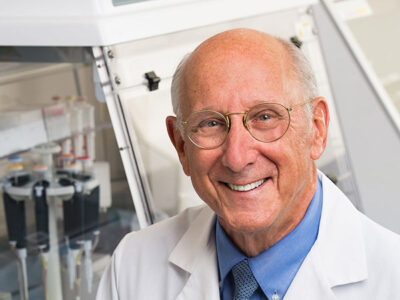
When Eric Karlson's lymphoma went into complete regression in 2009, Steven Rosenberg and James Kochenderfer knew they were making history—for the first time, they had cured a patient by using genetically modified cell therapy, specifically, anti-CD19 CAR-T cells.
FDA has approved Yescarta (axicabtagene ciloleucel), a genetically modified cell therapy, to treat adult patients with certain types of large B cell lymphoma who have not responded to or have relapsed after at least two other kinds of treatment.
The National Academy of Medicine announced the election of 70 regular members and 10 international members during its annual meeting.

Norman “Ned” Sharpless Oct. 17 was sworn in as the 15th NCI director, succeeding Harold Varmus, who stepped down as director in March 2015, and Douglas Lowy, who has served as acting director since that time.
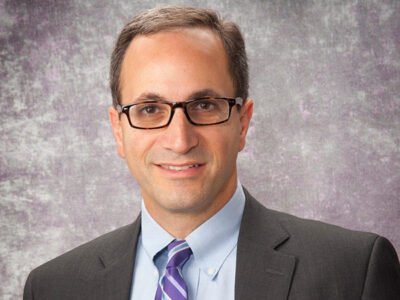
It may not be possible to point to definitive causes of the turnover in the executive offices of top academic cancer centers. However, the job of a center director is changing, said Robert Ferris, director of the University of Pittsburgh UPMC Hillman Cancer Center.


