On Aug. 26, FDA approved the RAS inhibitor, daraxonrasib, sponsored by Revolution Medicines Inc. and also known as Rasonque, for patients with metastatic pancreatic adenocarcinoma who have received at least one prior systemic therapy or are not candidates for multiagent systemic therapy.
This episode is available on Spotify, Apple Podcasts, and Youtube.
The approval was much anticipated by patients and clinicians alike, ever since the dramatic results of the RASolute-302 trial, a randomized, open-label, multicenter clinical trial involving 500 adults with previously treated metastatic pancreatic adenocarcinoma, were published.
In the trial, daraxonrasib nearly doubled median overall survival to 13.2 months compared to 6.7 months for standard chemotherapy, a historic increase in a disease whose overall survival has stagnated for decades.
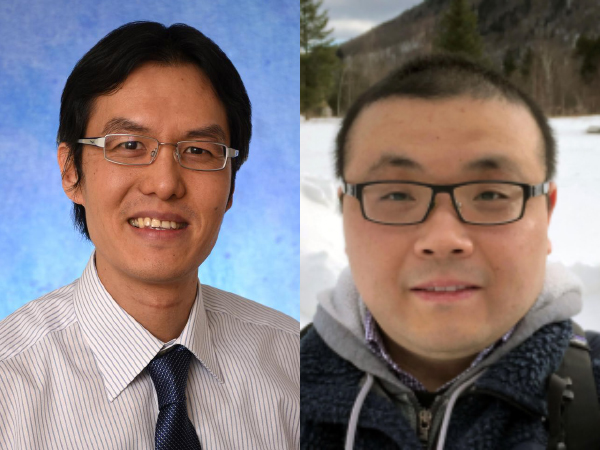
In this week’s episode of In the Headlines, Jacquelyn Cobb, associate editor with The Cancer Letter, speaks with Brian M. Wolpin, principal investigator for the RASolute-302 trial about his involvement in the clinical testing of daraxonrasib, what the scientific milestone means for his patients, and what to look out for next in the pancreatic cancer research space.
Wolpin is the director of the Hale Family Center for Pancreatic Cancer Research at Dana-Farber Cancer Institute.
“This really is the future of the field, I think, which is: KRAS is sort of the director of the orchestra in pancreatic cancer,” Wolpin said. “Once you inhibit that, you can then go after so many other aspects of pancreatic cancer biology and use it, use these new medicines in a way that if they were given by themselves, they wouldn’t work as well.”
Stories mentioned in this podcast include:
- Pancreatic cancer finally starts to budge as daraxonrasib doubles overall survival
- The story of daraxonrasib is the ultimate hero’s journey A narrative curve with twists, turns, intrigue, drama—and a blow to a mighty foe
- FDA permits expanded access for investigational pancreatic cancer drug daraxonrasib
- Long-awaited results from first phase III trial of a RAS inhibitor in pancreatic cancer shows that daraxonrasib doubles median OS PanCAN’s Berkenblit
- Zoldonrasib + daraxonrasib show 81% ORR in patients with RAS G12D metastatic pancreatic cancer, phase I/II study finds
This episode was transcribed using transcription services. It has been reviewed by our editorial staff, but the transcript may be imperfect.
The following is a transcript of this week’s In the Headlines, a weekly series on The Cancer Letter Podcast:
Jacquelyn Cobb:
Well, thank you so much for joining me, Dr. Wolpin. It’s such a pleasure to have you.
Congratulations, a little bit belated at this point, but on the results of the Rasolute-302 trial and the plenary and etc., etc.
I would love to hear, first of all, just how you got involved. I was writing up the question to ask, and I realized I actually am not very familiar with how exactly industry-sponsored trials connect with academic cancer centers. So, kinda just an ignorant question, a curiosity, but also, you know, how you felt excited about this particular trial and chose to participate in it.
Brian Wolpin: Sure. So, I’ve been working in pancreatic cancer for many years. I’ve been at Dana-Farber a little over twenty years and all that time, my focus has been on pancreatic cancer. So, we’ve been involved in quite a number of different both research endeavors and also work to try to identify new therapies. It’s been extremely hard to find new treatments that successfully work against pancreatic cancer.
But one thing we’ve known now for many years is that there is an oncogene that drives growth of pancreatic cancer, and that’s the KRAS oncogene. And it is mutated in almost 95% of pancreatic cancers. So, it has been a very logical thing that you would want to target that. And, in the laboratory, if you do target that by a number of different means, you really can treat pancreatic cancer well. If you use a drug that can block that or an approach that blocks that. The trouble is, we’ve not had a drug that can do that in people.
So, about 12, 13 years ago, there was a real change in the field, where a really outstanding chemist at University of California, San Francisco was able to identify molecules that could stick to RAS and start to show you could start to block the function of RAS, which is really, again, the driver in almost all pancreatic cancers.
The suite of compounds that came from that work, it turns out, were not very relevant to pancreatic cancer. They were very specific for one particular mutation in KRAS, which we don’t see very often in pancreatic cancer. But there were a number of both folks in the academic world, but also in the commercial world at biotech and in pharma, that were really working hard to identify other ways to block RAS signaling.
And it turns out, one of those, which was the drug that was ultimately presented, daraxonrasib, was being developed by a company in California called Revolution Medicines. And we had been working with them for a number of years, actually first on a previous compound that was not a RAS-targeted drug specifically, and then working with them in the laboratory to study the drug in the lab.
And what became clear is that the daraxonrasib that we were working with in the lab really blocked RAS signaling well if you used it in a culture dish or you used it in a mouse. But whether it would work in people at the time was unknown.
And so, we worked with them to open a phase I clinical trial, a first-in-human, sometimes it’s called, clinical trial, obviously opened at Dana-Farber, but at other sites too. and that’s where we really started to see some of the first activity in patients showing that the drug worked in patients. And then we obviously kept going after that, and worked with them on the phase II and then the phase III trial.
Jacquelyn Cobb: I listened to a recent webinar with RevMed and Tyler Jacks was the other person. and he kinda gave the history of the molecule itself, daraxonrasib. But he said that you know, they actually set out to find a more targeted drug; right?
Brian Wolpin: Yes.
Jacquelyn Cobb: And daraxonrasib specifically—it’s not specific. It’s RAS(on); right? So, it was a little bit broader than they expected. And so, I guess I was just wondering, you know, being a pancreatic cancer researcher and knowing that RAS is sort of this open question, and like, you know, we want to figure this out and it would have such an incredible impact, did you have options [of RAS-targeting molecules] to choose from?
Were you like, I believe more in this one? Did you have that choosing power? Especially [considering that] even within RevMed, I know that they had some like candidates they were working on and maybe this is a little bit too “insider knowledge” or whatever, but just, again, the curiosity of: Were you sitting there being like “Okay, I have to choose the one that will go into the clinical trial,” or was it kind of like “This is the first one, let’s let’s do it”?
Brian Wolpin: So, at the time—this is now several years ago—there were not that many RAS inhibitors available that were appropriate for patients with pancreatic cancer. So, there were not that many trials. But we had been working with the team at Revolution Medicines for a while, so we had seen both from the data they had generated and some data internally that the drug looked very good. So, we would not have gone forward to work with a trial that we didn’t think the drug had, you know, potential to be effective. But it’s not that there were 20 different, you know, inhibitors out there to choose from.
There are now; right? There are a lot more RAS inhibitors there now. And actually, now we do have, you know, a dozen or more different RAS inhibitors in trials at Dana Farber. But at the time, there were many, many less; right? Because things had not progressed far enough to get to that point yet.
Jacquelyn Cobb: Well I might skip ahead, this was [planned to be] a later question, but I would love to hear a little bit more about that “What’s next?” question, “What does it look like now?” question. Because obviously, the push has been how incredible this news is, and it is, period.
And the outcomes are still really terrible [for pancreatic cancer patients]. And so, I guess I’m just wondering, especially because there’s so much—and I have a lot to learn, but I even saw recently about a KRAS vaccine, you know—I feel like there’s a huge boom that I’m getting just through my email.
So, I can’t imagine what it looks like on your end. And I’d love a little sneak peek if you could.
Brian Wolpin: Mm-hmm. Yeah, so I think you’re definitely right that this feels like the time at which things are really going to accelerate and change. We historically have almost entirely used chemotherapy to treat patients with pancreatic cancer.
As opposed to some other cancer types, you really just can’t use one medicine alone. One medicine is not strong enough. So, a single chemotherapy drug does very little. So, it ultimately means you need to combine chemotherapy drugs together. And that gets hard for patients because they each have their own side effects, and then you put them together and there’s more side effects.
And so, it hasn’t been the easiest; right? Because the chemotherapies have a lot of side effects that make life more difficult for patients. And they don’t tend to work for very long.
They do work. We have used them for years and they do help patients, but the durability of how long they help patients isn’t nearly as long as what we would want.
And I think the way that I have thought about it is that chemotherapy essentially deals with the consequence of the cancer; right? It’s sort of killing cells that are dividing a lot.
And the problem is there’s many other cells in your body that divide too, and it causes side effects by hurting those cells. Whereas KRAS is really the founding of the cancer; right? So, we think one of the first things that happens that leads to a pancreatic cancer is you get a gene, this one gene, KRAS, that gets a mutation in it.
So, if you block that, you’re really sort of blocking the foundation of the cancer, rather than trying to deal with the consequences later on a more rapidly dividing cell. So, I think what daraxonrasib has done is it really has been a proof of concept that that really works; right? If you go after the root of the cancer, the mutant gene that starts the cancer, you really can do better even than the chemotherapies we’ve been using for a long time.
And that really has opened all new doors, right, to help think about new treatments. And to your question, some of those new treatments will be things combined with RAS inhibitors; right? We know that RAS inhibitors work, but in the setting we tested, they weren’t a cure then either; right? They helped people live longer, but people still then pass away from their cancer. We would like to, obviously, prevent that. And so, I think part of what is coming is, “Well, are there RAS inhibitors that are better than daraxonrasib that may work even more effectively?”
But I think even more important than that: “Are there also new medicines we can add to these RAS inhibitors that will make them profoundly treat the tumor so that you get even deeper reductions in the tumor and maybe cure more people from their cancer?”
There are also then, as you alluded to, there are things beyond sort of small molecule inhibitors—which is what this class [is]—or targeted therapies. There are vaccines and immune therapies and a whole host of other things that are also being tested. And I think there’s a lot more going on now than there has been in the past. And I am hopeful that some of these things will also break through and turn out to be useful. And we were going to have to then figure out, well, what are the right combinations for the patients that help them the most?
Jacquelyn Cobb: Gotcha. That’s wonderful. If you had to give just like a couple of the next things that we should be looking out for. I feel like it’s probably, maybe a combination? Is there a specific combination that’s like about to read out results that you’re excited for?
Brian Wolpin: Mm-hmm. Yeah, it’s pretty early days, so I’m not sure I can tell you exactly what’s going to win that race, but you know there have been some data reported recently. One set of data was two RAS inhibitors together. One of them was daraxonrasib, which, as you mentioned before, binds to and blocks a host of different mutations in RAS. And one was a mutant allele specific inhibitor, so it binds to and blocks only RAS when it has a very particular mutation.
It’s early data, but it suggested maybe the combination will be better than each one individually. That we will have to test in a larger study. And there is a phase III trial planned to open towards the end of the year to ask that question.
There was another small data set that was released combining a RAS inhibitor with a PRMT5 [Protein Arginine Methyltransferase 5] inhibitor, which is a different kind of drug. That drug is trying to block a different vulnerability in pancreatic cancer. About a third of pancreatic cancers seem to be susceptible to PRMT5 inhibitors. And so, that was a combination also with daraxonrasib with one of the PRMT5 inhibitors, in that case made by a company called Tango [Therapeutics]. But there are others. And that data also looked quite interesting.
I think there will be many more. Those are two that just happened to release data in the past few weeks, but I think this really is the future of the field, I think, which is: KRAS is sort of the director of the orchestra in pancreatic cancer. Once you inhibit that, you can then go after so many other aspects of pancreatic cancer biology and use it, use these new medicines in a way that if they were given by themselves, they wouldn’t work as well. And so, I think you’re right that these combinations likely are the future. What exactly is going to be the winner? We’re going to have to see. I hope there are multiple winners; right? Multiple ways we can do this. And we will figure out for each individual patient what the best one for them is.
Jacquelyn Cobb: That’s wonderful. Thank you.
I have to get back to where I was in my list here.
I wanted to talk to you specifically about this, because you work with patients; right? You’re a clinician. I was wondering what your sense was from the patients about the trial and about KRAS. Because obviously, from my perspective, while I speak to and hear from patient advocates and sort of those institutions, I haven’t spoken with someone directly who was either on the trial or heard about the trial. I was wondering what sense you got from them and how they thought about it, if you can. I know they’re not a monolith, obviously, but if you got a general sense about that.
Brian Wolpin: Mm-hmm. Sure. First, I would say: Patients are very brave; right? They go on trials with us when we don’t know if the drug will work, and sometimes we don’t know what the side effects could even be; right? When we do these first trials in patients, it’s never been given to a person before. So, we really don’t know what we will see. So, it really shows you the bravery and dedication of patients to go through and do that with us.
I think the drug has some advantages over chemotherapy, in that it’s not an IV infusion; right? Most of the therapies we use in pancreatic cancer are IVs. Some of the medicines we use require hours to deliver, so they’re in the infusion room for most of the day in some instances.
And then, some of the programs we use, you actually have to wear a pump at home. So, you carry a pump with you that has chemo in it, and it gets delivered over 48 hours, and that’s inhibiting for a patient’s life. And then again, the more side effects it causes, the less of a normal life people can lead.
And so, daraxonrasib is a pill. You take it once a day, there are no IV infusions, there are no pumps, you don’t spend all day sitting in the infusion room. You take it at home; right? And the side effects tend to be less, so your life is more normal.
So, I think, you know, one theme that I would say from the patients that I treated who were on these trials is that their life felt more normal; right? They didn’t feel as tethered to the clinic and being constantly reminded about their cancer. And they were able to do things like go on trips and take bike rides and do things that they want to do and be less sort of always reminded of what is lurking there, which is the cancer. And so, I think that was a big improvement over what we’ve been able to do with IV chemotherapies.
And then, the medicine does have side effects. Every medicine has some; right? It’s not that it has none. So, daraxonrasib can cause rash and sometimes inflammation in the mouth.
But overall, again, people tend to feel better than when they’re on chemotherapy, so their life feels more normal. And I think ultimately what we would like to do, right, is find the right set of medicines that people can take as pills and live as normal a life as we can have them live; right? And really be more living with the cancer instead of the cancer taking over so much of their day-to-day activities. So, I would say most patients who went on these trials really felt like it was substantially better.
Better than being on chemotherapy. They had all received chemotherapy before, because that was mandated in these trials. So, they all knew what chemotherapy was like.
Jacquelyn Cobb: Yeah, yeah. Wow.
Are you hearing from patients the same excitement that’s in the field? You know what I mean? It’s like the field is like, “My god, this like…”
Brian Wolpin: Mm-hmm.
Jacquelyn Cobb: “It’s the tipping point.” It’s such a celebration. And I guess I wonder about the patients themselves. That’s I guess my question. It might be a hard question. It might not be the right thing to focus on at this moment. But I just can’t help but wonder, I guess.
Brian Wolpin: Mm-hmm. Yeah, I think the results from the trial made it into quite a bit of media. And so, patients have very commonly now heard of this. They definitely are excited and, you know, are interested in participating in either studies or receiving the medicine.
I think another thing that’s come up is this is a U.S.-based program. So, the trial was worldwide; right? The trial was not only open in the U.S., it was open in Europe and also in Asia. but the expanded access program currently is only in the United States and the review for the FDA is a U.S. review. So, there really needs to be still quite a bit of work to make this drug also more broadly available outside the United States.
Jacquelyn Cobb: Gotcha. Good to know. Honestly, I feel like I didn’t understand that necessarily, even though I know that it’s not approved yet and that it’s you know just the expanded access program. It’s helpful to hear, I feel like, what that actually means in practice.
So, again, this is more a personal question. I would love to know what it felt like to give a plenary. I just cannot imagine speaking in front of that many people. Maybe you were just so prepared… But I guess the proper reporter question is, you know, how did you come to be the one to give the plenary? Were you like, “I want to give this”?
And then also, how did it feel? Was that such a crazy moment? I just can only imagine, so it seems really neat to me.
Brian Wolpin: So, when clinical trials, large trials like this, are done, there are generally a small number of investigators who help design and lead the trial. And there often is a steering committee of people who do that. And the chair of the steering committee is usually the one who will present the data at meetings. So, I was in that role.
So, it’s probably one of the biggest forums that I will ever present, in terms of a live presentation with almost ten thousand people in the room. So, a bit intimidating for sure. Even having given quite a lot of talks over the years. The lights are very bright. You can only see the first few rows, so it’s not like you can see all ten thousand people. That may have its benefits.
So, but I have never given a talk where I’ve been interrupted in the middle like that. That is an unusual scenario. And so, you know, just a bit overwhelming. It’s just the… you know, I’ve taken care of so many patients with pancreatic cancer over the years that I just feel like the presentation was mostly for them; right? To show them that we did it; right? We finally have cracked the armor a bit and there’s now a new future ahead. Again, not that we figured this out yet, but we really have made a dent in a way we haven’t in the past.
So, that it already was sort of overwhelming to give the talk in that way. But also, I wasn’t even halfway through, so I needed to pay attention, otherwise I was going to lose my train of thought and then the next half of the talk was not going to be so well performed. So, just trying to keep my wits about me.
And then, you know, I think what it shows you is just how much all of us want this; right? How patients, families, physicians—this cancer has such a bad reputation and it is so hard to treat that we have all been desperate for something like this. And there are so many people who’ve worked so hard to get here to finally see it.
I think people saw the initial data and just didn’t want to wait to show that that’s amazing—and it is. And I think it’s going to really change how we treat the disease going forward.
Jacquelyn Cobb: You seemed like you had it all together in the second half, from my perspective. And I’m sure even if you didn’t, the audience would have forgiven you. I mean, this is the most exciting, or the most rousing oncology news, clinical oncology news that I’ve had the pleasure to cover. So, it is such a pleasure.
I think you probably covered this, but I just what’s next for you in particular? Like what are you working on? What is your next question?
Brian Wolpin: Mm-hmm. Yeah, so I, as you said, see patients and I have a laboratory and we study pancreatic cancer. We obviously have a whole host of different projects going on. I think a lot of projects in the therapeutic space over the past few years have pivoted towards understanding how RAS inhibitors work.
Jacquelyn Cobb: Gotcha.
Brian Wolpin: So, I really think that what we will see in the next few years is that instead of chemotherapy being the base treatment all patients get and trying to add things to that, which we’ve been trying to do for a while, I think RAS inhibitors will become the base treatment all patients get, and we will figure out what we add to that to make them work better.
So, a bunch of the work we do in the lab on the therapeutic side has shifted over the past few years to really understanding, well, when you give a RAS inhibitor, what does that do to the tumor? How does the tumor adapt to that? How does it try to develop resistance to that? And what are the things we can do to prevent that adaptation or that resistance from developing?
And I think that’s where we’re going to spend a lot more time also in the next few years really trying to decipher the mechanisms of that, because I think that’s really what in the clinic we will then need, because I do think RAS inhibitors will become standard, I think probably in all settings for patients with pancreatic cancer.
Again, we don’t have trial data to support that yet. I can’t say that that has happened. It hasn’t yet. But I think that’s where we’re likely going. So, if you think that’s true, then you really got to understand resistance and adaptation.
Jacquelyn Cobb: Yes.
Brian Wolpin: And then also, part of the lab works on early detection. I think we should not lose sight of the fact that 80% of patients present with advanced disease that we know we cannot cure because it’s already too progressed to cure. And so, if we’re going to use these RAS inhibitors to their fullest potential, I think we need to find the disease earlier to give us a better chance to cure patients. And so, a good portion of the lab works on questions around that. Identify people to screen, how do you find it earlier? And I think that’s also an important thing for us to be working on. And obviously others in the field work in that space too.
Jacquelyn Cobb: Well, I would love to hear more, but you have to run. Is there anything I missed in the last minute that I have you?
Brian Wolpin: No, sounds great. Thank you for featuring this. I appreciate it. It’s nice to have some good news about pancreatic cancer to talk about. So, I appreciate you doing that.
Jacquelyn Cobb:
Yes. Well, thank you so much and talk to you soon.